Abandoning a car in Canada triggers fines, towing bills, and storage charges within days. Ontario municipalities can tag a vehicle as abandoned in as little as 24 hours, and the registered owner stays financially responsible even after a tow truck removes the vehicle.
Every province enforces abandoned vehicle rules differently, but the pattern stays consistent across Canada. A car left on a public road faces faster enforcement than one sitting on private property. A vehicle that leaks fluids or blocks access draws attention from bylaw officers within days, not months. This guide explains abandoned car law Canada wide, with a focus on Ontario, where enforcement is strictest and complaint volume runs highest.
Most owners assume an unused car can sit for weeks without consequence. That assumption costs money, because cities track abandoned vehicles through resident complaints, routine patrols, and licence plate scans. Every section below gives an exact number instead of a vague range, since specificity is what current search guidance rewards in 2026.
What Counts as an Abandoned Vehicle Under Canadian Law?
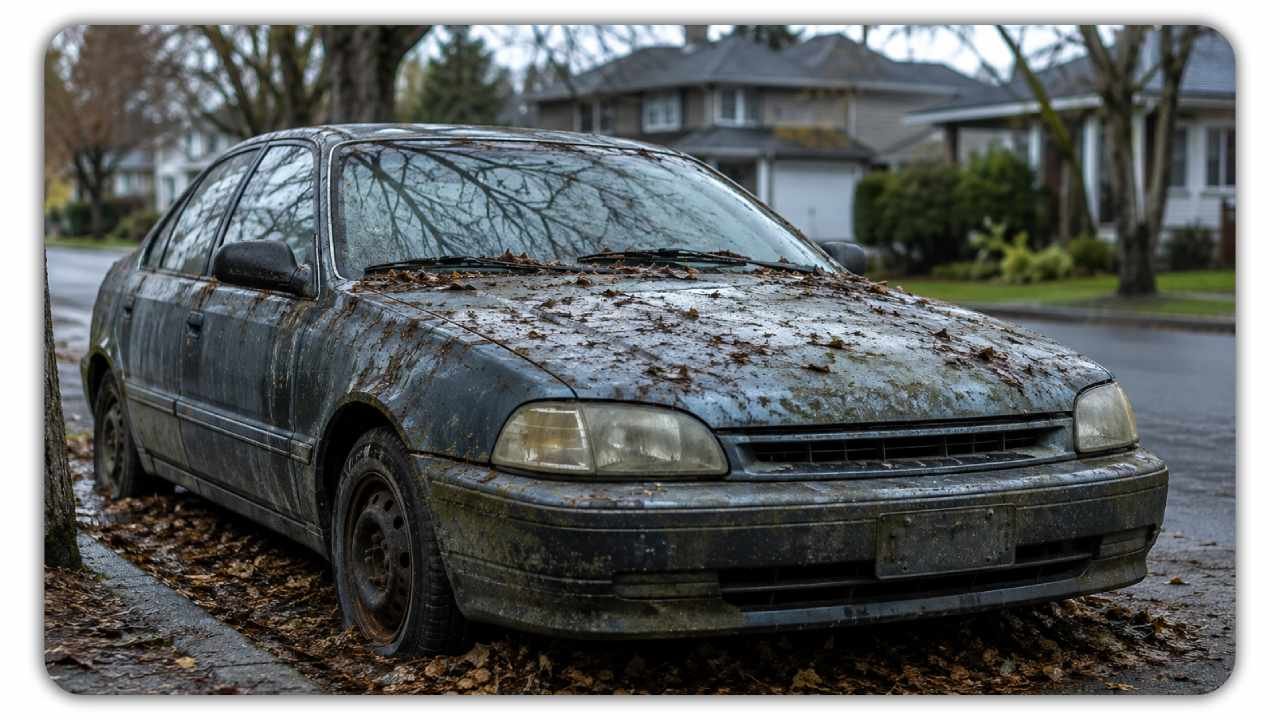
A vehicle counts as abandoned when it sits unattended on public or private land without the owner returning or moving it. Authorities look for 5 signs: expired plates, flat tires, visible body damage, no movement for weeks, and no contact from the registered owner.
Bylaw officers rarely wait for all 5 signs before acting. 2 or 3 visible signs are usually enough to trigger a tag or a complaint inspection. The registered owner then gets a set window to respond before towing or fines follow.
Abandoned vs Derelict vs Inoperable Vehicles
Abandoned describes presence, not condition, since no one is maintaining or returning to the car. Derelict is the term most municipal bylaws actually use, and it covers wrecked, stripped, or inoperative vehicles regardless of how long they sat. Inoperable is a narrower mechanical term for a car that cannot start or move under its own power.
Toronto Municipal Code Chapter 629 groups “wrecked, discarded, dismantled, inoperative or abandoned” vehicles into one combined enforcement category. Because the bylaw merges these conditions, a car does not need to sit for months to qualify. A single missing wheel or a smashed windshield can move it into the derelict category immediately.
Common Signs Authorities Use to Flag a Vehicle
Bylaw officers and police check for specific, observable details before logging a complaint. They record the license plate number, the vehicle identification number (VIN) if visible, the make, the model, and the exact parked location.
Neighbours and property managers trigger most complaints, not routine patrols. A car sitting in the same spot for 2 weeks on a residential street draws far more attention than one parked in a large commercial lot.
How Long Before a Car Is Legally Considered Abandoned in Ontario?
Ontario sets no single province-wide number of days for abandonment. Public roads move fastest: many municipalities tag a vehicle within 24 to 72 hours of it not moving. Private property moves slower and depends on a bylaw complaint triggering an inspection first.
- Public street or highway: 24 to 72 hours in many Ontario municipalities before a tag or tow
- Private property with a complaint: days to a few weeks after inspection and a written notice
- Left for months or years: condition, not time, becomes the deciding factor for enforcement
The Highway Traffic Act sets general provincial rules, and each municipality writes its own enforcement bylaw on top of it. Confirm the exact window with the local bylaw office, since Toronto, Ottawa, and Hamilton apply slightly different timelines.
Other provinces follow the same public-versus-private split, though the exact hours shift. British Columbia municipalities typically allow 24 to 48 hours on a public road before tagging a vehicle, while Alberta cities often extend that window to 72 hours in residential zones. Quebec’s Highway Safety Code lets police tow a vehicle immediately if it blocks traffic, regardless of how long it has sat there. Nova Scotia and other Atlantic provinces rely more heavily on municipal property standards bylaws than a single provincial statute, so timelines vary by city rather than by province.
What Happens If You Abandon a Car on a Public Road in Canada?
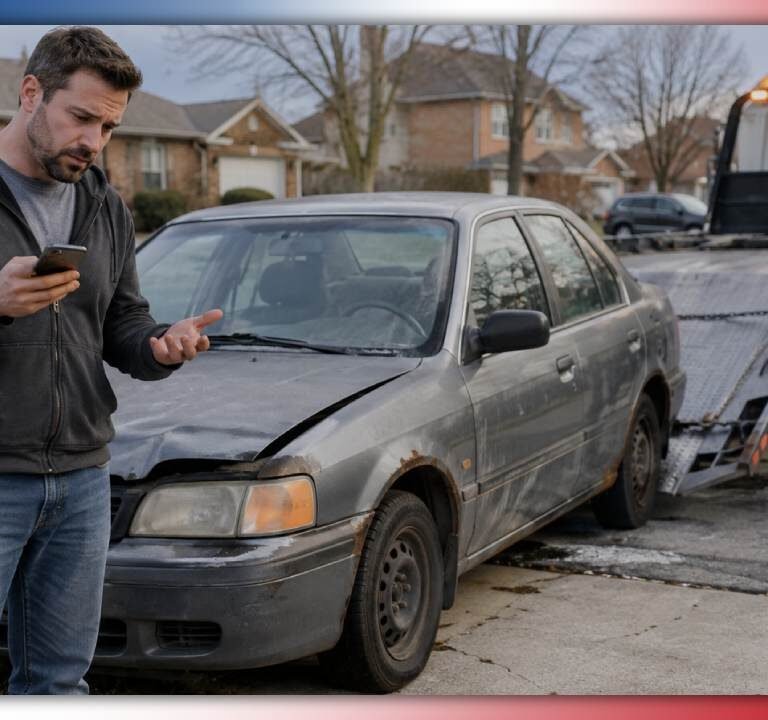
Leaving a car on a public street exposes the owner to a tag, a ticket, and a tow within days. Officers check the plate and VIN against provincial registration records once they log the vehicle, so the registered owner gets identified quickly.
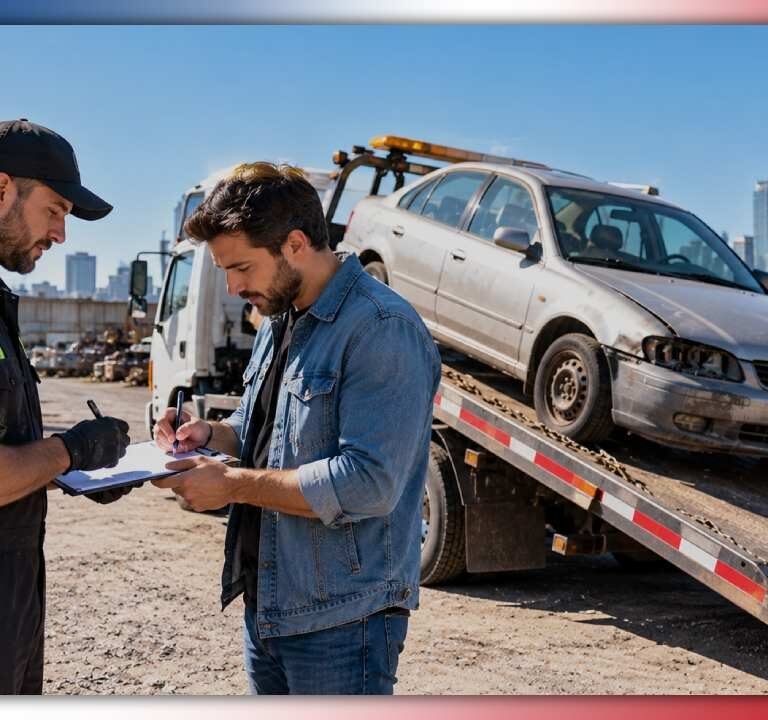
A car left on a highway or public right-of-way rarely stays anonymous for long. Once towing starts, the municipality bills the registered owner directly for towing and storage, not the vehicle itself. Some cities auction or scrap the vehicle without further contact if the owner does not respond within the notice period.
Winter creates extra urgency. Snow-clearing bylaws in most Ontario cities allow immediate towing of any vehicle blocking a plow route, regardless of how long it has sat there.
What Happens If a Car Is Abandoned on Private Property in Ontario?
A car abandoned on private property triggers a bylaw complaint process instead of immediate towing. The property owner or a neighbour files a complaint, a bylaw officer inspects the vehicle, and a notice period follows before enforcement.
Landlords, condo boards, and homeowners deal with this scenario often. The property owner cannot simply tow the car without following the notice process when a tenant or former occupant leaves it behind. Skipping that process can expose the property owner to legal risk if the registered owner later disputes the removal.
Toronto’s Property Standards Bylaw lets residents report derelict or abandoned vehicles on private land through 311. A confirmed complaint usually leads to a written notice, giving the registered owner a set number of days to remove the car before the city arranges removal.
Can You Legally Claim an Abandoned Vehicle Left on Your Land?
No, not by simply leaving the car where it sits. Ontario treats an abandoned vehicle on private land more like found property than a gift, so a specific process applies before any legal claim can form.
- Report the vehicle to police or bylaw services to create an official record
- Wait for identification, since officers trace the registered owner through the plate and VIN
- Allow the notice period to run, because the owner or a lienholder can still come forward
- Confirm the vehicle stays unclaimed through a licensed towing and storage operator
- Pursue disposal or ownership only after the legal process closes
Taking parts, driving, or selling the vehicle before this process finishes creates legal exposure, even on private property. A registered owner or a lienholder can still hold a valid claim during the notice period.
What Fines and Costs Apply Under Abandoned Car Law Canada?
Fines for abandoning a car in Canada typically run between $250 and $5,000, depending on the municipality and the severity of the violation. Toronto, Ottawa, and Hamilton each set their own maximum penalties under local property standards bylaws.
Costs stack quickly once towing starts. A single incident can include a bylaw ticket, a towing charge, a daily storage fee, and an administrative processing cost, all billed separately.
Towing, Storage, and Administrative Fees
Towing companies in the Greater Toronto Area (GTA) typically charge between $150 and $300 for a standard tow, plus $20 to $50 per day for storage. A car left unclaimed for 30 days can accumulate more in storage fees than the vehicle is worth.
The towing operator can apply for legal ownership under Ontario’s towing and storage rules for unclaimed vehicles if the owner fails to pay within the required window. At that point, the original owner loses any right to reclaim the car, even by paying the balance late.
A Provincial Offences Act ticket adds a separate layer of cost on top of towing and storage. Court administration fees typically add $50 to $100 to the base fine, and unpaid tickets can affect vehicle plate renewal at Ontario’s Ministry of Transportation (MTO). Owners who ignore a first notice often find a second, larger fine waiting once the file moves from bylaw enforcement to collections.
Who Carries Legal Responsibility for an Abandoned Vehicle?
The registered owner carries legal responsibility for an abandoned vehicle, not the property it sits on. A lienholder, such as a bank financing the car, can also share liability if the loan remains active when the vehicle gets towed.
Property owners hold a narrower responsibility: reporting the vehicle and cooperating with bylaw officers during inspection. Ontario law does not require a landlord or homeowner to pay towing or storage costs simply because the vehicle sat on their land, though many bylaws expect them to initiate the complaint.
How to Report an Abandoned Vehicle in Canada
To report an abandoned vehicle in Canada, contact the local municipality, the police non-emergency line, or the bylaw office and provide the exact details of the vehicle’s location. Most cities, including Toronto, accept reports through 311 or an online complaint portal.
Before calling, gather 5 details: the exact street address or intersection, the license plate if visible, the make and model, the approximate colour, and how long the car has appeared to sit unmoved. Officers use these details to prioritize inspections and confirm whether a vehicle meets the local definition of abandoned.
Reporting through official channels protects both the property owner and the vehicle’s registered owner, since it creates a documented timeline before any towing occurs.
What Environmental Liability Comes With an Abandoned Vehicle?
An abandoned vehicle can create environmental liability even after it leaves the property. Leaking engine oil, brake fluid, transmission fluid, battery acid, and coolant can seep into soil and groundwater within 15 feet (4.5 m) of the parked location.
Some municipalities issue separate environmental tickets on top of standard bylaw fines if fluids reach the ground or a storm drain. Cleanup costs for contaminated soil can run into the thousands of dollars, and the registered owner typically bears that cost, not the property owner.
Tires, plastics, and lead-acid batteries take decades to break down in landfill conditions. This decay timeline is why provincial environmental agencies push licensed disposal over abandonment.
What Are the Safer Alternatives to Abandoning a Car?
Selling, donating, or scrapping an unwanted vehicle avoids every fine, tow bill, and liability tied to abandonment. Each option clears the registered owner’s name from the vehicle once the paperwork transfers.
Owners have 4 alternatives to abandonment: selling privately, donating to a registered charity, trading in at a dealership, or scrapping through a licensed recycler.
A licensed scrap buyer offers the fastest path for a car with no resale value. Services like Scrap Cars 4 Cash provide licensed scrap car removal and handle the ownership transfer directly, so the vehicle never sits long enough to attract a bylaw complaint.
For owners who need the vehicle gone the same week, requesting free junk car pickup removes the car before it reaches the 24 to 72 hour window that triggers enforcement on public roads.
Owners who want a quicker decision can request an instant cash offer based on the vehicle’s weight, condition, and remaining parts value.
Whichever option an owner picks, acting within 2 weeks of the vehicle going unmoved avoids nearly every fine and liability described in this guide.
Quick-Reference: Handling an Abandoned Vehicle in Ontario
| Task | Timing | Method | Difficulty |
| Report an abandoned vehicle | Same day | Call 311 or the local bylaw office | Easy |
| Confirm the registered owner | 1 to 5 business days | Police trace the plate and VIN | Moderate |
| Wait out the notice period | 3 days to a few weeks | Municipality issues a written notice | Easy |
| Tow an unclaimed vehicle | After the notice period expires | Licensed towing and storage operator | Moderate |
| Scrap or sell an unwanted car | Same day | Licensed scrap buyer such as Scrap Cars 4 Cash | Easy |
Frequently Asked Questions
Is it illegal to abandon a car in Canada?
Yes. Every province enforces some form of abandoned vehicle bylaw, and municipalities can issue fines, towing charges, and storage fees against the registered owner.
How long can a car sit before it’s considered abandoned in Ontario?
Public roads: 24 to 72 hours in many municipalities. Private property: days to a few weeks after a bylaw complaint triggers an inspection.
Can I keep a car abandoned on my property?
No, not immediately. You must report it, allow identification and a notice period, and confirm it stays unclaimed through a licensed towing operator before any legal claim opens.
Who pays the towing and storage fees for an abandoned car?
The registered owner pays, even after the municipality or a towing company removes the vehicle from its original location.
What’s the fastest way to avoid abandoned car penalties?
Scrap, sell, or donate the vehicle before it sits unmoved for more than 2 weeks, since that is the point most bylaw complaints and public-road tags begin.
Your Next Step If the Car Isn’t Worth Keeping
Abandoned car law Canada wide comes down to one fact: an unused vehicle costs more the longer it sits. Fines, towing charges, storage fees, and environmental liability can all fall on the registered owner within days of a complaint.
If the car is no longer worth keeping, contact Scrap Cars 4 Cash to get your free quote and arrange same-day, no-cost removal across the GTA, before enforcement turns a parked vehicle into an expensive problem.