Commercial Fleet Car Removal in Toronto, ON
We remove decommissioned fleet vehicles from Toronto business sites. Send one vehicle list and receive a coordinated pickup plan for cars, SUVs, vans, pickups and light-duty work vehicles.
- 2 or more vehicles — small and large fleet clearances
- One or several sites — Toronto and GTA coordination
- Running or non-running — condition-based dispatch
- Per-vehicle records — unit details matched to pickups
Send Your Fleet List
Share the project scope. A coordinator can confirm the vehicle data, access needs and pickup plan.
No obligation. Fleet scope and towing requirements are confirmed before scheduling.
Keep one contact for vehicle lists, access and scheduling
Clear sites without disrupting daily operations
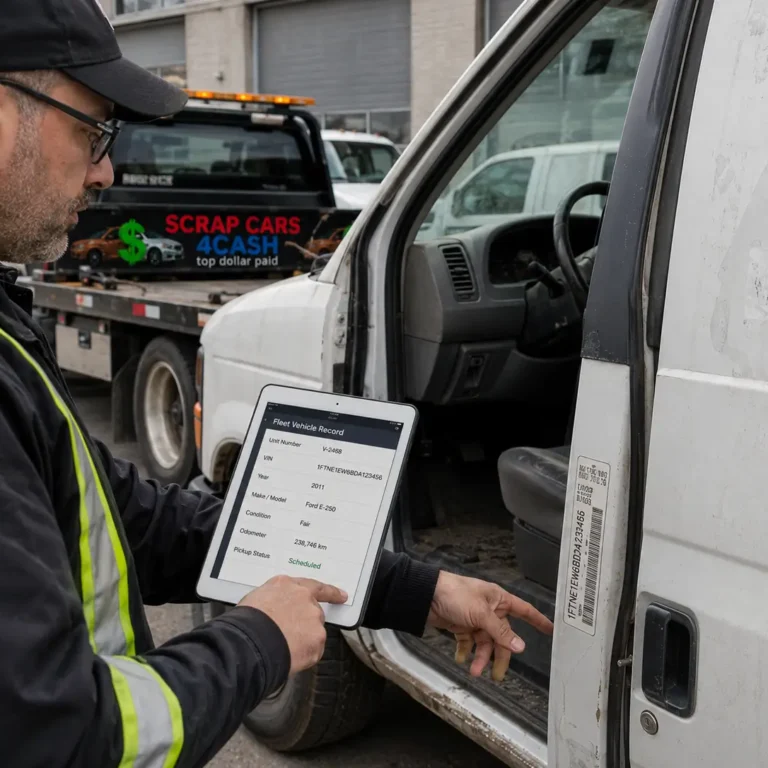
Match unit IDs, VINs and pickup dates to internal records
Coordinate one site or several GTA locations
What Is Commercial Fleet Car Removal?
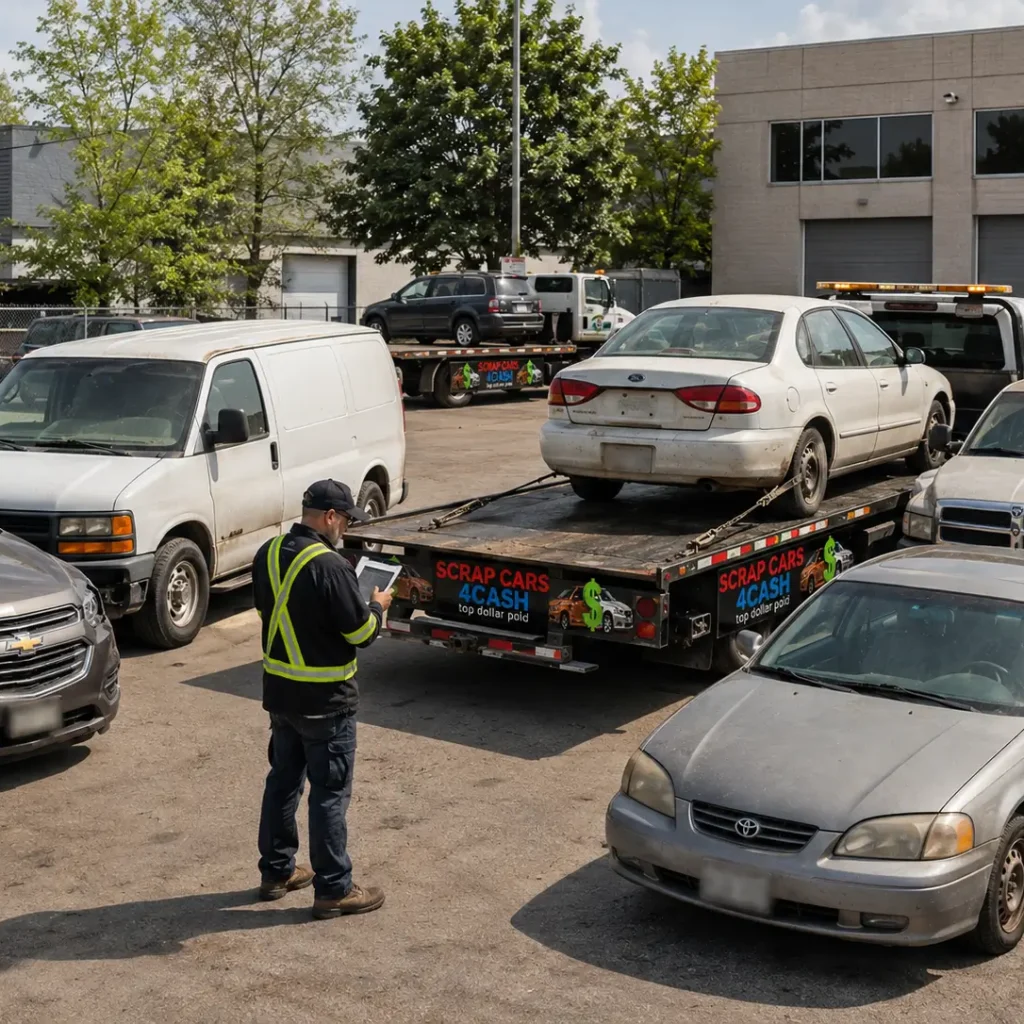
Commercial fleet car removal is a coordinated service for businesses retiring two or more vehicles. The service combines vehicle assessment, towing logistics, site scheduling, ownership checks and completion records.
Use fleet removal when vehicles no longer justify repair, fail company standards, occupy storage space or need to leave service before replacement units arrive. The pickup plan can cover mixed vehicle types and different conditions.
- Retire high-mileage and end-of-life fleet vehicles.
- Remove accident-damaged and non-running units.
- Clear dealer, rental and service-company inventory.
- Coordinate pickups from yards, depots and business parking lots.
- Match completed pickups to unit numbers and internal records.
Who Uses Fleet Vehicle Removal?
The service fits organizations that need a clear disposal process, a defined contact and less time spent arranging individual vehicle pickups.
Contractors and field-service companies
Remove retired cars, cargo vans, pickups and service vehicles after replacement or mechanical failure.
Delivery and logistics operators
Clear high-mileage route vehicles, damaged units and vehicles removed from active schedules.
Dealers and automotive businesses
Remove non-retail inventory, trade-ins with major faults and vehicles held for parts or recycling.
Rental and leasing operations
Coordinate end-of-cycle vehicle collection after internal approvals and ownership releases are complete.
Property and facility managers
Clear authorized business vehicles from commercial lots, storage sites and managed properties.
Institutions and non-profit fleets
Organize documented pickup for retired transport, maintenance and administrative vehicles.
Fleet Vehicles We Assess
Send mixed fleets in one request. Dispatch equipment depends on vehicle size, condition, wheel movement and parking access.
Passenger fleet cars
Sedans, hatchbacks, wagons and compact cars.
Accepted for review
SUVs and crossovers
Compact SUVs, 4x4s and seven-seat fleet vehicles.
Accepted for review
Commercial vans
Cargo vans, service vans, minivans and delivery vans.
Accepted for review
Pickups and work trucks
Light-duty pickups, crew cabs and utility-body units.
Equipment check
Damaged and non-running units
Collision damage, engine failure, rust, missing keys or locked wheels.
Condition review
Electric and hybrid vehicles
Battery-electric and hybrid cars, SUVs and light vans.
Separate assessment
How Commercial Fleet Removal Works
One process keeps the vehicle list, site access and pickup status clear from the first review to project completion.
1
Send the fleet list
Provide unit IDs, VINs, vehicle details, condition and pickup addresses.
2
Review each unit
Confirm completeness, keys, wheel movement, access and towing requirements.
3
Approve the plan
Agree on the assessed vehicles, pickup sequence, site contacts and timeline.
4
Coordinate pickup
Use one-day, staged or multi-site dispatch based on project size.
5
Close the records
Match collected units, dates and agreed payment details to the fleet list.
What to Include in the Vehicle List
A complete fleet sheet reduces follow-up questions and helps dispatch select the correct towing equipment for every unit.
1
Unit ID
Internal fleet number, asset or stock number, and an optional cost centre for each vehicle.
2
VIN
The 17-character Vehicle Identification Number, matching the permit and entered as a clear, readable value.
3
Year, make and model
Vehicle identity, body style and trim, plus the odometer reading when it is available.
4
Condition
Running or non-running status, damage and missing parts, and whether the wheels still move.
5
Keys
Whether keys are available, which keys exist (ignition and door) and the key count for each unit.
6
Pickup location
The full site address, parking level or yard zone, and the on-site contact for that location.
Garage, Indoor and Incomplete Vehicles
Two details change dispatch planning more than any others: indoor clearance and missing major components.
- Share clearance height in metres and feet, ramp width and parking level.
- Confirm whether each indoor vehicle can still roll.
- List missing catalytic converters, batteries, wheels or engines.
- Completeness affects both the assessment and the equipment sent.
Single-Site and Multi-Site Fleet Collection
Choose the pickup structure that fits your operating schedule, property access and vehicle count.
Single-Site Fleet Removal
- One dispatch plan for a yard, depot, dealership, office or commercial lot.
- Set one site contact and staging area.
- Group vehicles by running condition.
- Prepare keys and permits before arrival.
- Schedule one-day or staged pickup windows.
Multi-Site Fleet Removal
- One master fleet list with separate Toronto or GTA pickup addresses.
- Assign vehicles to each location.
- Confirm local access restrictions.
- Sequence pickups by region and priority.
- Track completion against the master list.
What Determines a Fleet Vehicle Offer?
Each unit is assessed on its own merits. Vehicle demand, condition, type, site access and quantity all shape the plan and the offer.
Vehicle demand, parts compatibility and model-specific value affect the assessment.
Running status, collision damage, rust and missing major components change recovery value.
Cars, vans, SUVs and pickups have different material, equipment and transport requirements.
Locked wheels, underground parking and tight loading areas affect dispatch planning.
Vehicle count, staging space and pickup sequence shape the project plan.
Each unit is assessed for its practical recovery route instead of using one flat fleet rate.
Individual Assessment, One Fleet Plan
Each vehicle can have a different value and towing requirement. The project stays easier to manage when every unit is listed separately.
- Separate unit-level vehicle details
- Grouped scheduling and site coordination
- Clear disclosure of missing components
- Confirmed scope before dispatch
- No reliance on generic per-car estimates
Fleet Decommissioning Checklist
Complete internal decommissioning before the tow team arrives. This protects company assets, data and branding. Do not remove major vehicle components without disclosing them — missing batteries, wheels, catalytic converters or powertrain parts can change the assessed value and the equipment required.
Remove company property
Take tools, inventory, safety equipment, documents and personal items out of every unit.
Remove access devices
Collect fuel cards, toll transponders, parking passes, gate remotes and building credentials.
Clear stored data
Delete paired phones, saved addresses, driver profiles and telematics data where possible.
Manage vehicle branding
Remove decals or confirm the company process for logos, unit numbers and commercial markings.
Prepare keys and records
Label available keys, permits and internal asset documents by unit number.
Stage accessible vehicles
Keep tow paths clear and identify units with locked steering, locked wheels or flat tires.
Paperwork for Company-Owned Fleet Vehicles
Prepare ownership and authorization records before pickup. Requirements can vary when vehicles are leased, financed, held under different business names or managed by a third party.
1
Match the VIN
Confirm the Vehicle Identification Number on the vehicle matches the permit and the fleet list.
2
Prepare the vehicle permit
Have the vehicle portion of the Ontario permit available for each company-owned unit.
3
Use an authorized representative
Assign a person who can approve the transfer, confirm the fleet list and answer ownership questions.
4
Remove company licence plates
Retain or return licence plates according to the company process and Ontario requirements.
5
Clear leases and liens
Obtain the required release or permission before a leased or financed vehicle is transferred or processed.
Leased, Financed or Third-Party Vehicles?
Vehicles that are not owned outright need a written release before ownership can be transferred or the vehicle can be processed.
- Written authorization from the lease or finance holder.
- Confirmation of the registered business name on the permit.
- An internal release document where company policy requires one.
- One authorized representative reachable at pickup.
Commercial Fleet Pickup Across Toronto
Coordinate pickups from business yards, dealerships, depots, offices, storage sites and managed commercial properties. Nearby Greater Toronto Area projects can be reviewed based on vehicle count, route and equipment requirements.
Choose the Correct Vehicle Removal Service
Use this page for multi-vehicle business projects. Use the related pages for specific vehicle types or individual pickups.
Scrap Car Removal
General removal for unwanted, damaged and end-of-life vehicles.
SUV and Truck Removal
Pickup planning for SUVs, pickups and larger light-duty vehicles.
Accident-Damaged Cars
Assessment and towing for collision-damaged vehicles.
What Our Clients Say About Our Scrap Car Removal In The GTA ?
Our customers trust us for reliable, fast, and hassle-free scrap car removal. Here’s what they have to say
Posted on Google
 carol azille
Trustindex verifies that the original source of the review is Google.
Very fast service & professional staff. Gave very fair price.. excellent. Definitely recommend to all...Posted on Google S CAwesome guys very responsive super helpful no games... id recommend.Posted on Google
 PUNEET CHAUDHARYProfessional service provided. Gave fair price. Same day pickup. Recommend to all…Posted on Google
 Norberto PetrovicsExcellent services. Staff is very professional. They picked the car on same day. Gave very fair price..Posted on Google
 Beaver EditsGreat service, same day pickup guy paid a fair pricwPosted on Google
 Ahamed MufeezHelped me with my car for an accident. Prices were really fair and they were professional. Highly recommended.Posted on Google
 James LeeVery straightforward, quick, same day pickupPosted on Google
 INDERPAL SINGHVery professional team of Scrap cars 4 Cash. Sold my Honda Accord, they gave very good rate & picked the car same day. All experience was hassle free & very satisfactory. Definitely advise others as well if they need good cash for their old car..Posted on Google
 Jesleen SandhuGood service for our car which we scraped. Same day pickup & gave us very fair price.. overall hassle free experience. Recommends to all..Verified by TrustindexTrustindex verified badge is the Universal Symbol of Trust. Only the greatest companies can get the verified badge who has a review score above 4.5, based on customer reviews over the past 12 months. Read more
Questions About Fleet Vehicle Removal
These answers cover vehicle counts, scheduling, records, towing and company-owned units.
What is commercial fleet car removal?
Commercial fleet car removal is a coordinated service for businesses retiring two or more vehicles. The service covers vehicle assessment, pickup planning, towing and per-vehicle records for cars, vans, SUVs, pickups and light-duty work vehicles.
Can you collect an entire fleet on one day?
Yes. One-day collection may be arranged when the vehicle count, site access, tow equipment and paperwork are confirmed. Larger projects may use staged pickup windows.
Do fleet vehicles need to run?
No. Non-running, accident-damaged, rusted and incomplete vehicles can be assessed. Share missing parts, locked wheels and access restrictions before dispatch.
Can you remove vehicles from several Toronto locations?
Yes. Multi-location pickup can use one master fleet list with separate site contacts, addresses and access notes for each Toronto or GTA location.
What information is needed for each vehicle?
Provide the unit number, VIN, year, make, model, condition, key status, missing components and exact pickup address. Add garage clearance and wheel-movement details when relevant.
Is towing included for commercial fleet vehicles?
Towing is included with an accepted vehicle purchase after the fleet scope, equipment requirements and site access are confirmed.
Can you remove leased or financed fleet vehicles?
Leased or financed vehicles require written authorization or a completed release before ownership can be transferred or the vehicle can be processed.
What paperwork is needed for company-owned vehicles?
Prepare the vehicle portion of the permit, a matching VIN, an authorized representative and any company release documents. Remove company licence plates before handover.
Do you assess electric and hybrid fleet vehicles?
Yes, after a separate review. Share battery condition, collision history, key status and parking location before pickup is confirmed.
Can the fleet pickup be matched to our internal records?
Yes. Use unit IDs and VINs in the approved fleet list so completed vehicles, pickup dates and payment details can be matched to company records.
Plan Your Toronto Fleet Vehicle Removal
Send the vehicle count, vehicle mix and pickup locations. A coordinator can review the fleet scope before dispatch is scheduled.