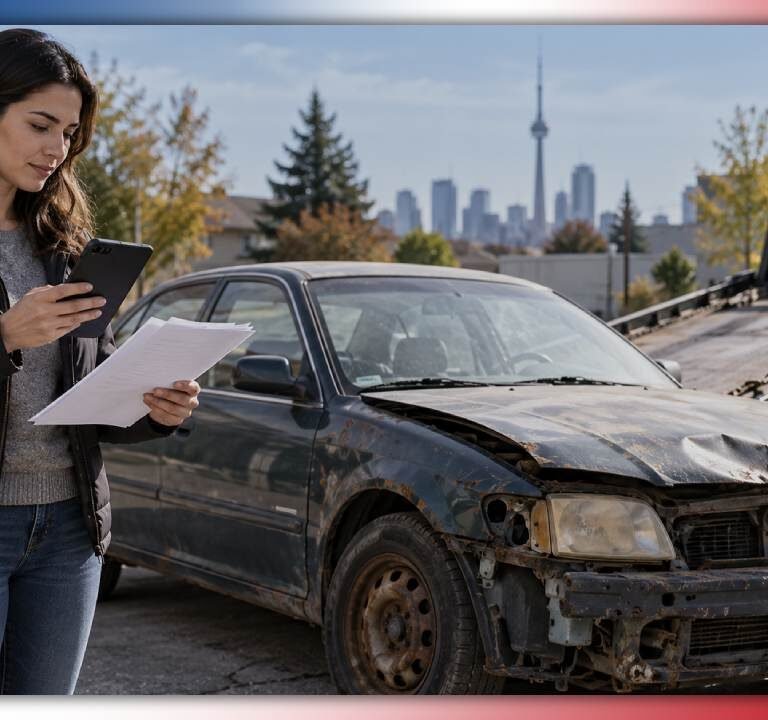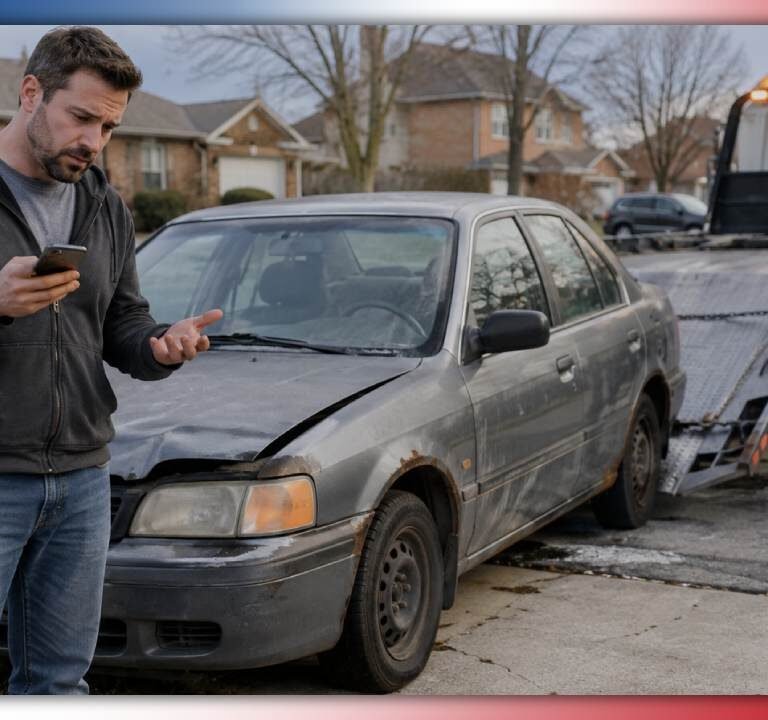
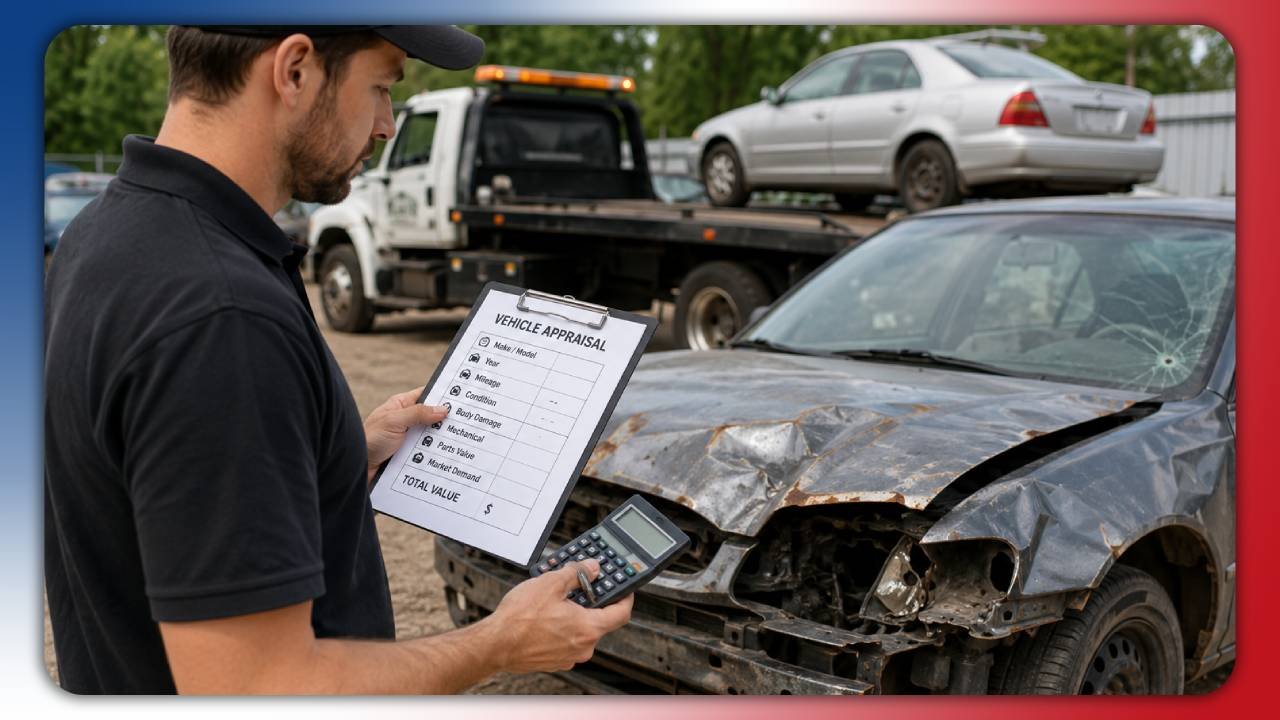
Junk car value determination combines 4 factors: scrap metal weight, parts demand, vehicle condition, and towing distance. Buyers compare your car’s raw scrap value against its parts value, then offer whichever number lands higher.
You can predict your payout before you make a single call. Scrap Cars 4 Cash and other Ontario buyers use the same core method on every vehicle they quote. Buyers do not use a secret formula, and the math behind your number follows a predictable order every time. This guide breaks down each step, so you know what shapes your offer before a buyer names one in 2026.
What Is Junk Car Value Determination in Ontario?
Junk car value determination is the process buyers use to turn your vehicle into a dollar figure. The buyer starts with scrap weight, then layers on parts value, condition, and location before naming a price. Ontario buyers apply this same 4-step method to every car, truck, and SUV they quote, regardless of the yard’s location.
A Toyota Corolla and a Ford F-150 rarely finish at the same number, even at similar mileage. The Corolla weighs less and holds fewer premium parts. The F-150 weighs more, carries a larger engine, and often keeps stronger drivetrain demand. Weight and demand pull these 2 vehicles toward different final prices, even when both arrive in similar condition.
Buyers also read your description before they ever see the car. Vague answers push offers toward scrap-only pricing, because uncertainty carries risk for the buyer. Clear answers about mileage, rust location, and starting behavior move the number up. A seller who explains exactly why a car stopped running receives a stronger offer. Vague phrases like “it doesn’t start” rarely help.
Buyers sort your description into 1 of 4 categories: roadworthy, parts vehicle, export-demand drivetrain, or pure scrap. That category, not scrap weight alone, decides the final offer. A car that lands in the parts-vehicle category can sell for several times its scrap-only price.
Understanding junk car value determination protects you from lowball offers. Sellers who know the 4-step method can compare offers accurately instead of guessing whether a number sounds fair. That knowledge also speeds up the call, since you can answer condition questions before the buyer even asks them.
How to Calculate Your Junk Car’s Scrap Metal Value
To calculate scrap metal value, multiply your weight in tonnes by the price per tonne for shredded steel. Ontario scrap steel trades between $150 and $270 per tonne (1,000 kg) in 2026, based on regional recycler rates. That price moves week to week, tied to demand from steel mills and export buyers.
Current Scrap Steel Prices in Ontario
A mid-size sedan weighing 1,360 kg (3,000 lbs) yields roughly 1.36 tonnes of recyclable steel. At $200 per tonne, that sedan’s scrap floor lands near $272. A full-size pickup truck weighing 2,270 kg (5,000 lbs) can clear $450 in scrap value alone, before parts get counted. These 2 examples show why heavier vehicles almost always start from a higher baseline.
How Vehicle Weight Affects Your Payout
To estimate your payout from weight alone, check your curb weight on the manufacturer’s specification sheet or door-jamb sticker. Heavier vehicles carry more recyclable steel, aluminum, and copper. 3 vehicle classes show the range. Compact cars sit near 1,100 kg (2,425 lbs) and mid-size sedans near 1,450 kg (3,200 lbs). Full-size SUVs reach 2,300 kg (5,070 lbs). Aluminum wheels, copper wiring, and stainless trim add extra weight-based value beyond the plain steel figure.
How Vehicle Condition Changes Junk Car Value Determination
Vehicle condition shifts your offer above or below the scrap floor. A running, complete vehicle typically brings 2 to 5 times more money than an identical non-running car. Buyers sort every vehicle into a runs-and-drives category or a scrap-only category within minutes. That sorting depends entirely on how you describe the car.
Running vs Non-Running Vehicles
To qualify as running, your vehicle must start under its own power. It must also drive onto the tow truck without a winch. A car that starts but stalls after 30 seconds still counts as non-running in most buyer assessments. Non-running vehicles are not worthless. The engine, transmission, and electronics still hold parts value even when the car cannot move. A seized engine still leaves a resellable transmission, axles, and body panels for the buyer to move.
Rust, Accident, and Flood Damage
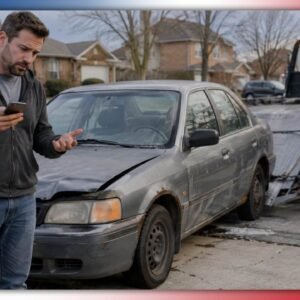
Rust location changes value more than rust itself. Surface rust on door panels and fenders rarely affects your offer. Frame rust destroys structural integrity and pushes buyers toward scrap-only pricing fast. Accident damage follows the same pattern. Bumper and fender damage stays repairable, while deployed airbags and frame damage signal parts-or-scrap territory. Flood damage corrodes wiring and electronics that would otherwise sell as working components. If your vehicle has been in a collision, our accident-damaged scrap cars page explains how buyers price write-offs across Ontario.
Why the Catalytic Converter Adds the Most Value
The catalytic converter (CC) adds more value per pound than any other single part on your car. It contains 3 precious metals: platinum, palladium, and rhodium. These metals sell by the gram on commodity markets. Even a small converter can add $100 to $500 to your offer. Larger trucks and SUVs often carry converters worth more than those found on compact sedans.
A missing catalytic converter drops your offer immediately. Buyers deduct the full replacement cost, which often exceeds what you would recover selling the part separately. Converter theft has climbed across Ontario in recent years, so buyers now ask directly whether yours is still attached. Keep the converter attached until pickup. Removing it yourself typically nets you less total money than leaving the car complete.
Some buyers also purchase converters separately from full vehicles, which can create confusion for sellers. Selling the converter alone almost always nets less than selling it inside a complete car. The buyer loses the rest of the vehicle’s scrap and parts value otherwise. A whole car, converter included, consistently outperforms a car plus a separately sold part.
How Make, Model, and Year Affect Parts Demand
Your vehicle’s make, model, and year decide how many buyers want its parts. Popular models like the Honda Civic, Toyota Corolla, and Ford F-150 hold active parts markets. Repair shops across Ontario stock replacement engines and transmissions for these 3 vehicles constantly.
Examples of High-Demand vs Low-Demand Models
A Honda Civic, Toyota Camry, or Ford F-150 rarely sits unsold on a parts shelf. Drivers across Ontario need doors, mirrors, and engines for these common models daily. A discontinued European sedan or a low-volume luxury coupe often falls back toward scrap-only pricing, even in excellent condition. Few local shops stock parts for these 2 vehicle types. Nobody shops for electronics that fit a car nobody else drives.
Age matters less than demand. A 15-year-old Civic can outprice a 5-year-old orphaned import when Civic parts stay active. High-mileage Toyota and Honda drivetrains often keep export value long after local resale stops making sense. That supports stronger offers past 200,000 km (124,000 miles).
Export demand adds another layer buyers weigh separately from local resale. Certain engines and transmissions ship overseas, where mechanics rebuild them for markets with fewer emissions restrictions. A drivetrain with no local buyer can still carry export value. That explains why 2 similar vehicles can land in different pricing categories.
How Title Status and Paperwork Affect Your Offer
Clean title status gives your buyer the widest resale options, which supports a stronger offer. A salvage or rebuilt title signals prior major damage. It narrows what the buyer can legally do with the vehicle afterward.
Ontario allows licensed recyclers to purchase vehicles without a title in specific situations. The process requires additional identification and paperwork. Missing paperwork slows the sale but rarely stops it outright. Bring your vehicle permit, driver’s license, and any lien release documents to speed up your pickup. Buyers sometimes ask for your vehicle identification number (VIN). This confirms your exact trim and checks recall history before your quote.
How Towing Distance Changes Your Final Price
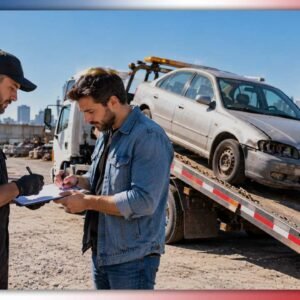
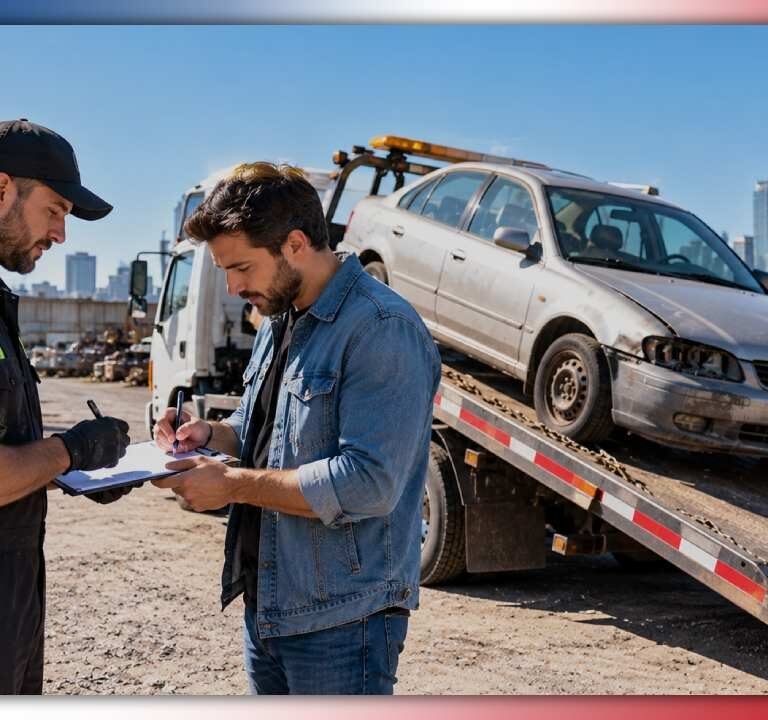
To reduce the effect of towing distance on your offer, choose a buyer with a yard close to your location. Towing costs money and time, and buyers factor that cost directly into your final number. A vehicle 15 minutes from the yard almost always nets more money than an identical car 1 hour away.
How to Minimize Towing Costs
Free towing offers absorb this cost upfront, so ask whether your quote already includes pickup before you accept it. Reputable Ontario buyers, including a scrap car removal service with local GTA yards, build free towing into every quote. They do not deduct it after pickup. A car buried behind other vehicles or stuck in a tight parking structure often costs more to recover. That can lower your final number before the metal gets weighed.
How Scrap Metal Market Prices Shift Your Offer
Scrap metal prices change weekly, tied to steel mill demand and global export activity. Prices published online go stale fast, since Ontario steel rates can shift by 10% or more within a single month. Spring and summer months often bring higher demand from construction activity, which can push scrap rates and your offer upward.
A quote from 3 months ago rarely matches today’s number, even for the identical vehicle. This is why 2 honest buyers can offer different amounts for the same car. Each buyer prices against a slightly different market moment. Calling for a fresh quote close to your planned pickup date protects you from outdated pricing.
Published price ranges online should guide expectations only, not replace an actual quote. Your specific vehicle, condition, and the market on the day you call decide the real number. A buyer who quotes instantly online still bases that figure on current rates rather than last month’s averages.
How to Get the Highest Offer for Your Junk Car
To get the highest offer for your junk car, gather your documents and describe the condition honestly. Compare 3 quotes before you accept one.
3 Steps Before You Call a Buyer
- Locate your vehicle permit and any lien documents first.
- Note your mileage, starting behavior, and any warning lights next.
- Photograph rust, dents, and missing parts from 4 angles last.
These 3 steps take under 20 minutes and consistently produce stronger, faster offers.
Mistakes That Lower Your Payout
- Vague descriptions push buyers toward conservative, scrap-first pricing every time.
- Removing the catalytic converter or battery before pickup strips out your car’s highest-value parts.
- Accepting the first offer without comparison leaves money on the table, since offers vary by hundreds of dollars between buyers.
- Letting a vehicle sit for years also invites hidden deterioration. Moisture damage and rodent damage both lower your eventual offer.
Quick Reference: Preparing Your Junk Car for Sale
The table below sums up the 5 preparation tasks that consistently produce stronger offers.
| Task | Timing | Method | Difficulty |
| Gather vehicle permit and ID | Before calling | Locate documents at home | Easy |
| Photograph the vehicle | Same day | 4 angles plus damage close-ups | Easy |
| Check starting behavior | Before calling | Turn key, note results | Easy |
| Compare 3 buyer quotes | 1-2 days | Phone or online quote forms | Moderate |
| Remove personal belongings | Before pickup | Clear trunk, glovebox, seats | Easy |
Junk Car Value Determination Myths You Should Ignore
Myth 1: a car that fails to start is worthless. A dead battery, a seized engine, and a blown head gasket all produce the same symptom on the phone. They lead to 3 different offers. The engine, transmission, and body panels of a non-running car often still carry strong parts value.
Myth 2: cleaning the car raises its scrap value. Detailing improves how a car looks, but it does not change the vehicle’s weight, drivetrain condition, or parts demand. Buyers price the metal and mechanical components, not the paint finish, so a wash rarely moves the final number.
Myth 3: every buyer uses the same formula. Two Ontario buyers can look at 1 identical vehicle and land on different offers. One may see scrap value only, while another sees export-demand drivetrain value. Comparing 3 quotes remains the most reliable way to find the strongest number for your specific vehicle.
Frequently Asked Questions
How much is my junk car worth in Ontario?
Most Ontario junk cars sell between $150 and $800. Heavier trucks and SUVs with strong parts demand can exceed $1,500, especially when the catalytic converter and drivetrain remain intact.
Do junk car buyers pay more for running vehicles?
Yes. Running vehicles typically bring 2 to 5 times more money than non-running vehicles. Buyers resell the engine and transmission as tested units.
Does a missing catalytic converter lower my offer?
Yes. A missing catalytic converter can cut $100 to $500 from your quote, since buyers deduct the full replacement cost.
Can I sell a junk car without a title in Ontario?
Yes, in specific situations. Licensed recyclers can purchase certain vehicles without a title, though the process requires extra identification and a completed ownership declaration.
Does rust always lower a junk car’s value?
No. Surface rust on body panels rarely changes your offer. Frame rust destroys structural integrity and pushes the vehicle toward scrap-only pricing.
Get Your Junk Car Value Determination Today
Junk car value determination comes down to 4 numbers: scrap weight, parts demand, condition, and distance. Add those together, and you know what your car is worth before a buyer names a figure. Keep the vehicle complete, gather your paperwork, and compare multiple quotes before you accept one. Buyers reward complete, honestly described vehicles with stronger offers every time. That pattern holds true across every make, model, and condition.
Ready for a real number instead of an estimate? Request a free cash for cars offer from Scrap Cars 4 Cash today. Get paid the same day your vehicle gets picked up.