Old Car Removal in Toronto, ON and the GTA
Remove an old, unwanted or non-running vehicle without paying for a separate tow. Share the vehicle details, receive a clear offer and choose a practical pickup time. Towing is included with accepted vehicles.
- Running and non-running old cars
- High-mileage, rusted and failed-safety vehicles
- Free towing with accepted pickups
- Toronto and GTA collection
Request an Old Car Quote
Send 5 details for a clear, no-obligation quote.
No obligation. Final terms depend on the vehicle and pickup details matching the information provided.
Included with accepted vehicles
Same-day may be available
Condition matters more than age
Book a suitable collection time
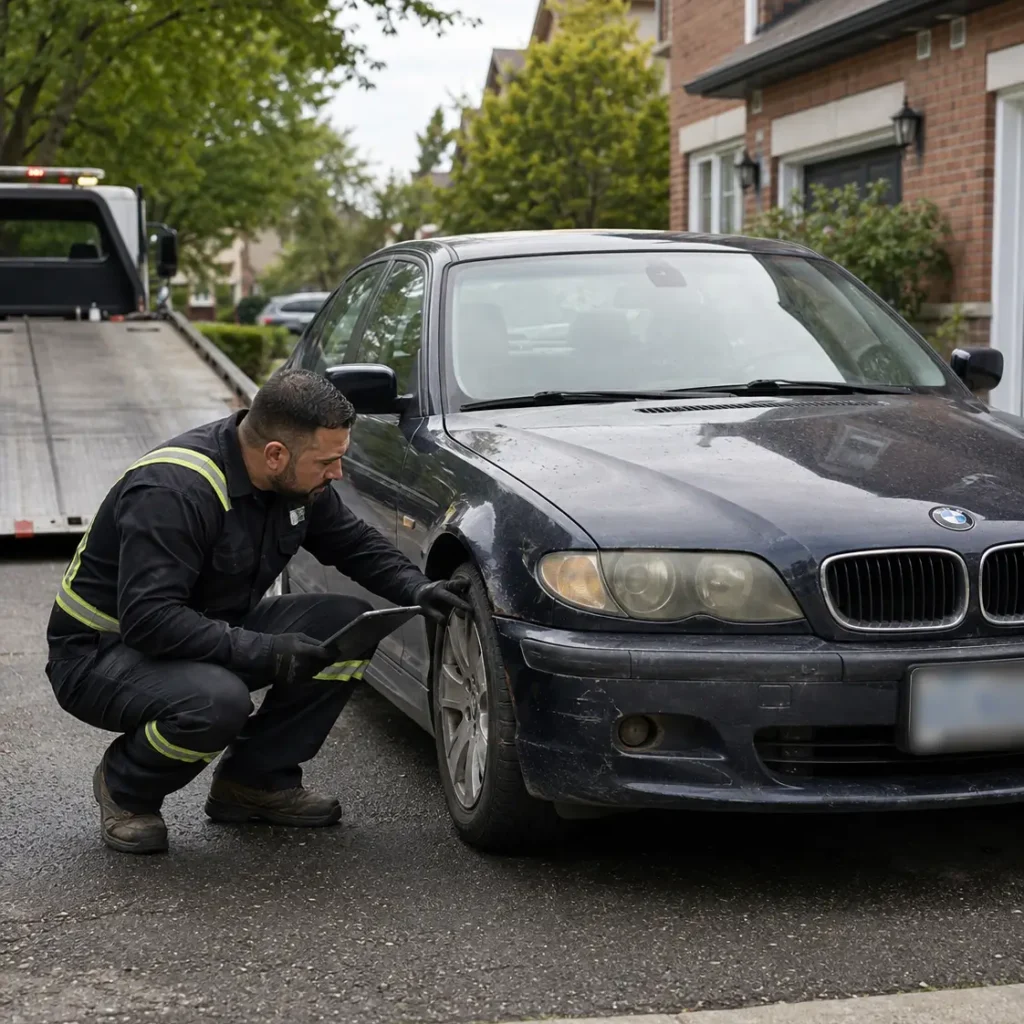
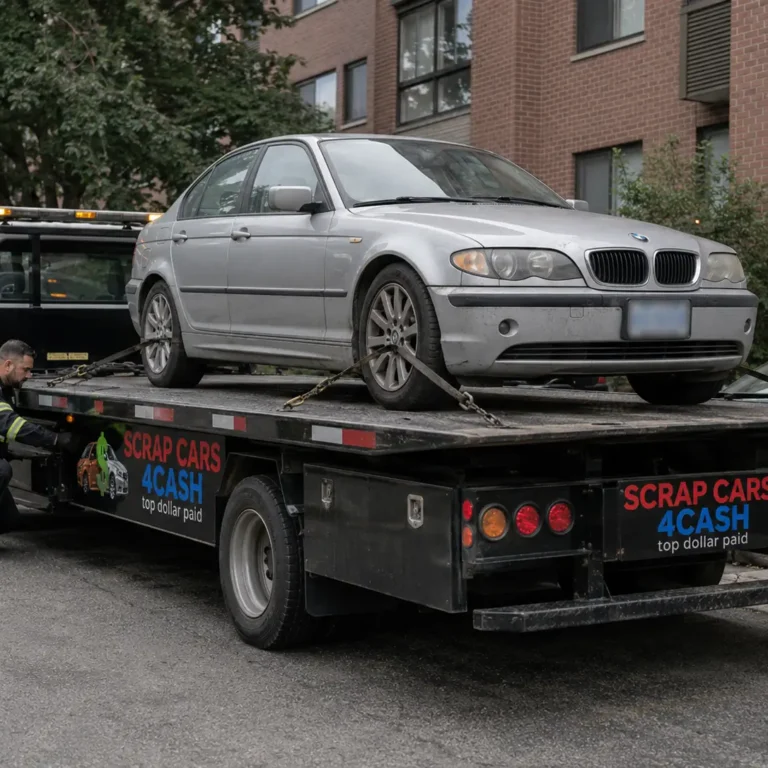
Remove an Old Car Without Repairing or Advertising It
Scrap Cars 4 Cash removes old cars across Toronto and the Greater Toronto Area (GTA), including unwanted, high-mileage, rusted, failed-safety and non-running vehicles.
Send the year, make, model, mileage, Vehicle Identification Number (VIN), condition and location. State whether the vehicle starts, rolls, steers, brakes and has keys. These details help produce a realistic quote and determine the right towing method.
You do not need to pay for repairs before requesting an offer. A vehicle with engine trouble, transmission failure, corrosion, electrical faults or a failed Safety Standards Certificate (SSC) inspection can still have reusable parts, resale potential or recycling value.
- Sell from a driveway, garage, workplace or repair shop.
- Avoid classified ads, repeated viewings and test drives.
- Receive a quote based on the actual vehicle details.
- Arrange towing after the documents and access are confirmed.
How Old Car Removal Works
Accurate details keep the quote and pickup simple.
1
Describe the Vehicle
Provide the year, make, model, mileage, condition, VIN and pickup location. Mention missing parts and access limits.
2
Review the Offer
The offer reflects the vehicle condition, usable parts, metal value, documents and collection requirements. Ask what is included before accepting.
3
Confirm the Pickup
Choose a time when the owner or authorized person can provide access, keys and the required transfer documents.
4
Verify and Remove
The driver confirms the vehicle details, completes the agreed handoff and loads the car with suitable towing equipment.
Old Cars We Remove
Age alone does not decide value. Condition, parts and demand matter.
High-Mileage Cars
Cars with 200,000 km, 300,000 km or more can still have usable assemblies and metal value.
Non-Running Vehicles
Engine failure, dead electrical systems, transmission faults and long-term storage do not automatically prevent pickup.
Rusted Cars
Heavy body corrosion, damaged rocker panels, rusted brake lines and structural deterioration require honest disclosure.
Failed-Safety Cars
Vehicles that need major work to pass a DriveON inspection may be more practical to sell directly.
Repair-Costly Cars
Blown head gaskets, failed transmissions, electrical faults and repeated breakdowns can exceed the car’s market value.
Unwanted Second Cars
Unused commuter cars, former student vehicles and surplus family cars can be removed from legal private parking.
Old Work Vehicles
Sedans, SUVs, minivans, pickups and light commercial vans are assessed by condition and completeness.
End-of-Life Vehicles
Vehicles no longer suitable for road use can be directed toward parts recovery, depollution and material recycling.
5 Signs It May Be Time to Remove an Old Car
Repair is not always the best use of money. Compare the next repair with the car’s realistic value and expected service life.
Repairs exceed the vehicle value
A transmission, engine or structural repair can cost more than the car is worth after the work.
Breakdowns keep returning
Repeated towing, diagnostics and small repairs increase total ownership cost.
Rust affects safety items
Corrosion near suspension mounts, brake lines, subframes or structural areas needs professional assessment.
The vehicle cannot pass inspection
List every item needed for an SSC, then compare the total with the car’s roadworthy market value.
The car no longer fits your needs
Insurance, parking, fuel and maintenance still cost money when the vehicle is rarely used.
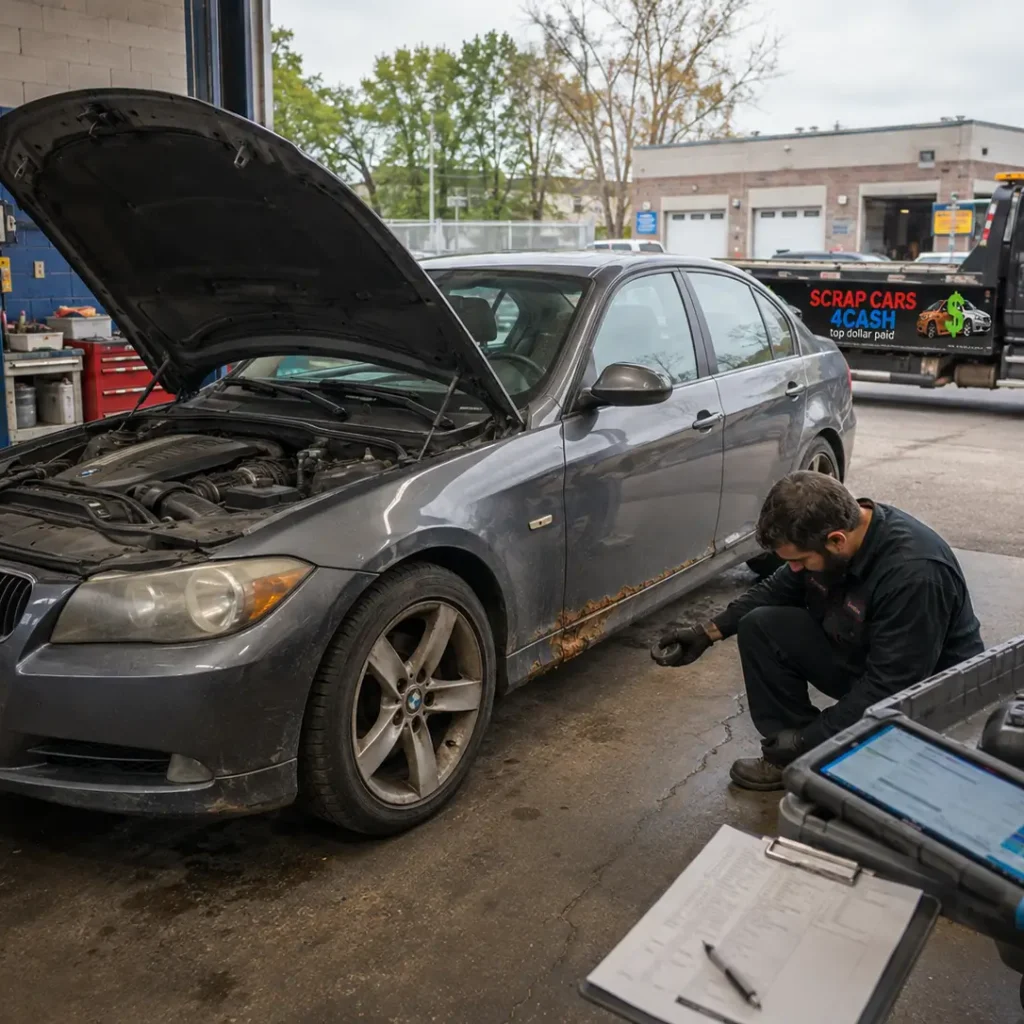
6 Factors That Affect an Old Car Offer
No single price applies to every old vehicle.
01
Year, Make and Model
Parts demand and vehicle popularity can affect the value more than age alone.
02
Mechanical Condition
A running engine, usable transmission and intact drivetrain can add value.
03
Body and Structural Condition
Rust, collision damage, missing panels and unsafe structure reduce reusable value.
04
Complete Parts
Wheels, battery, catalytic converter, electronics and interior components affect the assessment.
05
Documents and VIN
Clear ownership, matching VIN details and a legal transfer make collection possible.
06
Pickup Access
Locked wheels, underground garages, narrow lanes and blocked vehicles can require extra equipment and time.
Repair, Sell Privately or Use Old Car Removal?
Use the option that matches the vehicle’s condition and your available time.
Repair the Vehicle
- Best when the car is structurally sound.
- Requires a written repair estimate.
- May need an SSC before ownership transfer.
- Risk increases when faults are difficult to diagnose.
Sell It Privately
- Can suit a roadworthy or repairable vehicle.
- Requires advertising, calls and buyer meetings.
- Needs accurate condition disclosure.
- The seller must follow Ontario transfer requirements.
Trade It In
- Convenient when buying another vehicle.
- The dealer controls the appraisal.
- Very old or non-running cars may receive limited interest.
- The offer may be tied to a replacement purchase.
Direct Old Car Removal
- Fits unwanted, non-running and end-of-life vehicles.
- No public listing or test drive required.
- Towing is included with accepted pickups.
- Pickup can be arranged after ownership and access are confirmed.
Free Towing for Accepted Old Cars
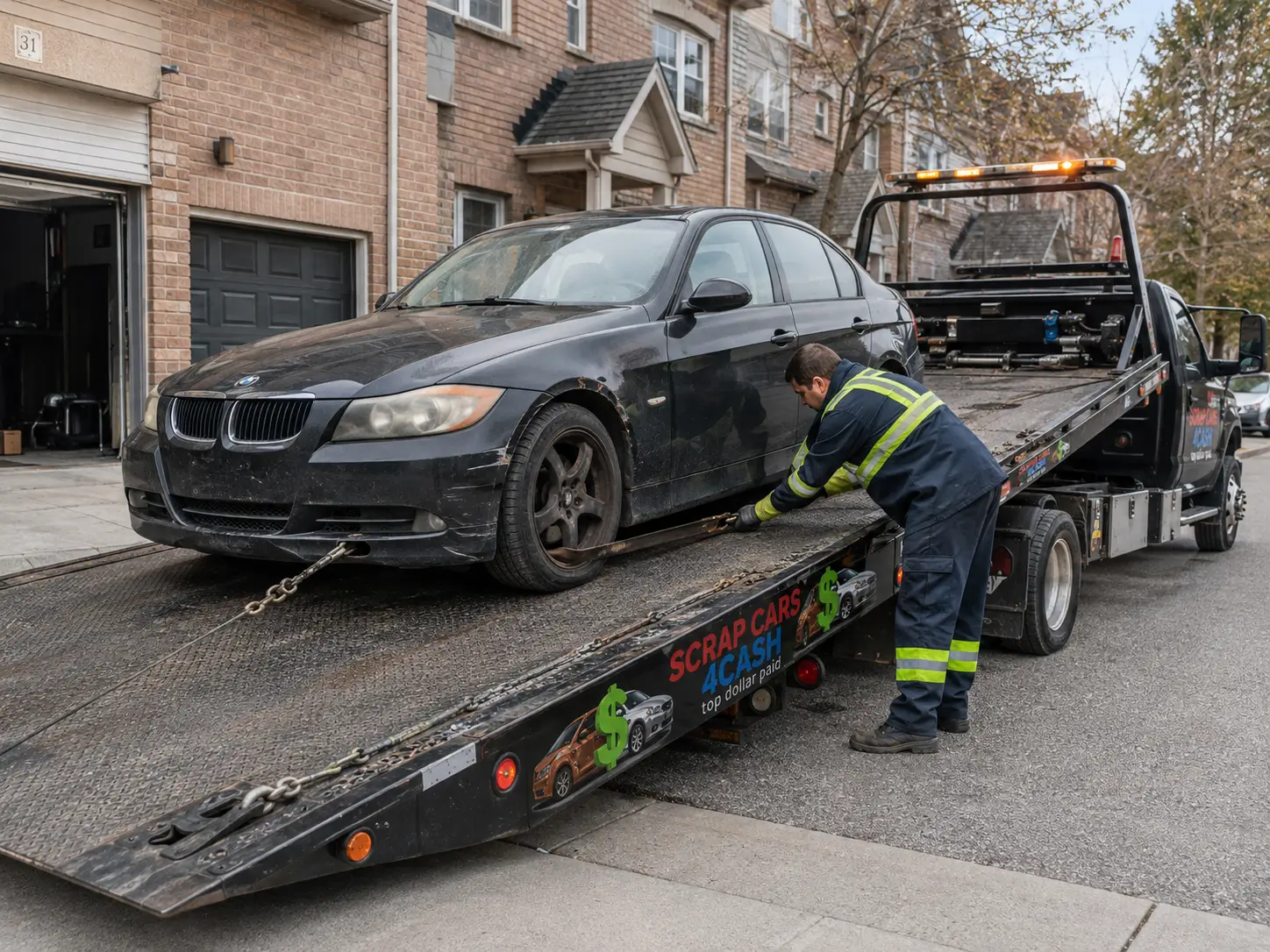
Do not try to drive an unsafe or unregistered car to a yard. The pickup team can plan a flatbed or wheel-lift collection after the vehicle condition and access are confirmed.
Provide enough space for the truck to approach and load. Move other vehicles, open gates and confirm building access before arrival. A standard flatbed needs more working space than a passenger car.
- Share whether the car rolls, steers and brakes.
- Report missing keys, locked steering or seized wheels.
- Give garage clearance in feet and metres.
- Confirm parking level, ramp angle and loading rules.
- Arrange written release for repair shops or storage facilities.
Private-property warning: The registered owner or a legally authorized party must approve the transfer. A landlord, neighbour or property manager cannot sell a vehicle solely because it is parked on the property.
Prepare the Vehicle Permit and Ownership Details
Verify the documents before the tow truck arrives. The VIN on the dashboard or door label must match the Ontario vehicle permit.
1
Vehicle permit
Prepare the original permit and complete the applicable vehicle-transfer section.
2
Photo identification
The seller’s identity and authority to transfer the vehicle must be clear.
3
Bill of sale
Record the buyer, seller, VIN, sale date and agreed amount in the transfer record.
4
Licence plates
Remove and keep the plates. Ontario plates stay with the plate holder, not the vehicle.
5
UVIP and lien check
A Used Vehicle Information Package (UVIP) can show vehicle status and registered liens. Ask ServiceOntario what applies to the transaction.
What an SSC Means
A Safety Standards Certificate confirms that a vehicle met Ontario’s minimum safety standards on the inspection date. The certificate is not a warranty.
A roadworthy private transfer may require an SSC. An old car sold for removal or end-of-life processing does not become roadworthy because ownership changed.
Use a registered DriveON Vehicle Inspection Centre when a safety inspection is required.
What Happens to an End-of-Life Vehicle?
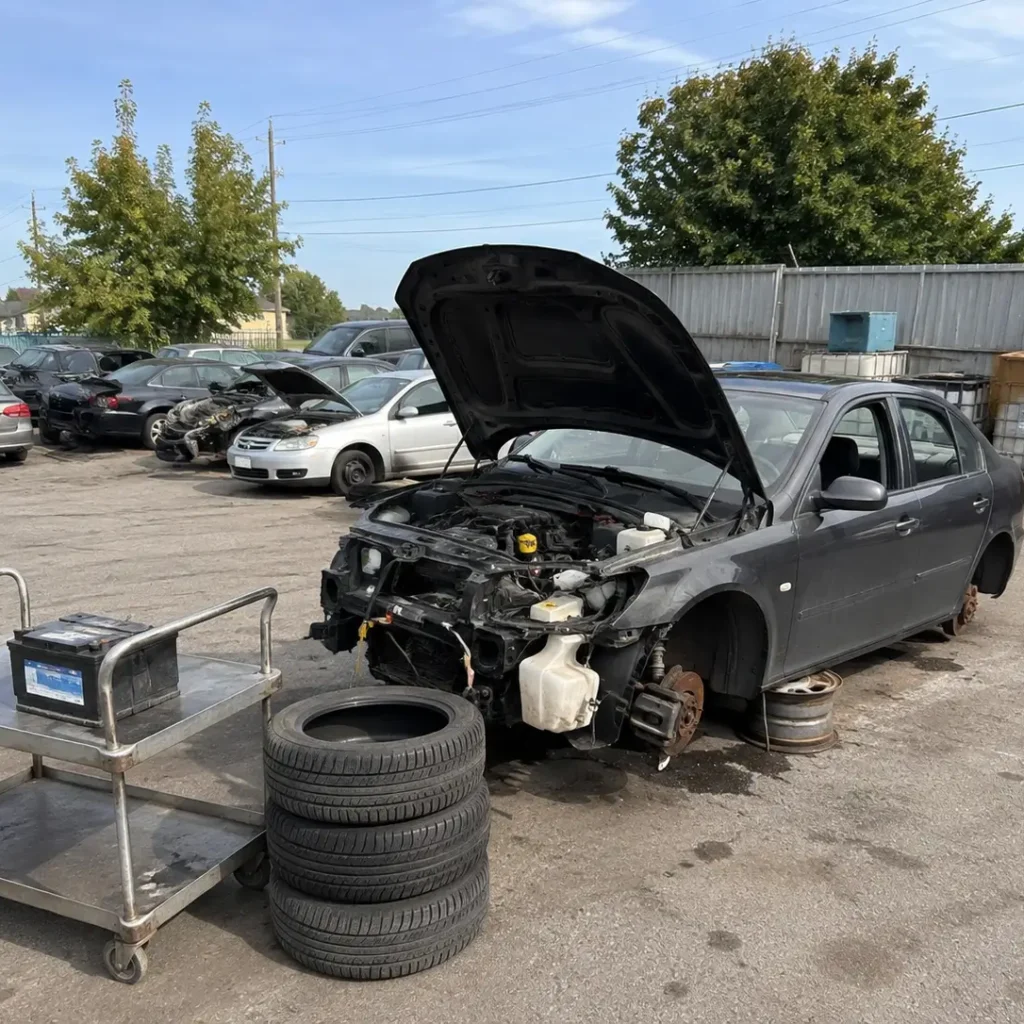
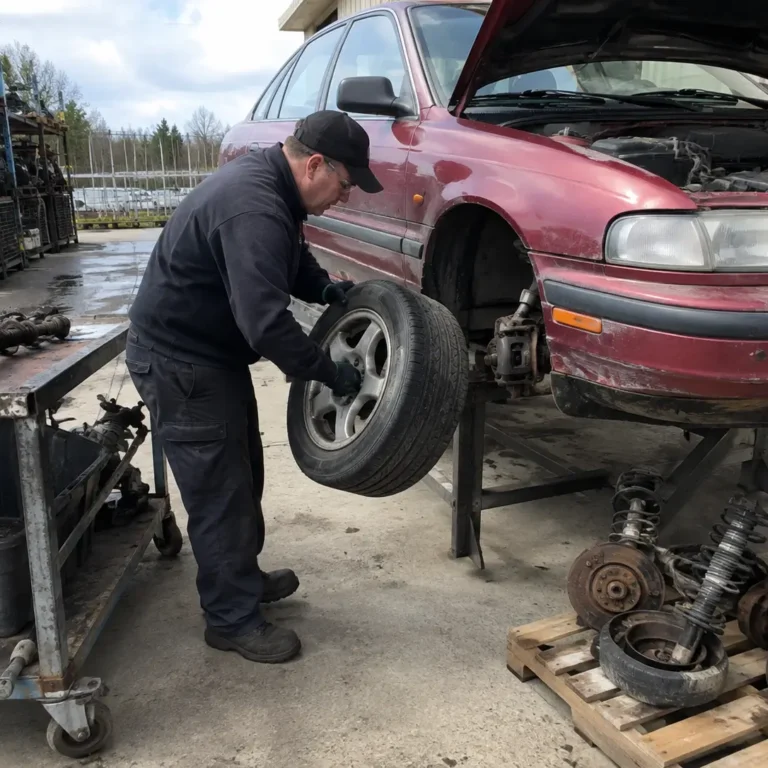
An end-of-life vehicle (ELV) is no longer being managed as an operable road vehicle. The next step depends on its condition, ownership status and remaining components.
Reusable parts may be inspected and recovered. Batteries, tires, refrigerants, fuel, oils and other fluids require controlled handling. Ferrous and non-ferrous metals can be separated for recycling after depollution and dismantling.
Ontario regulates sites that manage end-of-life vehicles. Ask where the vehicle is going and keep the sale or collection record for your files.
- Recover safe, reusable parts.
- Remove fluids and hazardous components.
- Separate tires, batteries and metals.
- Process the remaining vehicle shell.
Old Car Removal Across Toronto and the GTA
Pickup availability depends on the vehicle, exact location and access.
Choose the Service That Matches Your Vehicle
Cash for Cars
Sell a running, repairable or unwanted vehicle through a direct quote.
Junk Car Pickup
Arrange collection for a junk, incomplete or long-term non-running vehicle.
Scrap Car Removal
Remove an end-of-life vehicle for parts recovery and material recycling.
Accident-Damaged Cars
Sell a collision-damaged, total-loss or insurer write-off vehicle.
Towing Services
Request vehicle towing or roadside assistance when no vehicle sale is involved.
What Our Clients Say About Our Scrap Car Removal In The GTA ?
Our customers trust us for reliable, fast, and hassle-free scrap car removal. Here’s what they have to say
Posted on Google
 carol azille
Trustindex verifies that the original source of the review is Google.
Very fast service & professional staff. Gave very fair price.. excellent. Definitely recommend to all...Posted on Google S CAwesome guys very responsive super helpful no games... id recommend.Posted on Google
 PUNEET CHAUDHARYProfessional service provided. Gave fair price. Same day pickup. Recommend to all…Posted on Google
 Norberto PetrovicsExcellent services. Staff is very professional. They picked the car on same day. Gave very fair price..Posted on Google
 Beaver EditsGreat service, same day pickup guy paid a fair pricwPosted on Google
 Ahamed MufeezHelped me with my car for an accident. Prices were really fair and they were professional. Highly recommended.Posted on Google
 James LeeVery straightforward, quick, same day pickupPosted on Google
 INDERPAL SINGHVery professional team of Scrap cars 4 Cash. Sold my Honda Accord, they gave very good rate & picked the car same day. All experience was hassle free & very satisfactory. Definitely advise others as well if they need good cash for their old car..Posted on Google
 Jesleen SandhuGood service for our car which we scraped. Same day pickup & gave us very fair price.. overall hassle free experience. Recommends to all..Verified by TrustindexTrustindex verified badge is the Universal Symbol of Trust. Only the greatest companies can get the verified badge who has a review score above 4.5, based on customer reviews over the past 12 months. Read more
Questions About Removing an Old Vehicle
Do you remove old cars anywhere in Toronto?
Is old car pickup free?
Can I get cash for an old car that still runs?
Do you take old cars that do not run?
What documents are needed for old car removal in Ontario?
Can you remove an old car without ownership papers?
How is an old car valued?
Should I repair my old car or remove it?
Can you collect an old car from underground parking?
What happens to an old car after pickup?
Request an Old Car Removal Quote
Call with the year, make, model, condition and pickup city. Mention access limits before the truck is dispatched.