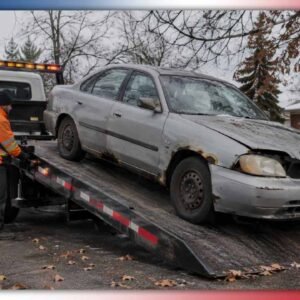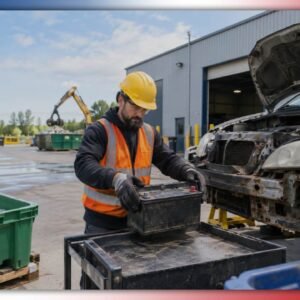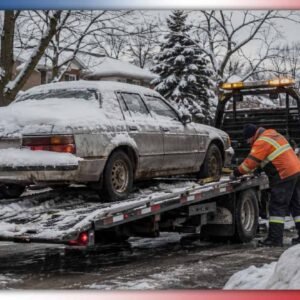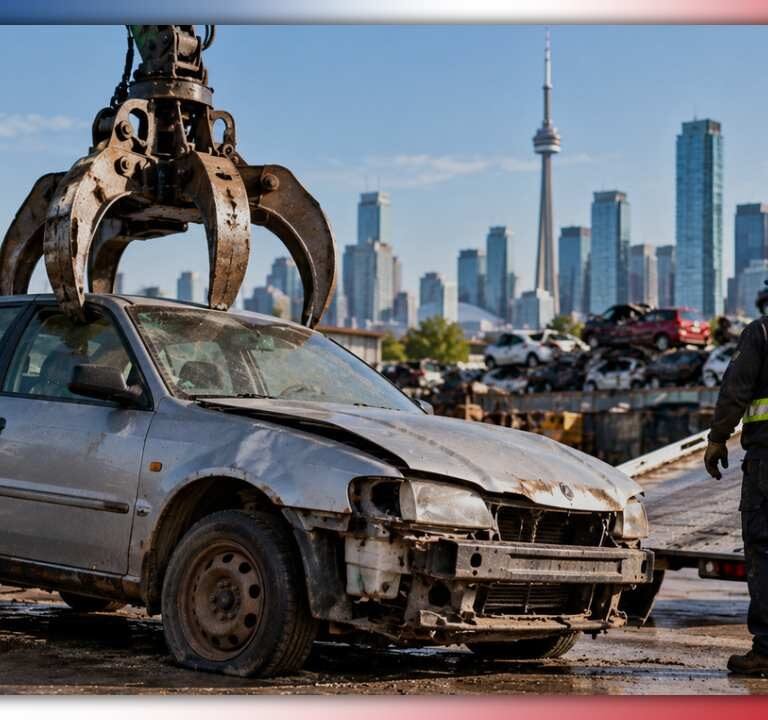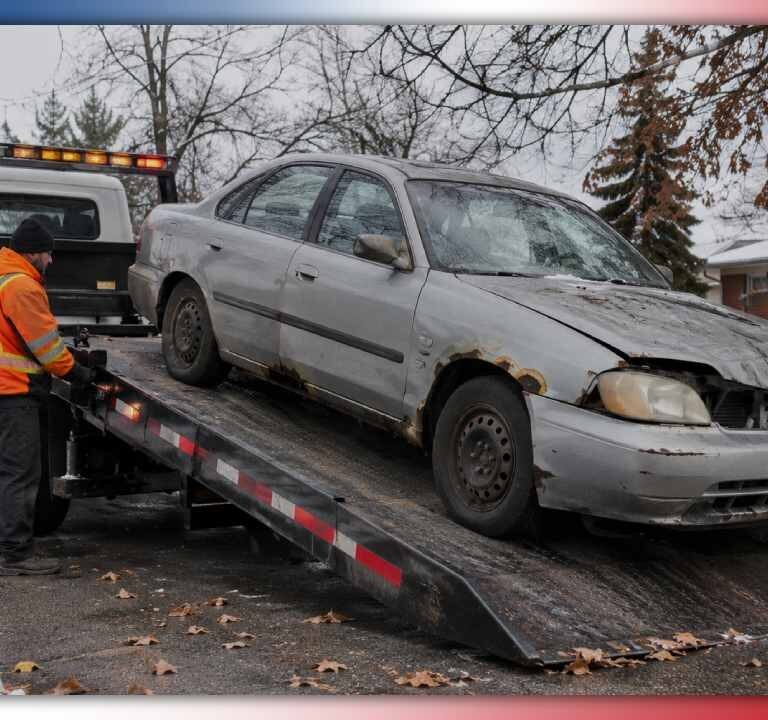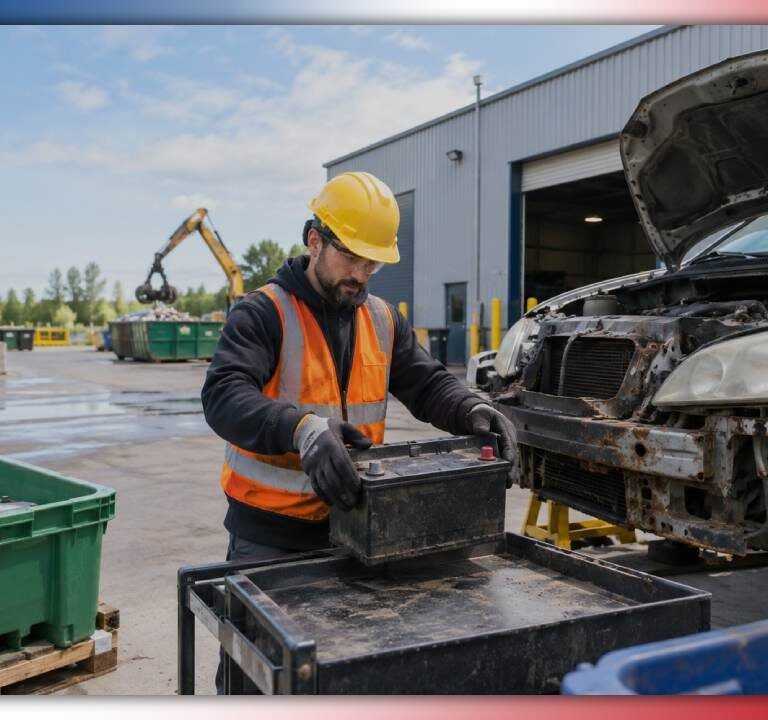
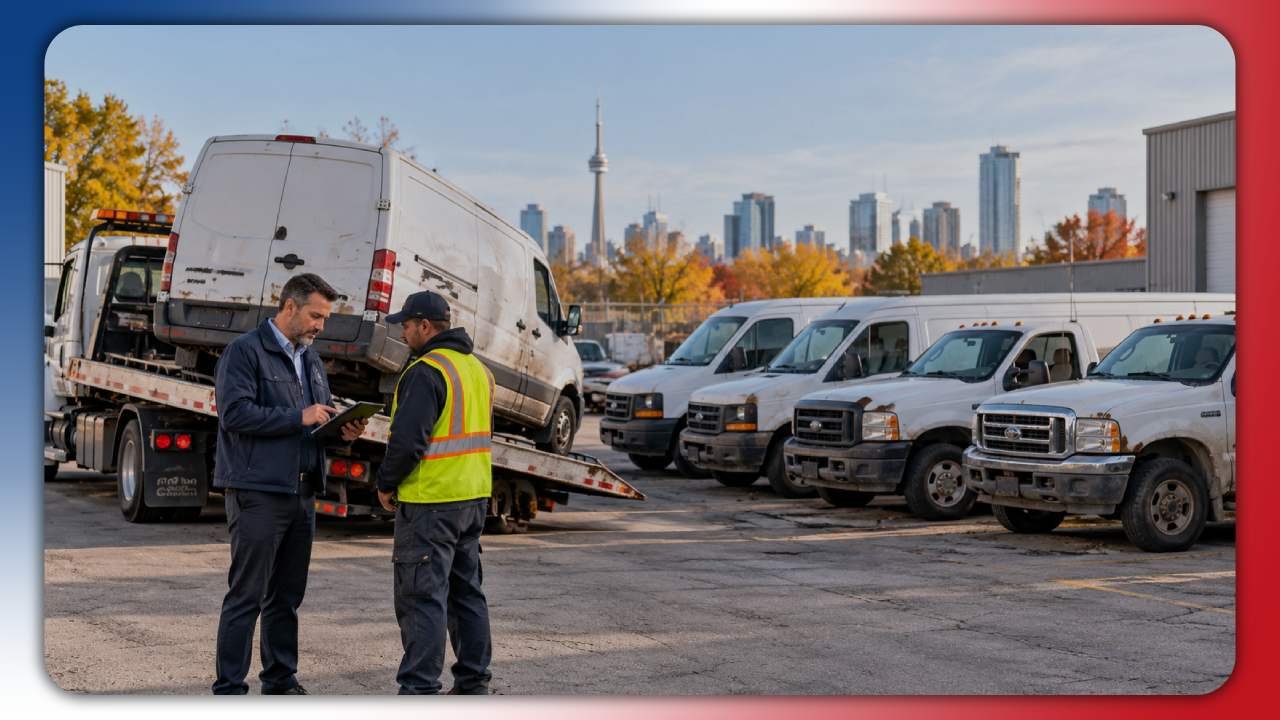
Commercial fleet junk car removal Ontario helps businesses retire unwanted cars, vans and light-duty trucks through coordinated collection. You can remove 2 or more vehicles with a single inventory, a clear pickup schedule and individual disposal records.
Start by identifying each vehicle, confirming ownership and requesting a condition-based fleet assessment. Scrap Cars 4 Cash coordinates Toronto and Greater Toronto Area (GTA) business pickups, subject to vehicle and site review.
Commercial Fleet Junk Car Removal Ontario for Business Vehicles
Commercial fleet junk car removal Ontario serves employers replacing high-mileage or unusable vehicles. A fleet project differs from a single-car sale because your team must track each asset individually.
Your list can cover 3 delivery sedans, 4 service vans and 2 damaged pickups. A consolidated request helps the buyer review the complete project without hiding important differences between vehicles.
Fleet disposal works for landscaping companies, delivery businesses, property managers, dealerships and contractors. Each organization needs an approved release process and a reliable record of collection.
Your fleet manager should appoint one coordinator who controls vehicle approvals. The coordinator can update accounting, dispatch and insurance teams after each pickup.
A fleet removal agreement should identify the buyer, seller, registered owner and designated pickup contacts. Request written confirmation of the accepted vehicles before authorizing loading.
Vehicles That Qualify for Commercial Fleet Disposal
Suitable vehicles include older cars, cargo vans, sport utility vehicles (SUVs), pickup trucks and light-duty work vehicles. The buyer must assess each vehicle’s dimensions, condition and towing requirements.
Company Cars and Delivery Vehicles
Company sedans and delivery hatchbacks often reach retirement after collisions, repeated breakdowns or high repair estimates. Provide their years, makes, models and odometer readings.
Work vans deserve separate inspection because cargo partitions, shelving and ladder racks affect the pickup assessment. Decide whether your company wants to keep those accessories.
Businesses handling older cargo vehicles can compare the commercial van removal options provided on the site. The fleet coordinator should identify the vehicle type before requesting equipment.
Review commercial van removal options when planning removal for company-owned vehicles.
Damaged, Non-Running and Electrified Units
A vehicle does not need to run before a buyer assesses a scrap fleet. Report seized brakes, missing keys, flat tyres, collision damage and detached wheels.
Tell the dispatch team when a vehicle cannot roll or steer. The recovery operator can assess whether winching or a flatbed truck suits the job.
Electric vehicles (EVs) and hybrids need a separate safety review. Disclose battery damage, water exposure and warning indicators before arranging transportation.
Do not disconnect high-voltage components or cut orange cables. Ask trained specialists to evaluate damaged traction batteries and appropriate handling procedures.
How to Build a Fleet Disposal Inventory
To build a fleet disposal inventory, record every unit separately before requesting quotes. A complete list reduces pickup confusion and strengthens your asset-disposal records.
Create a spreadsheet with 8 core fields: unit ID, vehicle identification number (VIN), year, make, model, condition, location and ownership status.
Add photos showing the front, rear, cabin and visible damage. Photographs help the buyer identify missing parts and assess tow-truck access before dispatch.
Document Identification and Mechanical Condition
Check the VIN against the vehicle portion of the permit. Never estimate a VIN from an older service record or a partial photograph.
Record whether the engine starts, transmission shifts and wheels turn. List missing components such as the battery, engine, wheels and catalytic converter.
Mark each asset as running, non-running or incomplete. Use the same condition labels across your inventory to support consistent offers and transport plans.
Flag equipment beyond normal passenger dimensions. For example, provide a truck width of 7 feet (2.13 m) and height of 8 feet (2.44 m).
Confirm Business Ownership and Release Authority
Your company must identify the legal owner before releasing each vehicle. Check whether the permit lists the business, a lessor or another corporate entity.
Ask finance to confirm outstanding liens, lease obligations and lender releases. Obtain written authority before selling leased or financed equipment.
Use an internal approval record showing the vehicle ID and authorized employee. The driver collecting the vehicle should know whom to contact at the property.
Company-owned vehicles sometimes involve a registrant identification number (RIN). ServiceOntario provides the relevant processes for business vehicle registration and authorized transactions.
How to Arrange Bulk Vehicle Pickup Across Ontario
To arrange bulk vehicle pickup across Ontario, send a complete fleet list and site details to a buyer serving your locations. Confirm coverage before describing a pickup as province-wide.
Scrap Cars 4 Cash advertises Toronto and GTA coordination. Its coverage pages identify locations such as Mississauga, Brampton, Vaughan and Scarborough, subject to dispatch confirmation.
Group vehicles by address and desired removal date. A 10-unit fleet spread across 3 depots needs a different plan from 10 vehicles at one parking lot.
Plan Staged Collections and Site Access
Book staged collections to keep operations running while recovery trucks work. Schedule retired units before active delivery vehicles or employee parking periods.
Send a site plan that identifies entrances, loading bays, keyholders and restricted areas. Specify gate operating hours and local parking rules.
Record access measurements using both systems. A gate measuring 10 feet (3.05 m) wide needs equipment clearance confirmation before dispatch.
Describe garage ceilings, steep ramps and damaged pavement. A dispatcher should confirm equipment suitability instead of assuming every tow truck can enter.
Prepare Vehicles Before the Tow Truck Arrives
Collect keys, remove licence plates and clear company property. The responsible employee should confirm each unit number immediately before loading.
Remove loose tools, fuel cards, toll devices, branded paperwork and employee possessions. Keep only vehicle items that the sale agreement specifically includes.
Avoid operating an unsafe vehicle solely to move the vehicle closer to the gate. Ask the recovery operator to assess movement and loading conditions.
Capture a departure photograph and record the pickup time. The pickup record should match the unit ID and VIN in your inventory.
Commercial Fleet Junk Car Removal Ontario Pricing Factors
Commercial fleet junk car removal Ontario quotes depend on vehicle details rather than a universal fleet price. Obtain a written offer for each vehicle before approving collection.
Buyers assess condition, recoverable parts, current metal demand and collection complexity. A complete working van and an incomplete collision-damaged sedan produce different valuations.
Describe missing wheels, damaged drivetrains and catalytic converter status honestly. Unexpected problems at pickup can change an assessment based on inaccurate details.
A single coordinated route can simplify scheduling, but do not assume automatic bulk discounts or guaranteed minimum prices. Ask for the total agreed payment and any exceptions.
The Scrap Cars 4 Cash fleet service states that towing accompanies an accepted purchase after access and equipment review. Confirm the scope in writing for your specific job.
Separate a 9-vehicle project into unit valuations rather than accepting one unexplained total. Your accounting team can compare asset proceeds against disposal records later.
Consider usable accessories before accepting the sale. Reusable shelving, lift gates and specialist fittings can have separate business value outside a scrap quote.
For larger light-duty assets, review SUV and truck removal requirements before describing the unit to the buyer.
Review SUV and truck removal when planning removal for company-owned vehicles.
Ontario Ownership Documents and Legal Responsibilities
Ontario fleet sellers need accurate ownership and transaction records. Keep licence plates and the plate portion of the permit when disposing of company vehicles.
Prepare the vehicle portion of the permit and a bill of sale identifying both parties. Confirm the VIN, date, agreed payment and authorized signature.
Ontario provides rules for used vehicle transfers, including the Used Vehicle Information Package (UVIP). A wrecking or scrap transaction can involve exemptions; verify the applicable transaction before purchasing paperwork.
Check the province’s current guidance rather than assuming ordinary private-sale requirements apply identically to every dismantling transaction. Ask ServiceOntario about unusual ownership arrangements.
Ontario also allows an owner to change a vehicle’s status to sold at a ServiceOntario centre. Keep evidence identifying the buyer and transfer date.
Finance departments should retain proof of lien discharge for financed units. A scrap buyer cannot independently cancel a registered lender’s rights.
Your representative should not sign blank transfer forms. Complete the buyer identity, vehicle identification and sale details before releasing the vehicle.
For heavy diesel commercial vehicles, different emission and transfer requirements can apply. Check weight and vehicle classification before extending a light-duty fleet plan.
Protecting Fleet Data and Company Property
Retired fleet vehicles can retain sensitive information through telematics, navigation and company documents. Remove business data before handover, then record completion.
Delete saved navigation addresses, paired phones and driver profiles from accessible infotainment systems. Follow the vehicle manufacturer’s deletion guidance where available.
Retrieve dash cameras, tracking devices, electronic toll tags and removable storage. Ask your information technology team to deactivate vehicle management accounts.
Remove magnetic signs and detachable company branding when practical. Confirm how you will handle permanent decals before the vehicle leaves your property.
Inventory removable equipment such as ladders, toolboxes, cargo scanners and emergency supplies. Ask the assigned driver to sign an internal equipment-return checklist.
Photograph the cleared interior after an employee inspection. The photograph provides a timestamped reference if an employee reports missing property later.
Do not attempt unsafe battery disassembly to erase vehicle data. Treat damaged high-voltage equipment as a specialist task.
Fleet Removal Tasks and Pickup Schedule
A documented schedule reduces avoidable delays during commercial vehicle collections. Use the following quick-reference table as a planning estimate, not a provider promise.
| Task | Typical planning time | Method | Difficulty |
| Build unit inventory | 1–3 business days | Fleet spreadsheet and photographs | Easy |
| Check ownership and liens | 1–5 business days | Permit, lender and business records | Medium |
| Confirm offers and equipment | 1–3 business days | Written review with buyer | Medium |
| Prepare access and keys | 1–2 business days | Site walk and key register | Easy |
| Complete collection records | Pickup day | VIN and receipt reconciliation | Medium |
Timelines are illustrative because fleet size, ownership complications and truck availability differ. Confirm agreed pickup dates directly with the service provider.
Allocate a separate time slot for properties with controlled gates or underground parking. A tow operator should know the exact clearance before arrival.
Assign one employee to sign release forms and one to update the asset list. Define responsibility before the first truck reaches the site.
Choosing a Reliable Fleet Vehicle Removal Provider
Select a fleet buyer that explains accepted vehicle classes, service geography and written documentation. Ask how each vehicle gets tracked from pickup to completion.
Check the company’s business identity and ask about applicable permissions for its activities. Confirm the recycling destination and the process for fluids and batteries.
An experienced provider should request the VIN, vehicle condition and access details. Treat a guaranteed final offer without assessment as a reason to request clarification.
Ask whether the buyer uses one point of contact for multiple locations. Confirm how dispatch updates will reach your fleet coordinator during a staged collection.
Request a pickup receipt identifying every VIN and payment allocation. Business audits benefit from a complete trail connecting vehicles to accepted offers.
Compare the buyer’s disclosed service area with your depots. A Toronto-based service must separately confirm jobs outside its ordinary pickup footprint.
Review commercial fleet removal service details for fleet lists, staged scheduling and Toronto-area support. Submit your vehicle count before expecting a pickup date.
Completing Fleet Disposal and Accounting Records
Complete disposal by matching every sold unit to a signed transfer and payment record. Reconcile each VIN before closing your project.
Record the sale date, payment amount, buyer details and approved disposal reason. Update fixed-asset schedules to show the removal of retired equipment.
Ask accounting to determine the correct treatment of proceeds, depreciation and any applicable taxes. Tax reporting depends on the company and transaction facts.
Notify your insurer after the vehicle leaves company control. Confirm cancellation timing and record the policy change alongside the disposal documents.
Check telematics accounts and recurring vehicle subscriptions for charges after disposal. Fleet maintenance software and toll accounts sometimes retain retired vehicle entries.
Store final photographs, invoices and signed receipts under the fleet unit ID. Give your finance and operations teams access through approved company systems.
Reconcile partial pickups on the same day. Keep a unit at the yard open until a completed receipt supports removal.
Use a weekly audit during an extended disposal programme. Check the approved vehicle count, completed pickups, missing documentation and outstanding payments every Friday.
Set clear exceptions for 3 common problems: a VIN mismatch, an unavailable key and an unresolved finance claim. Stop the affected vehicle transfer while the coordinator investigates.
Keep the rejected unit on your active inventory until the issue clears. Allow other approved vehicles to proceed without weakening ownership controls.
Businesses with vehicles in Toronto, Brampton and Mississauga should compare route availability rather than assuming identical service windows. Ask for separate arrival ranges per depot.
Use separate sign-off fields for vehicle release and payment verification. Your records will show when operations and finance approved the completed transfer.
Frequently Asked Questions
Can a company remove 2 or more scrap vehicles together?
Yes. Scrap Cars 4 Cash describes fleet projects involving 2 or more vehicles. Share one detailed vehicle list for assessment.
Do non-running work vans qualify for fleet removal?
Yes. Non-running vans can receive an assessment. Disclose wheel condition, missing keys and pickup restrictions first.
Is towing automatically free for every commercial fleet?
No. The website includes towing for accepted purchases after you confirm access and equipment. Request written terms for your project.
Can you sell a leased company truck without authorization?
No. Obtain the lessor’s written approval or discharge before arranging an ownership transfer.
Can a provider collect vehicles from different GTA depots?
Yes, subject to confirmation. Send separate addresses, VIN lists and access notes. The provider can assess staged pickup routes.
Book a Business Fleet Assessment
Commercial fleet junk car removal Ontario works best with organized vehicle details, clear ownership records and confirmed dispatch conditions. Request a written pickup plan through the dedicated service page. Review commercial fleet removal service when planning removal for company-owned vehicles.