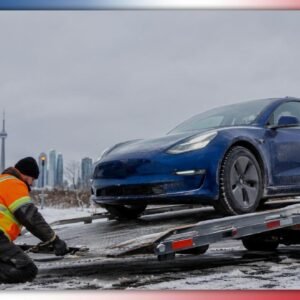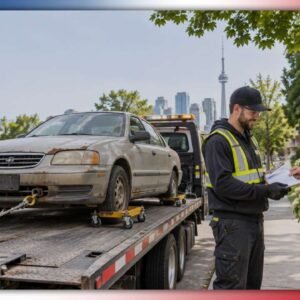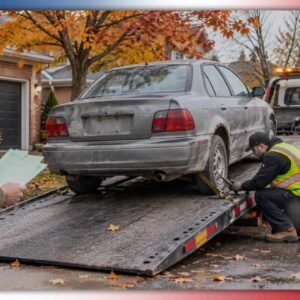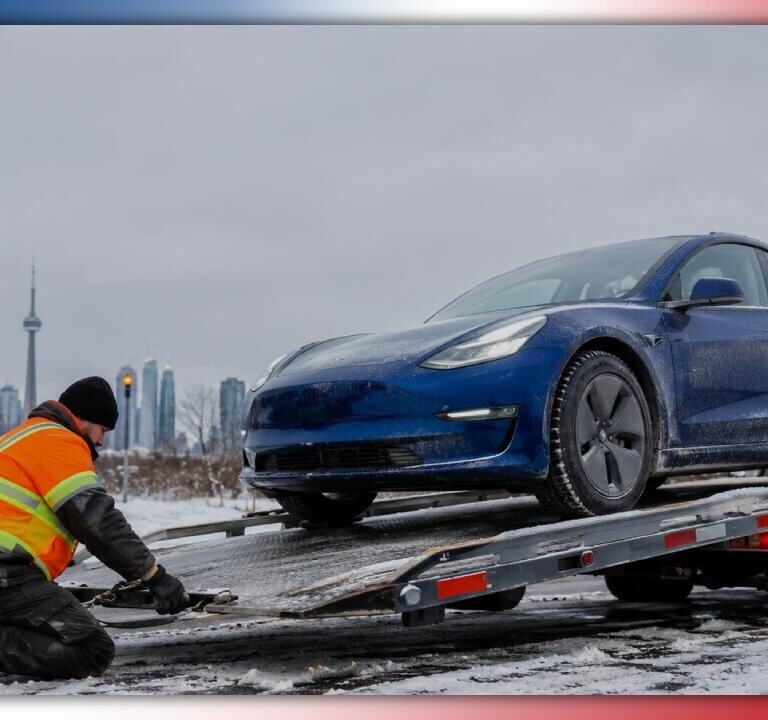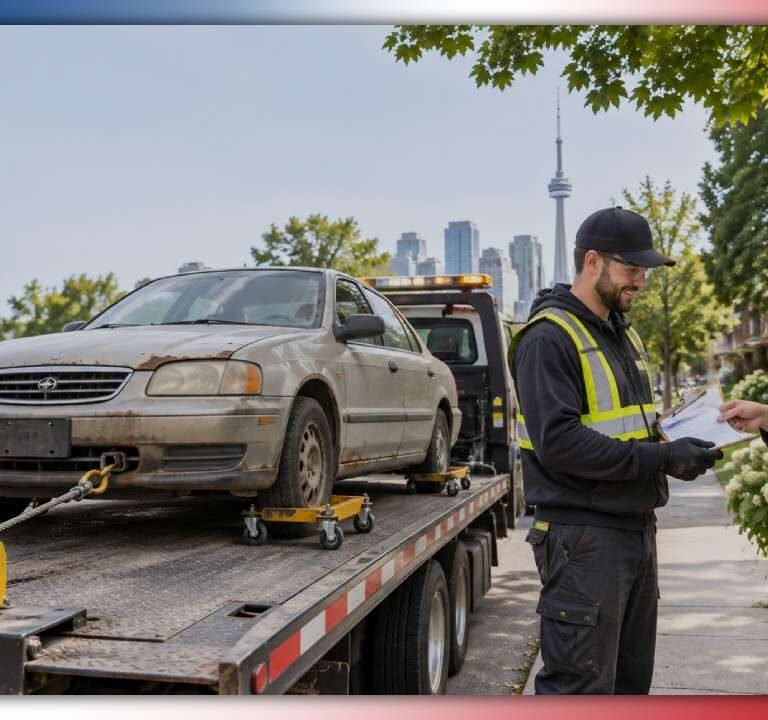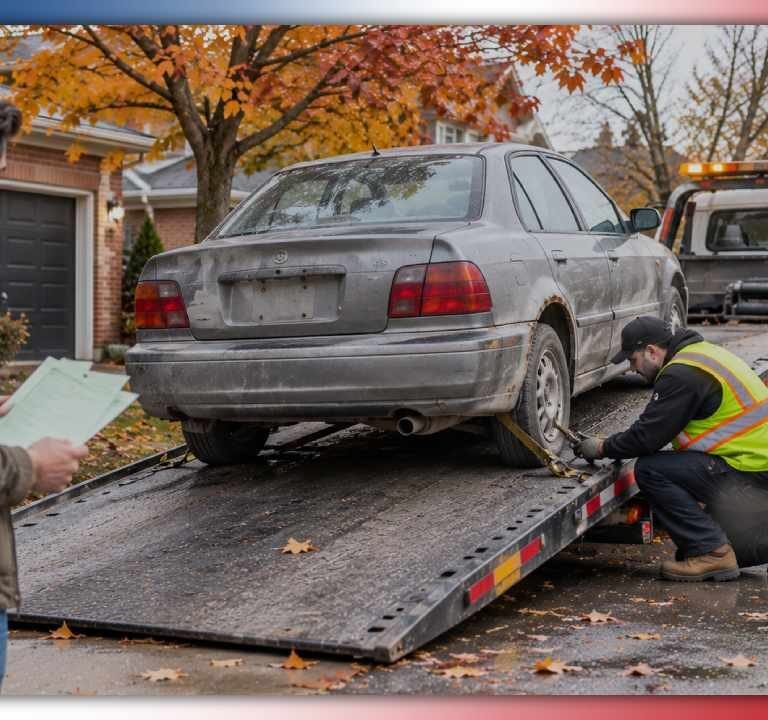
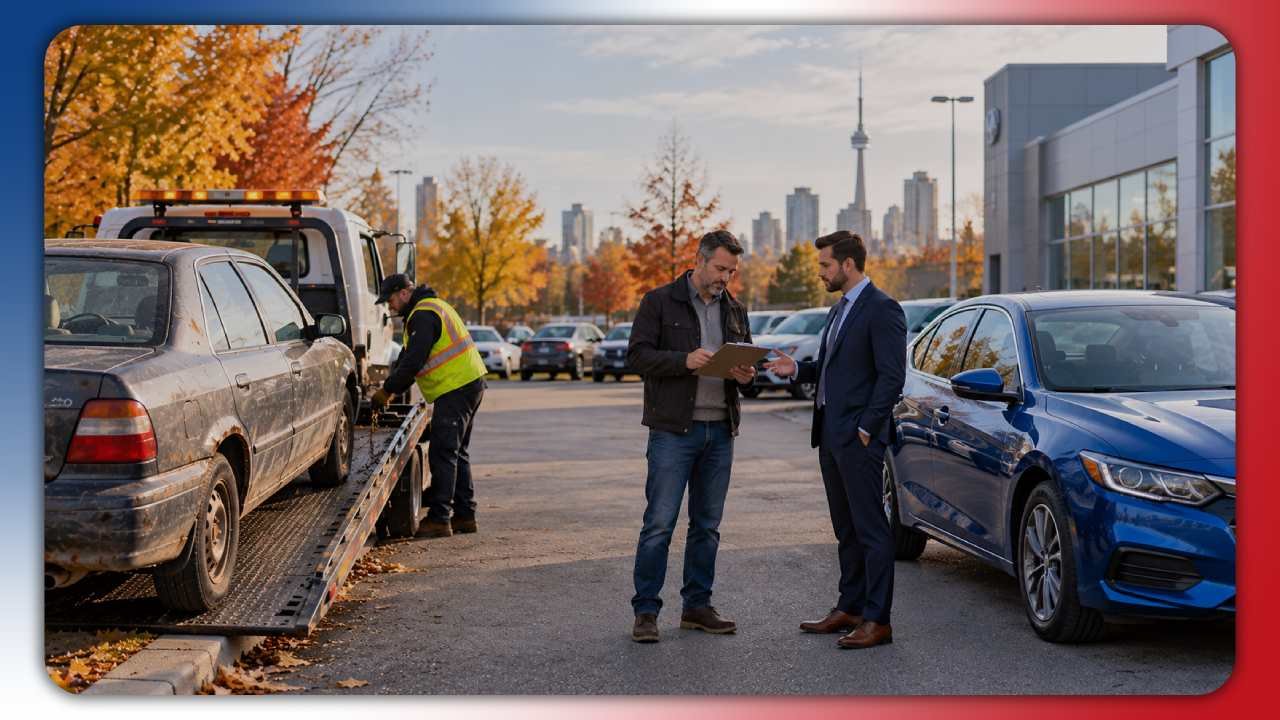
For scrap car vs trade-in Ontario decisions, compare the dealer’s tax-adjusted offer with a recycler’s final cash payment. A running, roadworthy car often earns more through trade-in; a broken, unwanted car often suits direct scrap removal.
The right answer depends on condition, the replacement purchase, financing, and towing costs. You should compare written offers rather than assume either buyer pays more. Ontario applies a 13% Harmonized Sales Tax (HST) to most dealer vehicle purchases. An eligible trade-in reduces the purchase price subject to HST.
Scrap Car vs Trade-In Ontario: The Real Financial Difference
A trade-in gives you credit toward another vehicle. A scrap buyer pays you directly for an unwanted vehicle. Count the trade-in’s tax savings before comparing totals.
Dealer Credit and HST Savings
For an eligible trade-in, calculate the dealer credit plus 13% of that credit. A $2,000 trade-in therefore creates a $260 tax reduction. The combined potential benefit reaches $2,260 when you complete the qualifying purchase.
The tax saving is not cash a dealership hands you. The saving reduces the tax you pay on the replacement vehicle. Ask the dealer to show the trade-in credit and HST calculation separately.
Direct Cash and Collection Costs
A scrap buyer offers cash based on the vehicle and collection circumstances. A direct sale does not reduce HST on a separate dealer purchase. Compare cash received after every collection cost.
Scrap Cars 4 Cash advertises towing with accepted vehicle purchases. Confirm the final amount and collection conditions before accepting a quote. An unusually high verbal figure gives you little protection without written details.
Scrap Car vs Trade-In Ontario for Running Vehicles
A clean, running vehicle usually deserves a dealer appraisal before you accept a recycling offer. Dealers value resale potential, demand, mileage, and repairs. Recyclers examine metal, working components, and pickup logistics.
Roadworthy Cars With Resale Demand
A reliable 2016 Toyota Corolla with clean ownership has a different buyer pool than a failed-engine sedan. Obtain a dealer appraisal, a direct buyer offer, and a private-sale estimate. Keep the figures dated.
Ask the dealer about tire condition, warning lights, accident history, and recent repairs. These factors change reconditioning costs. A second dealership appraisal also helps you spot a weak first offer.
High-Mileage Cars With Major Faults
A vehicle with 310,000 kilometres (about 193,000 miles) and transmission failure often loses dealer interest. An intact catalytic converter, engine, and body still give a recycler recoverable value.
The exact make and model matter more than mileage alone. List every fault honestly, including a seized brake, coolant leak, or missing wheel. Accurate descriptions reduce changes during collection.
Trade-In Tax Credits and Ontario Dealer Purchases
Ontario Motor Vehicle Industry Council (OMVIC) explains that an eligible trade-in reduces the taxable difference on the replacement purchase. The dealer should document the credit on your contract.
A Worked Tax Comparison
Consider an illustrative replacement vehicle priced at $25,000 before tax. A dealer offers $2,500 for your existing car. You pay HST on $22,500, saving $325 in tax compared with no trade-in.
The trade-in’s combined value is $2,825, assuming the full credit qualifies. A $2,650 recycler offer produces less total financial benefit when you buy that replacement. These amounts illustrate calculations, not market quotations.
Buying No Replacement Vehicle
A trade-in tax benefit requires a qualifying dealer purchase. You gain no comparable tax reduction by selling a car and purchasing nothing. Compare the dealer’s standalone buying offer against direct cash instead.
A dealership sometimes buys vehicles without a replacement purchase. Ask whether the figure represents an outright purchase or conditional trade credit. Avoid treating promotional discounts as additional guaranteed trade value.
Scrap Car Valuation for Damaged and Non-Running Cars
Scrap value comes from recoverable metals, reusable parts, vehicle completeness, and collection difficulty. A broken car can still earn a reasonable offer without repair. A recycler quotes the actual vehicle, not a universal Ontario rate.
Vehicle Weight and Recoverable Components
Steel, aluminum, catalytic converters, engines, and transmissions influence recycling economics. A 3,000-pound (1,361-kilogram) sedan contains less mass than a 5,000-pound (2,268-kilogram) pickup.
Weight alone never fixes the amount. Parts demand, trim, vehicle history, and market conditions affect the offer. Keep the battery and catalytic converter attached until the buyer inspects the vehicle.
Collision Damage and Missing Parts
Describe collision damage, flood exposure, missing wheels, and dismantled components before requesting pickup. A buyer needs enough information to select a flatbed, winch, or wheel dollies.
Share clear photographs of all 4 sides and the dashboard when accessible. Record the Vehicle Identification Number (VIN) correctly. Photograph visible damage rather than hiding defects behind vague descriptions.
A Quick Reference for Comparing Sale Methods
Use the following checklist to compare an outright recycler sale with a dealer transaction. The best choice produces the higher documented net benefit.
| Task | Timing | Method | Difficulty |
| Check VIN | Before quotes | Match permit | Easy |
| Get dealer offer | Before purchase | Written appraisal | Easy |
| Get scrap quote | Before pickup | Photos and condition | Easy |
| Calculate tax saving | Before decision | Credit × 13% | Moderate |
| Resolve loan | Before transfer | Lender statement | Moderate |
| Prepare pickup | Collection day | Plates, documents | Easy |
Do not compare a tax-adjusted dealer number with an unadjusted recycler quotation. Also subtract outstanding finance and unavoidable transport expenses. Keep dated copies of every calculation.
How to Compare Scrap Offers and Dealer Trade-Ins
To compare scrap offers and dealer trade-ins, collect matching details and request written figures before choosing a buyer. Use the same vehicle condition description for every quote.
Collecting Comparable Written Quotes
Ask 2 dealerships and 2 recycling businesses for offers. Provide year, make, model, mileage, location, ownership status, and mechanical faults. Request each offer’s expiration date.
Ask whether a dealer requires you to purchase another vehicle to receive the quoted amount. Ask a recycler whether towing is included. Confirm how the buyer handles locked wheels or parking restrictions.
Calculating Net Financial Benefit
Add an eligible dealer’s 13% HST saving to the trade-in credit. Subtract any outstanding loan balance and agreed fees. Compare the result with the recycler’s actual payment less applicable charges.
For a simple example, a $1,800 trade-in plus $234 tax saving equals $2,034. A $2,100 direct cash offer wins by $66. Treat the example as arithmetic only.
Comparing Time and Pickup Convenience
Consider time required for dealer appraisal, personal belongings, towing, and document signing. A running vehicle can reach a dealership easily. A non-running vehicle requires transport.
Scrap Cars 4 Cash outlines its collection process through the linked scrap car removal service page. Ask for an available pickup window, not an unconditional same-day guarantee.
Repair Expenses and Safety Inspection Costs
A safety inspection and repair estimate can change the best selling method. Major mechanical faults can eliminate the benefit of a slightly higher dealership offer. Obtain a written repair estimate first.
Repairs That Change Resale Value
Identify 3 repair categories: safety faults, mechanical faults, and cosmetic faults. Brake lines, steering components, and tires affect roadworthiness. Transmission failure affects drivability. Paint damage affects appearance.
Compare repair spending with the increase in expected buyer offers. A $1,200 repair that raises the quote only $500 loses $700. Do not repair solely because a buyer requests it.
When Direct Old-Car Removal Fits Better
Direct removal suits vehicles with failed engines, extensive corrosion, or repair bills above realistic sale value. Review old car removal options for applicable local pickup requirements.
An older vehicle does not automatically require scrapping. A sound, roadworthy car can retain dealer and private-sale demand. Base your decision on a current assessment rather than age.
Financing, Liens and Negative Equity
A financed vehicle requires a loan-payout check before any transfer. A lien does not disappear when someone tows the vehicle away. Contact your lender and request a dated payout statement.
Trade-Ins With Outstanding Loans
A dealer can apply trade credit toward the outstanding loan. A $6,000 loan balance against $4,000 trade credit creates $2,000 negative equity. Review how the purchase contract handles the shortfall.
Rolling negative equity into a new loan increases borrowing. Request an itemized contract showing selling price, trade credit, payout, financing amount, and applicable tax. Check the lender’s payoff confirmation.
Scrap Sales With Registered Liens
Tell the recycler about the lien before pickup. Obtain the lender’s instructions and settle the loan through an approved process. Never promise clear ownership without checking financial records.
A buyer may decline a vehicle while a lien remains unresolved. Keep proof of payout and the completed sale record. Follow the lender’s release procedure before assuming the transfer is complete.
Ontario Ownership Papers and Seller Protection
Ontario sellers must follow applicable ownership-transfer rules. Check the current ServiceOntario guidance for your transaction. The documents differ for ordinary private sales, dealer transactions, and eligible wrecking transactions.
VIN, Permit and Sale Record
Match the VIN on the vehicle with the green ownership permit. Record the buyer’s legal name, date, agreed amount, and vehicle description. Keep copies of signed documents and payment confirmation.
Ontario generally requires a Used Vehicle Information Package (UVIP) for private used-car sales, subject to exemptions. Confirm the applicable exemption for a transaction involving a registered dealer or vehicle wrecker.
Licence Plates and Insurance
Remove your licence plates before handing over the vehicle. Retain the plate portion of the permit. Arrange insurance cancellation after the sale and any required ownership updates.
Do not leave personal documents, toll transponders, or garage remotes inside. Photograph the vehicle before collection. Retain the signed bill of sale and the buyer’s contact details.
Choosing a Buyer Across Toronto and the GTA
Compare companies that actually serve your pickup location, including Toronto, Mississauga, Brampton, Vaughan, and Oshawa. Distance, access, and tow availability influence a recycler’s final offer.
Pickup Access and Equipment Requirements
Describe narrow driveways, underground garages, steep ramps, and parked vehicles. Report a garage clearance of 6 feet (1.83 metres) or another measured height before booking.
Confirm whether the car rolls, steers, and brakes. A truck operator needs accurate details to arrange safe loading. Never arrange an unsafe roadside transfer for convenience.
Checking Buyer Terms Before Handover
Read written terms covering payment method, quote adjustments, collection charges, and identity verification. Request proof that the buyer can lawfully handle the vehicle. Decline unexplained last-minute deductions.
For vehicles that no longer start, tell the buyer your access conditions before booking. Confirm your exact address and available pickup window with the team.
Common Pricing Errors in Scrap and Trade-In Decisions
The most expensive error is comparing promotional trade credit against a recycler’s cash offer without separating tax and vehicle discounts. Ask dealers for complete purchase figures.
Dealer Discounts Disguised as Trade Value
A dealer can shift discounts between the replacement price and the trade figure. Negotiate the replacement vehicle’s price separately. Request a no-trade purchase quote for the same vehicle.
Compare the final invoice and total tax, not only the trade allowance. Promotional financing or loyalty incentives can have separate eligibility rules. Confirm every discount in writing.
Scrap Quotes That Ignore Vehicle Details
A generic advertisement rarely establishes your actual sale price. Confirm intact parts, access, keys, condition, and towing before scheduling. Ask who pays any unexpected recovery expense.
Avoid removing valuable components solely to raise a separate parts sale amount without checking the buyer’s revised offer. A stripped vehicle can produce a lower total return.
Three Vehicle Scenarios That Change the Best Choice
Three common Ontario situations show why dealer credit and recycler cash cannot be compared without vehicle context. These sample numbers explain decision methods; they are not advertised buying prices.
A Reliable Commuter With No Loan
Consider a roadworthy commuter with complete maintenance records and no outstanding loan. Request a trade appraisal before deciding. A dealership can resell a reliable vehicle after inspection and preparation.
Compare the dealer credit plus the eligible tax benefit with direct cash. Do not include HST savings when you are not buying another vehicle. Document both versions of the calculation.
A Non-Running Vehicle Outside a Repair Shop
A broken sedan outside a garage creates transport and storage problems. Confirm whether a dealership accepts non-running trade-ins and whether transport costs apply. A recycler can assess components without requiring a road test.
Tell the buyer about seized brakes, missing keys, and blocked parking access. The most useful offer accounts for collection conditions upfront. Obtain payment confirmation before the vehicle leaves.
A Financed SUV With Collision Damage
An accident-damaged sport utility vehicle (SUV) requires both a payout statement and damage disclosure. Ask the lender how any insurance settlement affects the balance. Request separate dealer and recycling offers.
Do not transfer the vehicle while the lender’s requirements remain unresolved. Compare both offers after subtracting the amount owed. Retain lender correspondence, sale receipts, and ownership records.
Frequently Asked Questions
Is scrapping a car better than trading it in Ontario?
Yes, for some non-running or badly damaged vehicles. A running car often deserves a trade-in appraisal first, including the HST benefit.
Does Ontario give an HST credit for vehicle trade-ins?
Yes. An eligible dealer trade-in reduces the taxable amount of the replacement vehicle purchase. The standard Ontario HST rate is 13%.
Can I trade in a car that does not start?
Yes, if a dealer accepts the vehicle. Many dealers offer little for non-running cars. Compare a written recycling quote before agreeing.
Do I need ownership papers to scrap my car?
Yes, you generally need proof of ownership. Provide your vehicle permit and identification. Ask the buyer about the correct transfer documents.
Can I scrap a car with an outstanding loan?
Yes, after resolving the lender’s requirements. Obtain a payout statement and follow the lien-release process before completing the sale.
Choose the Stronger Net Return for Your Ontario Vehicle
Compare written dealer and recycler offers, include eligible HST savings, and resolve any outstanding finance. A running vehicle often justifies a dealer appraisal. A broken or unwanted car often suits cash collection. Request a vehicle-specific assessment through the junk car pickup service page. Confirm towing, payment, documents, and pickup access before making your final decision.