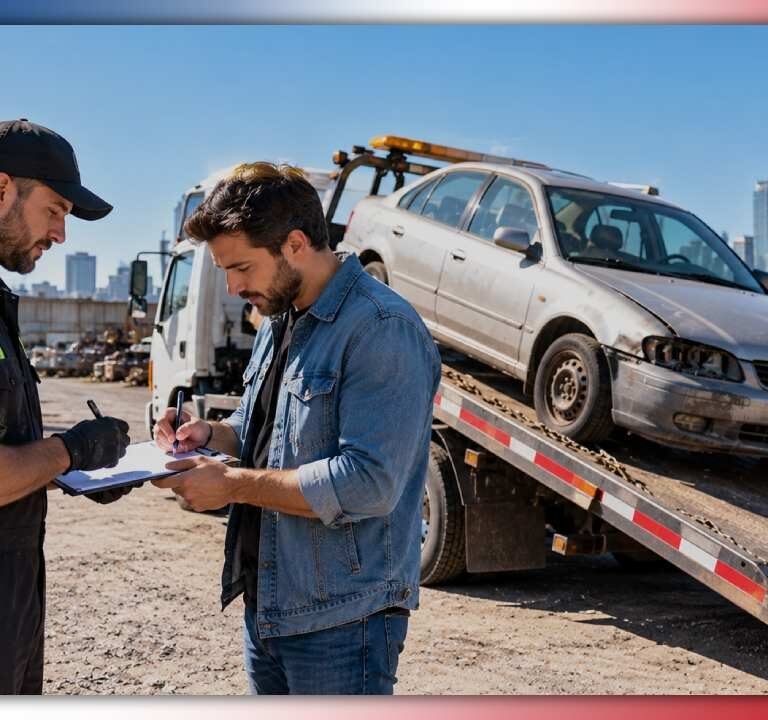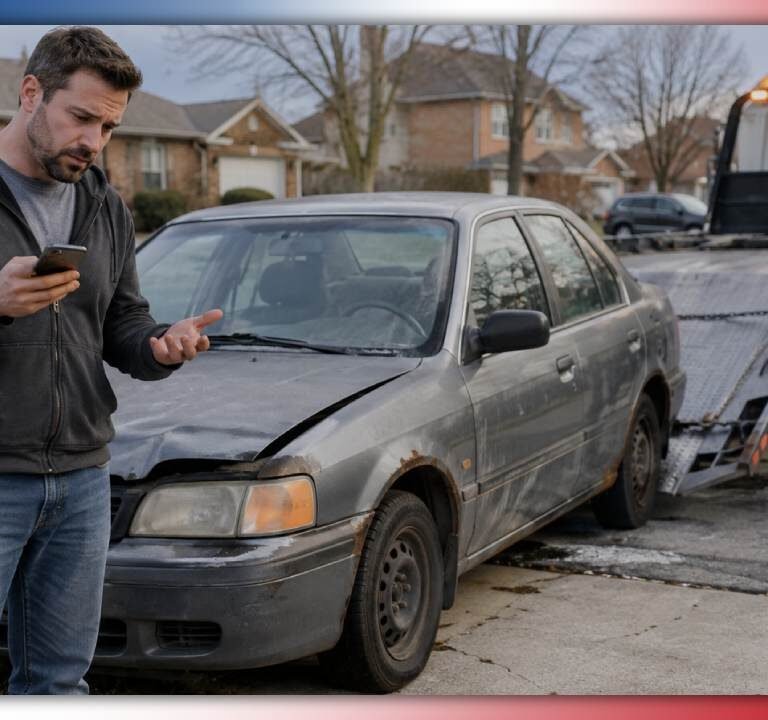
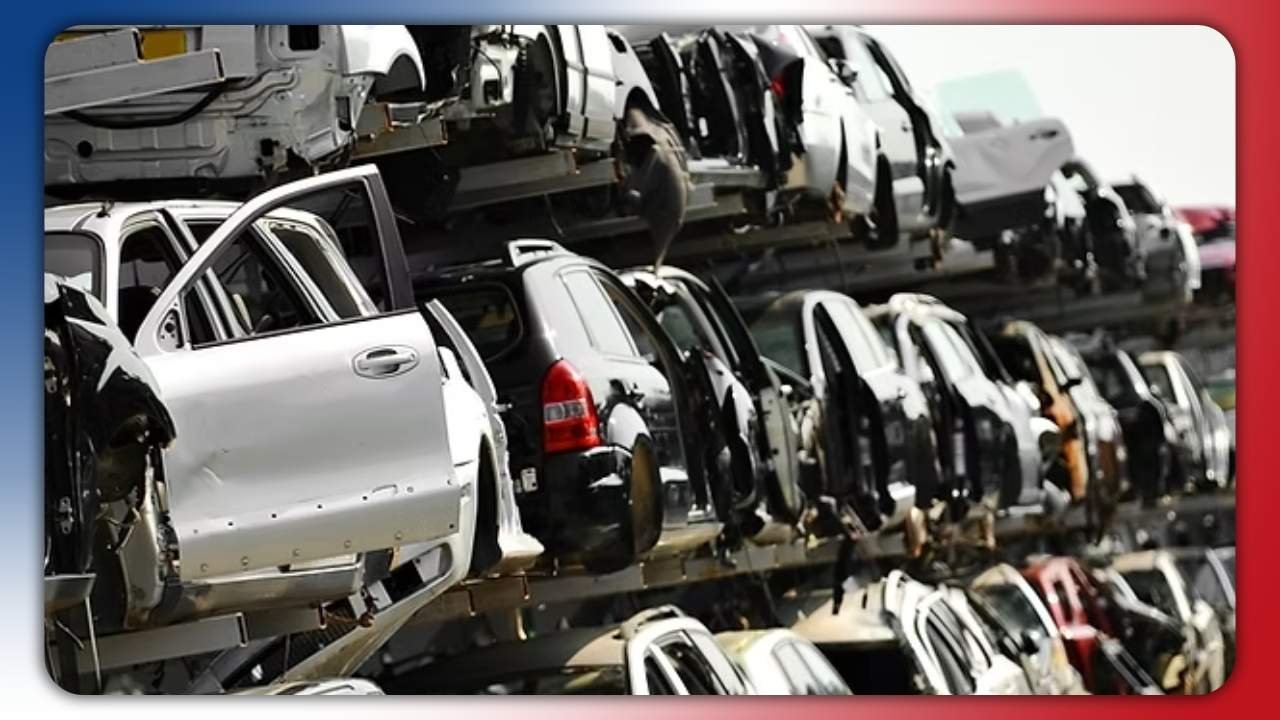
Scrap cars supply the steel, aluminum, and copper that keep Toronto’s metal recycling market running. These materials feed directly into Ontario steel mills like Stelco and ArcelorMittal Dofasco in Hamilton. Over 60% of all steel produced in Canada starts as recycled scrap. End-of-life vehicles are among the largest and most consistent sources of that supply. A single passenger car yields 900 to 1,300 kg (2,000 to 2,900 lbs) of recoverable steel alone. This volume compounds fast across the Greater Toronto Area (GTA). There, hundreds of thousands of vehicles reach end-of-life status every year.
This guide breaks down exactly how a scrap car moves from a Toronto driveway into a steel beam or a new vehicle body. It also explains what materials it contributes. Furthermore, it shows why that process matters economically across Ontario.
Most vehicle owners never think past the moment a tow truck pulls away with their old car. What happens next, however, is a tightly regulated industrial process that connects a single household decision to one of Canada’s largest manufacturing sectors. Understanding that chain explains both why your scrap car has real value and why the steel recycling industry depends on a steady stream of end-of-life vehicles.
Why Toronto Generates a Constant Supply of Scrap Metal
Ontario has more registered vehicles than any other Canadian province, and the GTA alone accounts for millions of cars, trucks, and SUVs that eventually reach end-of-life status. That volume makes vehicle recycling one of the most reliable feedstock sources for Ontario’s metal recycling market, since cars retire on a predictable schedule regardless of broader economic conditions.
A modern passenger vehicle is 75% to 80% recyclable by weight, with metal accounting for the majority of that figure. The table below shows what a single average vehicle contributes once it’s processed.
| Material | Recoverable Weight Per Vehicle |
| Steel and iron | 900–1,300 kg (2,000–2,900 lbs) |
| Aluminum | 100–150 kg (220–330 lbs) |
| Copper (wiring, motors) | 20–25 kg (44–55 lbs) |
| Rubber (tires, seals) | 60–80 kg (132–176 lbs) |
| Plastic and foam | 100–120 kg (220–265 lbs) |
| Fluids (oil, coolant) | 10–15 litres (2.6–4 gal) |
Multiply the steel figure across a city the size of Toronto, and the scale becomes clear: a steady stream of end-of-life vehicles delivers thousands of tonnes of recoverable metal to Ontario processors every single month.
How a Scrap Car Becomes Recycled Steel: The 4-Step Process
A scrap car moves through 4 stages before its metal reaches a mill: depollution, parts recovery, shredding, and metal sorting. Each stage is regulated by Ontario’s environmental standards and designed to recover the maximum amount of usable material from every vehicle.
Step 1: Depollution
Before any dismantling begins, licensed processors drain every hazardous fluid: engine oil, brake fluid, transmission fluid, power steering fluid, coolant, and air conditioning refrigerant. This step prevents contaminants from entering soil and groundwater and is required under Ontario environmental regulations before a vehicle can be shredded.
Step 2: Parts Recovery
Once the system is depolluted, technicians remove components that still have resale value. The engine, transmission, catalytic converter, alternator, starter, body panels, and electronic control modules are all catalogued and sold into the used-parts market before the remaining body is moved to the shredder.
This stage is where a vehicle’s age and condition matter most. A 5-year-old sedan with a functioning drivetrain yields far more resalable parts than a 20-year-old vehicle that’s already been picked over or corroded beyond use, which is part of why parts-based buyers pay more for newer, more complete vehicles.
Step 3: Shredding
What remains after parts recovery goes into an industrial shredder. This machine reduces the vehicle body to fist-sized fragments of mixed steel, aluminum, plastic, and rubber within seconds. In turn, this step physically breaks down the vehicle structure to a size that downstream sorting equipment can process efficiently.
Step 4: Metal Sorting and Mill Delivery
Magnetic separation pulls ferrous steel from non-ferrous metals like aluminum and copper. Sorted ferrous scrap typically moves to integrated steel mills, while non-ferrous fractions go to specialized smelters. In Ontario, that sorted steel frequently ends up at one of the province’s 3 major integrated steel producers.
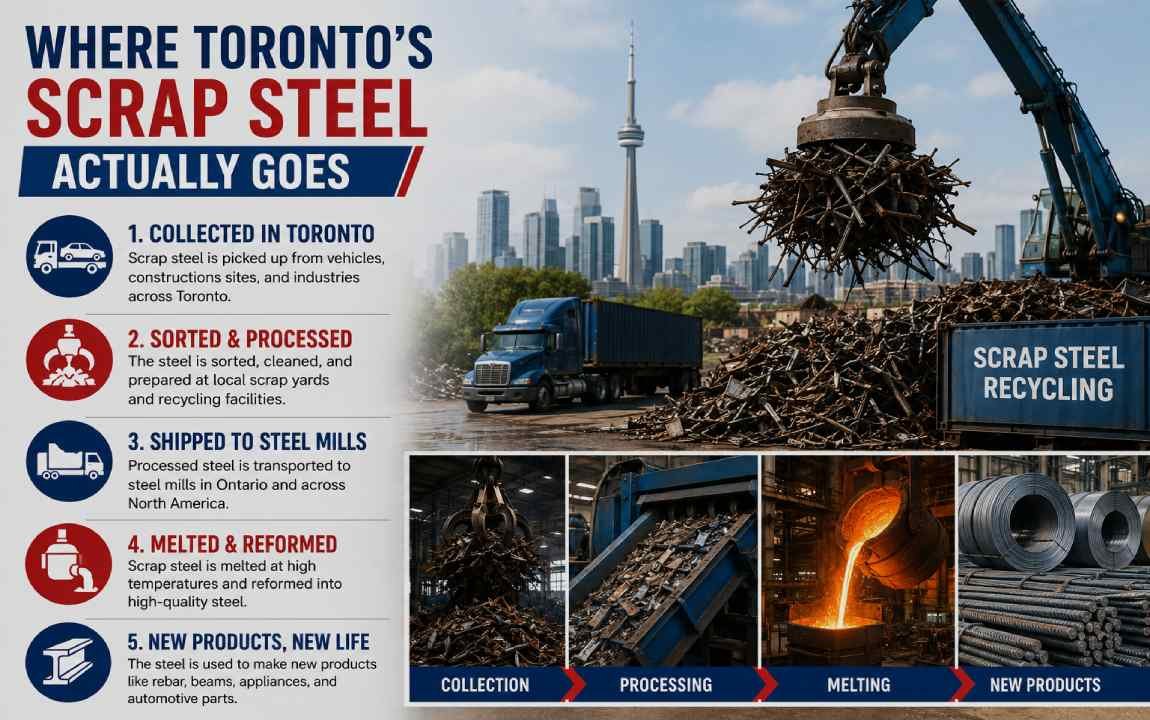
Where Toronto’s Scrap Steel Actually Goes
Most of the steel recovered from Toronto-area scrap cars feeds Ontario’s 3 major integrated steel producers: Stelco, ArcelorMittal Dofasco, and Algoma Steel. Hamilton, often called “Steel City,” anchors this supply chain. ArcelorMittal Dofasco alone employs roughly 4,600 people at its Hamilton facility and is the city’s largest private-sector employer, drawing a meaningful share of its raw material from recycled scrap rather than virgin iron ore.
Over 60% of all steel produced in Canada comes from recycled scrap metal, according to the Canadian Steel Producers Association. That recycled content reduces the energy and emissions required compared with mining and refining new ore, since melting existing steel uses a fraction of the energy needed to extract and process raw iron.
ArcelorMittal Dofasco’s Hamilton facility is currently shifting from coal-fed blast furnaces to a hydrogen-ready electric arc furnace (EAF). This transition leans even more heavily on recycled scrap as feedstock. Projections show it will cut the facility’s carbon dioxide emissions by approximately 3 million tonnes annually once complete.
How Scrap Metal Value Connects Back to What You’re Paid
Buyers price a scrap car using 2 models: weight-based pricing, which pays for raw metal content, and parts-based pricing, which adds resale value for working components on top of the metal. Understanding which model a buyer uses explains why quotes for the same vehicle can vary by hundreds of dollars.
| Pricing Model | What It Pays For | Typical Payout Range |
| Weight-based | Steel, aluminum, copper content only | $100–$500 |
| Parts-based | Metal weight + resalable engine, converter, wheels, battery | $300–$1,000+ |
A buyer offering cash for cars that factors in both metal weight and recoverable parts typically pays 30% to 60% more than a yard pricing on weight alone, since the parts-aware buyer captures value the basic yard leaves on the table.
The Economic Impact of Auto Recycling Across the GTA
Auto recycling is a measurable economic sector in Ontario, not just an environmental footnote. It supports jobs, household income, and downstream manufacturing across the province.
- Direct employment: Metal recycling facilities across the GTA employ workers in processing, logistics, sorting, and administration roles. These roles tie directly to vehicle and metal recovery.
- Lower input costs for manufacturers: Recycled steel costs less to produce than virgin steel. This gives Ontario builders and manufacturers a real cost advantage when sourcing material.
- Household cash flow: Scrap buyers pay vehicle owners directly for end-of-life cars. This puts money back into households across Toronto, Mississauga, Brampton, and the wider GTA.
- Affordable used parts: Recovered engines, transmissions, and body panels supply independent mechanics and budget-conscious drivers. They offer tested secondhand components at a fraction of new-part pricing.
- Regional manufacturing support: Sorted scrap from Toronto-area yards feeds processors and manufacturers in Hamilton, Brampton, and Cambridge. This extends the economic impact well beyond the GTA’s borders.
Ontario’s iron and steel manufacturing sector alone holds a value of roughly $6.7 billion (CAD) as of 2026. Recycled scrap, including the steel recovered from end-of-life vehicles, forms a structural input to that figure, not a marginal one.
Primary metal manufacturing employment in Ontario concentrates heavily in Toronto and the Hamilton-Niagara Peninsula region. There, it accounts for a disproportionately large share of total regional employment compared with the provincial average. That concentration reflects how directly this region’s job market ties to the steady flow of recyclable material. Scrap cars move through GTA processors toward Hamilton’s mills as part of that flow.
What Determines a Scrap Car’s Value to a Toronto Metal Yard
6 factors decide what a Toronto scrap buyer offers for a vehicle: weight, current scrap metal prices, condition of harvestable parts, vehicle year and model, catalytic converter status, and fluid condition.
- Vehicle weight. Heavier vehicles contain more recoverable metal, which translates directly into a higher baseline offer.
- Current scrap metal prices. Commodity prices shift weekly based on global steel and aluminum demand, so the same car can be worth different amounts depending on when it’s sold.
- Condition of harvestable parts. An intact, working engine or undamaged catalytic converter adds significant value on top of base scrap pricing.
- Year, make, and model. Newer vehicles tend to carry a higher proportion of aluminum, which commands a higher price per kilogram than steel.
- Catalytic converter status. The platinum, palladium, and rhodium inside a converter can be worth several hundred dollars depending on the vehicle’s make and model.
- Fluid condition. Clean, properly maintained fluids cost less for the buyer to process and dispose of, which can modestly affect the final offer.
What to Confirm Before You Scrap a Car in Toronto
5 steps protect both your payout and your legal standing once a vehicle leaves your property:
- Use a licensed auto recycler. Ontario regulates facilities that process end-of-life vehicles. A licensed recycler issues a certificate of destruction, which removes the vehicle from provincial registration records and protects you from future liability tied to that VIN.
- Have ownership documents ready. You need to be the registered owner on file to legally transfer and scrap a vehicle, so confirm your paperwork matches the name on the green ownership permit before contacting a buyer.
- Clear out personal belongings. Check the glove box, under seats, the trunk, and any storage compartments. This step gets overlooked more often than expected.
- Cancel your insurance after transfer. Once the certificate of destruction is in hand, contact your insurer to cancel coverage and stop unnecessary premium payments.
- Confirm free towing is included. Legitimate scrap car removal services include pickup at no extra cost. You shouldn’t pay separately to have your vehicle towed away.
Why Ontario’s Auto Industry Depends on This Recycling Loop
Ontario’s auto manufacturing sector ranks as one of the largest in North America. That production volume creates constant demand for steel and aluminum. Much of this material comes from recycled vehicle scrap rather than newly mined ore. Five major automakers operate assembly plants in the province. Ontario’s vehicle assembly volume reached approximately 1.5 million units in a recent year alone. Every one of those new vehicles requires steel. Recycled scrap supplies a meaningful share of that input.
Manufacturers use recycled steel to make roughly 25% of a new vehicle’s body. This means the car you scrap today can quite literally become part of the next vehicle rolling off an Ontario assembly line. This closed loop connects scrap car to steel mill to new vehicle. As a result, Ontario’s automotive and recycling sectors are structurally connected rather than separate industries operating side by side.
From Driveway to Steel Beam: The Bigger Picture
Every vehicle that reaches end-of-life status in Toronto, Scarborough, North York, Mississauga, or Vaughan eventually contributes to the same supply chain: depollution, parts recovery, shredding, sorting, and delivery to mills in Hamilton and beyond. That process turns what looks like dead weight in a driveway into the structural steel in a new building, the aluminum in a new vehicle, or the copper in new wiring.
Whether your vehicle is a junk car that won’t start or an accident-damaged vehicle beyond repair, the metal inside still has real economic value, both to you and to Ontario’s manufacturing sector.
Frequently Asked Questions
1. How much of a car gets recycled?
Yes, modern vehicles are 75% to 80% recyclable by weight, with metal accounting for the majority of that recovered material. A single passenger vehicle yields 900 to 1,300 kg (2,000 to 2,900 lbs) of recoverable steel and iron alone.
2. Where does Toronto’s scrap car steel actually go?
Most recovered steel from Toronto-area scrap cars goes to Ontario’s integrated steel producers, Stelco, ArcelorMittal Dofasco, and Algoma Steel, primarily through Hamilton-based mills. From there, it’s melted down and recast into new steel products for construction and manufacturing.
3. What percentage of Canadian steel comes from recycled scrap?
Over 60% of all steel produced in Canada originates from recycled scrap metal, according to the Canadian Steel Producers Association. End-of-life vehicles are one of the largest and most consistent contributors to that recycled feedstock supply.
4. Does scrapping a car actually help the environment?
Yes, recycling steel from scrap cars uses significantly less energy than producing new steel from raw iron ore. This directly reduces greenhouse gas emissions. Ontario’s largest steel mill is currently transitioning to a hydrogen-ready electric arc furnace. It aims to capitalize on this advantage. As a result, this shift will cut emissions by roughly 3 million tonnes annually once complete.
5. Why does a scrap car’s value vary between buyers?
Buyer pricing models differ: weight-based buyers pay for metal content only, while parts-based buyers add resale value for working components on top, typically paying 30% to 60% more. The same vehicle can generate very different quotes depending on which pricing model the buyer uses.
6. Do I need a title to scrap a car in Ontario?
Yes, Ontario requires a signed green Vehicle Ownership Certificate and a valid government-issued photo ID to legally transfer and scrap a vehicle. If the title is lost, apply for a replacement through ServiceOntario before contacting a buyer.
7. Is auto recycling a significant industry in Ontario?
Yes, Ontario’s iron and steel manufacturing sector is valued at approximately $6.7 billion (CAD) in 2026, with recycled scrap metal, including vehicle steel, as a structural input. The sector also supports direct employment across processing, logistics, and sales roles throughout the GTA.
Turn Your Scrap Car Into Cash and Recycled Steel
Every vehicle Scrap Cars 4 Cash picks up across Toronto, Mississauga, Brampton, Vaughan, and the rest of the GTA enters this same recycling stream, depolluted, processed, and fed back into Ontario’s steel supply. Free same-day towing, fair cash payouts based on current scrap metal rates, and full MTO ownership transfer handled on pickup. Call +1 437-269-6321 or get a free quote online to put your vehicle’s metal back into the supply chain.
Sources: Canadian Steel Producers Association; Invest Ontario — ArcelorMittal Dofasco Clean Steelmaking; Job Bank Canada — Primary Metal Manufacturing Ontario