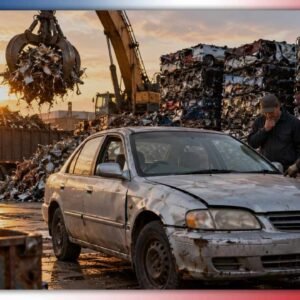
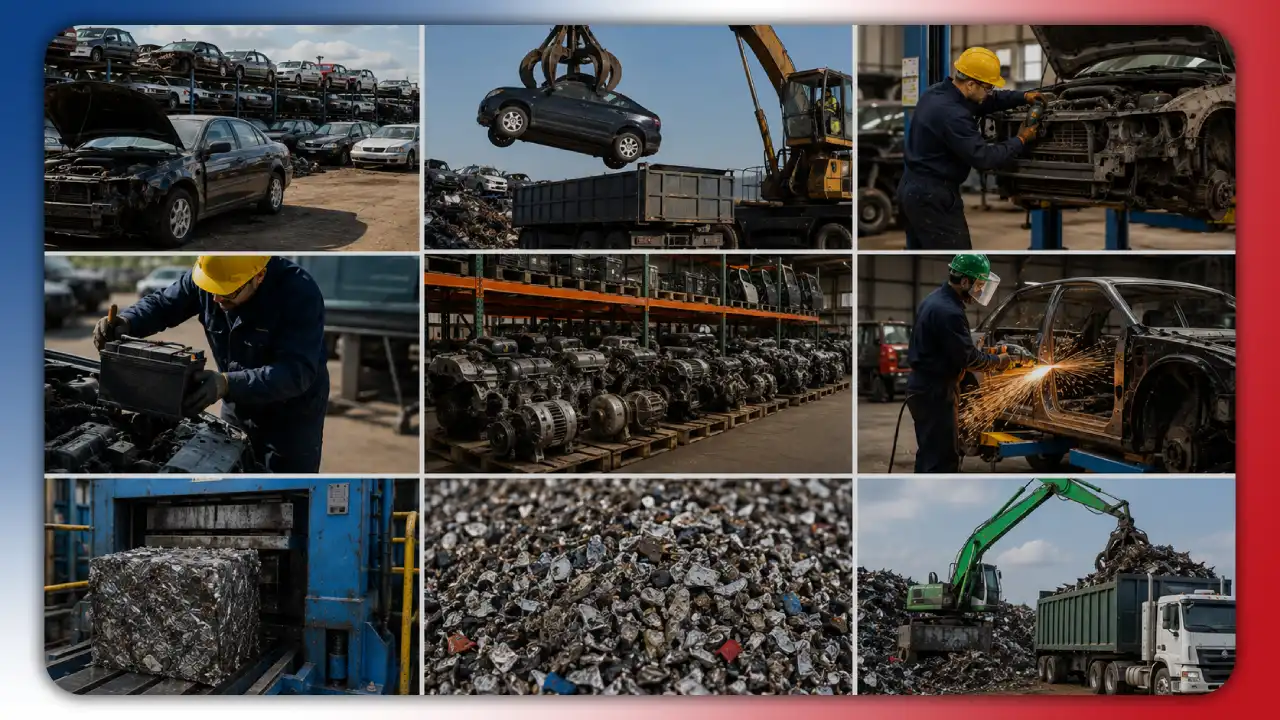
Junkyards recycle cars through 6 main stages: evaluation, fluid draining, parts dismantling, crushing, shredding, and metal separation. This complete cycle recovers 75 to 85% of a vehicle’s weight and turns scrap steel into raw material for new products within days.
You drop off an old sedan, truck, or SUV, and workers move it through a fixed sequence at the yard. Every stage protects soil and water, recovers resale value, and feeds material back into manufacturing plants. Below, you get each step broken down with exact numbers, timing, and Ontario-specific paperwork rules for 2026.
How Junkyards Recycle Cars in 6 Steps
Junkyards recycle cars by following 6 sequential stages: vehicle evaluation, fluid removal, parts dismantling, crushing, shredding, and metal recovery. Each stage strips value from the vehicle before the remaining shell advances to the next machine.
- Technicians log the Vehicle Identification Number (VIN), make, model, and condition into shared inventory software.
- Workers drain 5 to 8 fluids, including motor oil, coolant, and brake fluid.
- Staff remove 15 to 20 reusable parts such as alternators, starters, and catalytic converters.
- A hydraulic crusher compresses the stripped shell to roughly 10% of its original size.
- A hammermill shredder breaks the compressed shell into fist-sized fragments.
- Magnets and eddy current separators sort the fragments into steel, aluminum, and copper.
This 6-step sequence recovers metal, protects the environment, and produces clean scrap ready for steel mills. Skipping any single step, such as fluid removal, creates fire and pollution risks inside the facility.
How to Drain and Recycle Car Fluids at a Junkyard
To drain and recycle car fluids at a junkyard, technicians remove 5 to 8 fluids before touching a wrench. Workers pull motor oil, transmission fluid, brake fluid, antifreeze, power steering fluid, gasoline, and Freon refrigerant, then route each fluid into its own recovery stream.
Motor oil gets filtered and resold as industrial lubricant. Antifreeze gets cleaned of contaminants and reused in another vehicle. Freon gets captured inside closed-loop recovery tanks, since this chemical damages the ozone layer if released into open air.
Which Fluids Get Reused
Oil, antifreeze, and transmission fluid commonly get filtered and reused after processing. A licensed facility runs each fluid through a filtration unit that strips out metal particles, water, and debris. The cleaned fluid then re-enters the supply chain as a lower-cost lubricant or coolant for other vehicles.
Which Fluids Require Hazardous Disposal
Brake fluid, Freon, and gasoline require certified hazardous handling under Ontario environmental rules. These substances cannot enter storm drains, soil, or regular waste bins. A licensed yard stores each substance inside sealed containers, then ships every container to a certified hazardous waste processor.
How to Dismantle and Salvage Reusable Car Parts
To dismantle and salvage reusable car parts, technicians pull 15 to 20 components before crushing begins. Workers target engines, transmissions, alternators, starters, axles, catalytic converters, seats, mirrors, and glass panels first, since these components carry the highest resale value.
A single engine or transmission can sell for hundreds of dollars in the used parts market. Non-engine components, including bumpers, hoods, doors, and windshields, follow close behind in demand from body shops and independent repair garages. Comparing multiple buyers before drop-off helps you secure the highest cash for scrap on vehicles with strong parts value.
Which Parts Get Resold First
Engines, transmissions, alternators, and catalytic converters get pulled and resold first in almost every yard. These 4 components hold the highest dollar value per unit of labor, so technicians prioritize them within the first hour of dismantling.
How Technicians Test Salvaged Parts
Technicians test each salvaged part on a bench rig before listing it for resale. A yard checks electrical output on alternators, compression on engines, and resistance on wiring harnesses. Parts that fail testing get redirected into the scrap metal stream instead of the resale shelf.
How to Crush and Shred a Junked Vehicle’s Frame
To crush and shred a junked vehicle’s frame, a yard uses a hydraulic press followed by a hammermill shredder. The press reduces the stripped shell to roughly 10% of its original volume. A full-size sedan measuring 15 feet (4.6 meters) long compresses into a flat slab or dense cube within 2 to 5 minutes.
Crushing exists purely for space and transport efficiency, not for material recovery. A crushed shell still needs shredding before any metal gets separated for sale to a mill.
Car Crusher vs Hydraulic Baler
A pancake crusher flattens a vehicle vertically into a slab, while a hydraulic baler compresses it from multiple sides into a rectangular block. Both machine types reduce a car’s footprint by up to 90%, but a baler produces a denser, easier-to-stack unit for rail and truck transport.
How to Separate and Recycle Scrap Metal After Shredding
To separate and recycle scrap metal after shredding, a facility runs the fragments past magnets and eddy current separators on a conveyor line. A shredder first breaks crushed shells into fragments roughly 6 inches (15 cm) across, processing a full vehicle in 30 to 60 seconds.
After shredding, magnets pull ferrous steel out of the material stream automatically. Eddy current separators then use rotating magnetic fields to eject non-ferrous metals, including aluminum and copper, from the remaining mix. This recovered steel and aluminum directly feeds the Toronto metal recycling market with raw material for new vehicles, appliances, and construction beams.
How Magnets and Eddy Currents Sort Metal
A magnetic drum captures ferrous steel first, since steel responds directly to magnetic pull. An eddy current separator then generates an opposing magnetic field that repels aluminum, copper, and brass off the conveyor belt into a separate bin. This 2-stage system sorts thousands of pounds (hundreds of kilograms) of material per hour with minimal manual labor.
Why Recycling a Car Matters for the Environment and the Economy
Recycling a car matters because it cuts raw material demand, conserves landfill space, and generates real economic activity across North America. A vehicle contains 3 major recoverable material groups: ferrous metal, non-ferrous metal, and reusable components, and each group avoids a separate environmental cost when it gets reused instead of mined or manufactured from scratch.
The North American auto recycling industry processes millions of end-of-life vehicles every year and generates billions of dollars in annual revenue. This activity supports jobs for tow operators, dismantling technicians, parts graders, and metal buyers in every province and state.
How Much Energy Recycling Steel Saves
Recycling steel from a junked car uses far less energy than mining and refining new ore into fresh steel. Producing steel from recycled scrap also uses less water and generates fewer emissions than starting from raw iron ore, coal, and limestone. This is why steel mills pay for clean, sorted scrap instead of relying only on virgin material.
How Car Recycling Creates Local Jobs
Car recycling supports 4 main job categories: tow truck operators, dismantling technicians, parts sales staff, and metal grading specialists. A single mid-size recycling yard can employ dozens of workers across these roles. Local economies benefit further when recycled parts stay in the used auto parts market instead of importing new components from overseas manufacturers.
What Happens to Auto Shredder Residue That Can’t Be Recycled
Auto Shredder Residue (ASR) makes up 15 to 20% of a vehicle’s total weight and consists of rubber, foam, glass, and mixed plastics. Recyclers cannot separate ASR into pure material streams with current technology, so most of this residue goes to a licensed landfill.
Some processing plants now burn ASR for energy recovery instead of landfilling it outright. Newer separation technology, including advanced plastic sorting systems, continues to shrink the percentage of ASR that reaches a landfill every year.
How Long Does a Junkyard Take to Recycle a Car
A junkyard typically recycles a car within 3 to 10 days from drop-off to full metal recovery. Fluid draining and dismantling take 1 to 3 hours per vehicle, while crushing and shredding take only minutes once a vehicle reaches the front of the line.
The timeline stretches when a yard batches multiple vehicles before running the crusher, or when a specific part goes into storage for resale instead of immediate processing. Metal buyers typically ship shredded material to a steel mill within 1 to 2 weeks of final separation.
High-demand parts, such as a working transmission or an intact catalytic converter, can sit in inventory for 30 to 90 days before a buyer claims them. This storage window does not slow down the metal recovery timeline, since technicians pull these parts before the shell ever reaches the crusher.
Quick-Reference: Car Recycling Timeline
| Task | Timing | Method | Difficulty |
| Fluid draining (depollution) | 15 to 30 minutes | Manual draining with a vacuum extractor | Easy |
| Parts dismantling | 1 to 3 hours | Manual disassembly by technicians | Moderate |
| Crushing | 2 to 5 minutes | Hydraulic car crusher or baler | Easy |
| Shredding | 30 to 60 seconds per vehicle | Hammermill shredder | Moderate |
| Metal separation | Continuous conveyor process | Magnets and eddy current separators | Moderate |
| Ontario deregistration | 1 to 2 business days | MTO plate and permit surrender | Easy |
How to Choose a Licensed Junkyard for Car Recycling
To choose a licensed junkyard for car recycling, check for provincial registration, clear pricing, and free towing before you book pickup. A reputable recycler in Ontario carries proper environmental compliance certificates and follows Ministry of the Environment rules for fluid and battery disposal.
Signs of a Licensed and Reputable Recycler
A licensed recycler displays 3 clear signs: a physical yard address, verifiable customer reviews, and transparent pricing based on weight and condition. Avoid any buyer who refuses to provide a firm quote before pickup or who asks you to pay a fee for towing a vehicle they are buying.
Questions to Ask Before You Book Pickup
Ask 4 questions before you book pickup: does the yard offer free towing, how fast can they arrive, what documents do they require, and how do they calculate your cash offer. A transparent recycler answers every question directly without pressuring you into an immediate decision.
How to Prepare Your Documents Before an Ontario Junkyard Recycles Your Car
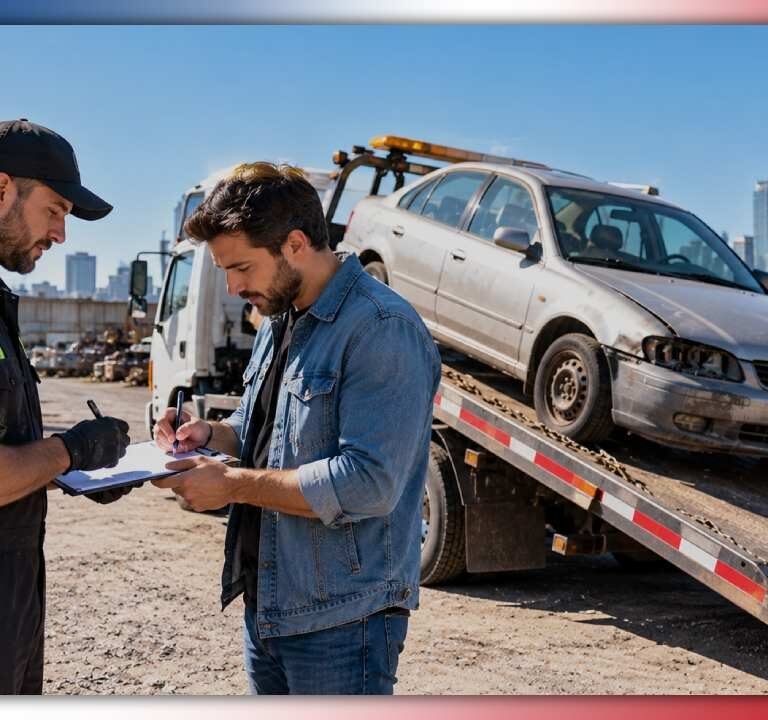
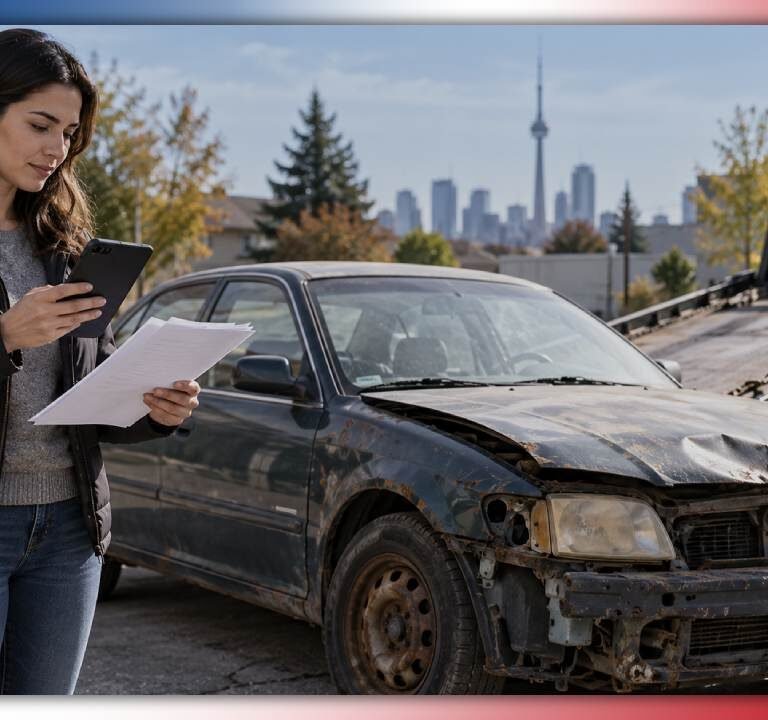
To prepare your documents before an Ontario junkyard recycles your car, gather your signed vehicle title, a valid photo ID, and a completed bill of sale. A licensed recycler cannot legally process a vehicle without proof that you own it, since this rule prevents stolen vehicle trafficking.
Vehicle Title and Ownership Transfer
You sign the ownership portion of your vehicle permit over to the recycler at pickup. A licensed recycler then registers the vehicle as retired within the province’s used vehicle information system. Keeping a copy of this signed transfer protects you from future liability tied to the vehicle.
Removing Your License Plate in Ontario
Ontario law requires you to remove your license plate before a junkyard tows your vehicle away. You return the plate to a ServiceOntario location or transfer it to another vehicle you own. Skipping this step can leave you liable for parking tickets or toll charges tied to your old plate.
You should also cancel your vehicle insurance policy on the same day as pickup to avoid paying for coverage on a car that no longer exists. Removing personal belongings from the glove compartment, trunk, and under the seats prevents the loss of valuables during dismantling.
Frequently Asked Questions About How Junkyards Recycle Cars
Do junkyards recycle every part of a car?
No, junkyards recycle 75 to 85% of a car by weight, and Auto Shredder Residue accounts for the remaining 15 to 20% that goes to landfill.
Can you junk a car in Ontario without a title?
No, Ontario recyclers require a signed vehicle title or permit before accepting a vehicle, since this document proves legal ownership.
Do junkyards recycle electric vehicle batteries?
Yes, certified facilities recycle electric vehicle batteries through specialized disassembly processes that recover lithium, cobalt, and nickel.
Does crushing a car destroy its recyclable value?
No, crushing only reduces a vehicle’s size for transport, and the shredding step afterward recovers the same steel and aluminum content.
How much cash can you get for a recycled car in Ontario?
Cash offers for a recycled car in Ontario typically range from $150 to $800 or more, depending on weight, condition, and current metal prices.
Recycle Your Car the Right Way in 2026
Junkyards recycle cars through a proven 6-step system that recovers steel, aluminum, and reusable parts while keeping hazardous fluids out of the environment. You get the fastest, safest outcome for your old vehicle when a licensed recycler handles fluid draining, dismantling, and Ontario paperwork correctly. Book free scrap car removal today and turn your old vehicle into same-day cash across the GTA.