To verify scrap car buyer Ontario credentials in 2026, first search the Ontario Business Registry and confirm the buyer’s legal name. Next, when applicable, check dealer registration, review environmental permissions, and confirm payment and ownership paperwork before releasing your vehicle.
A professional website alone does not prove registration. Compare the buyer’s business identity, pickup details, and signed documents before accepting any offer. Your checks should match the activity: vehicle dealing, recycling, or towing.
Why You Must Verify Scrap Car Buyer Ontario Credentials Before Pickup
Registration checks help you identify the business taking your vehicle and the person responsible for payment. A matching legal name also makes your receipt more useful if a dispute arises. Start the review before sharing your home address.
Ontario distinguishes business registration from permissions for regulated activities. A registered business name does not automatically authorize every scrap processing activity. Dealer registration serves another purpose and cannot replace environmental review.
Separate 3 Different Types of Registration
Check 3 distinct records: the Ontario Business Registry, the OMVIC dealer database, and applicable environmental permissions. Each record answers a different question about a buyer’s legal identity or work.
The Ontario Business Registry describes the business entity. OMVIC addresses regulated motor vehicle dealing. Ontario environmental permissions cover specified waste operations and emissions. A buyer does not automatically need every registration.
Identify the Business That Actually Purchases Your Car
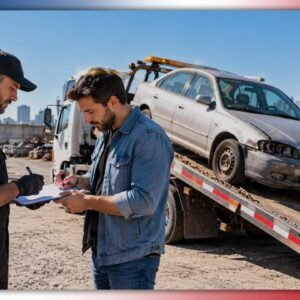
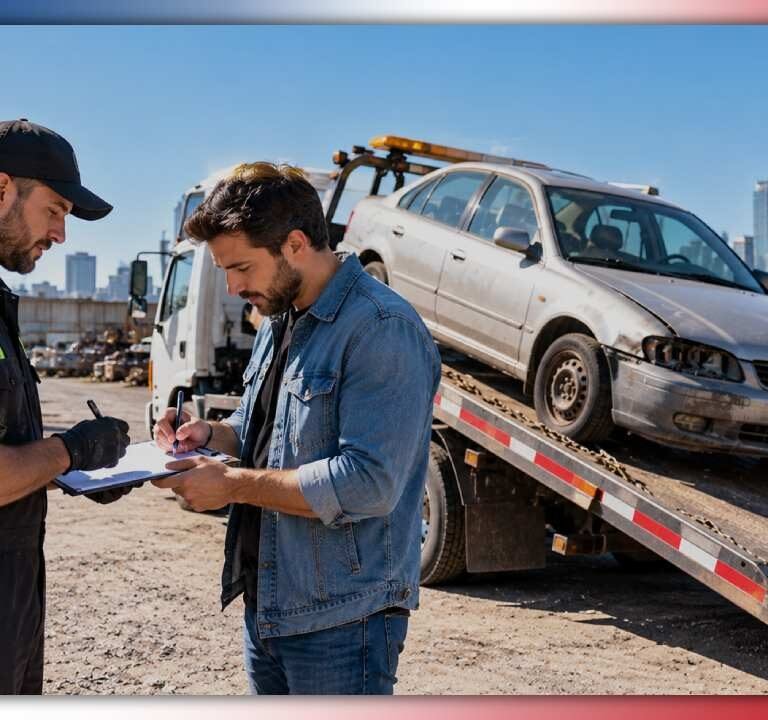
Ask who signs the bill of sale and who receives the vehicle. A dispatcher, towing contractor, and recycler can represent 3 separate businesses. Record the purchasing company’s legal name before confirming pickup.
A company might advertise using a trading name different from its legal name. Request both names and an explanation of the relationship. Match the information against the receipt, quote, and business record.
How to Verify Scrap Car Buyer Ontario Business Registration
To verify scrap car buyer Ontario business registration, open the official Ontario Business Registry and search the buyer’s exact name. Compare the results with the name and address supplied by the buyer.
Search the Ontario Business Registry by Legal Name
Use the public search through ontario.ca/page/ontario-business-registry. Ontario offers free basic business searches. A more detailed profile report carries a government fee, so purchase one only if you need extra confirmation.
- Request the exact legal business name and any operating name before searching.
- Search the Ontario registry using the legal name or available registration number.
- Compare the listed entity details with the quote, website, and invoice.
- Ask the buyer to explain any conflicting names, addresses, or business identities.
An Ontario Corporation Number (OCN) identifies an Ontario corporation. A Business Identification Number (BIN) identifies a registered business name. Neither number alone proves that a scrapyard follows every applicable operating rule.
Confirm the Address, Phone Number, and Collector
Call the business using a number listed on its official website. Confirm the collector’s name, truck details, and purchase amount. Ask for an invoice showing the purchasing entity rather than an unrelated dispatch name.
Check the business address through independent records and recent customer reviews. Google Maps and business directories provide supporting clues, not government certification. Treat missing explanations and inconsistent details as reasons to stop.
When OMVIC Registration Applies to a Scrap Vehicle Buyer
Use the OMVIC dealer search when a company carries on regulated motor vehicle dealing. Ontario requires motor vehicle dealers and salespeople to register. A scrap recycling business does not automatically belong in that category.
Check a Dealer Through the Official OMVIC Search
Open omvic.ca/dealer-search and enter the dealership’s business name or city. Select the active-registration filter when available. Compare the displayed legal name with the business claiming dealer status.
The OMVIC database also provides dealer enforcement information. An empty result does not automatically prove a scrap recycler operates illegally. Ask whether the buyer purchases vehicles for dismantling or operates as a motor vehicle dealer.
Distinguish a Recycler From a Vehicle Reseller
Ask the buyer whether the vehicle will enter recycling, parts dismantling, or resale. The intended transaction influences which obligations apply. A buyer who resells vehicles as a business can fall under dealer rules.
Do not accept an unsupported statement that every scrapyard holds an OMVIC licence. Verify the actual business model with OMVIC when registration requirements remain unclear. Keep the reply with your sale records.
Environmental Permissions and Scrap Yard Legitimacy in Ontario
Check the recycler’s operating location and ask which environmental permission applies to its work. Some waste operations need Environmental Compliance Approval (ECA). Certain eligible activities use the Environmental Activity and Sector Registry (EASR).
Request the Recycler Name and Applicable Permission
Ask for the receiving facility’s name, location, and available environmental authorization details. Confirm whether the company operates the facility or sends the vehicle to another recycler. Request clarification if the buyer avoids naming the destination.
Ontario’s Ministry of the Environment, Conservation and Parks administers relevant environmental permissions. Requirements depend on the activity and exemptions. A general claim of being environmentally friendly does not establish compliance.
Review Safe End-of-Life Vehicle Handling
Responsible processing addresses automotive fluids, batteries, tires, and recoverable metal. Ask whether the receiving facility manages hazardous materials under applicable rules. Record the recycling destination when the buyer can provide the information.
Different operating models require different checks. A towing company that transports your vehicle is not necessarily the operator dismantling it. Confirm the receiving recycler instead of assuming the truck driver operates a licensed scrapyard.
Class C Wrecker Licensing and the UVIP Exemption
Ontario law treats regulated vehicle wrecking differently from ordinary motor vehicle dealing. Section 59 of the Highway Traffic Act addresses licences for wrecking or dismantling businesses. Ask the actual dismantling facility about its applicable Ministry of Transportation authorization.
Confirm the Wrecker Activity and Ministry Licence
Request the facility name and its Class C licence details when the transaction involves a qualifying licensed wrecker. Match the named facility to the vehicle destination and buyer’s sale paperwork. Contact the ministry for confirmation when records conflict.
OMVIC identifies a specific registration exemption for wreckers who purchase vehicles for dismantling and meet the applicable Highway Traffic Act requirements. A buyer who trades vehicles instead of dismantling them cannot rely on the same activity description.
Ask whether the purchaser intends to report wreck status to the Ministry of Transportation. OMVIC’s exemption guidance describes that condition for qualifying wreckers. Keep a written description of the proposed vehicle disposal route.
Apply Used Vehicle Information Package Exemptions Carefully
Ontario Regulation 601/93 includes an exemption for transfers to a Ministry Class C licence holder for wrecking or dismantling. Your car’s poor condition alone does not qualify the transaction. The recipient and purpose determine whether the exemption applies.
For a different sale category, follow the general Used Vehicle Information Package requirements or another verified exemption. Ask ServiceOntario to confirm your situation before pickup. Record the reason for using a specific exemption with your signed paperwork.
A licensed wrecker, OMVIC dealer, and registered towing contractor fulfill different functions. Verify the correct operator instead of treating a licence claimed by one company as permission for another business.
Seven Checks Before Accepting a Scrap Car Offer
Complete 7 checks before booking. Use the same vehicle description with every buyer, including year, model, missing parts, and collection location. Consistent facts make quotes easier to compare.
Verify Identity, Pricing Terms, and Payment
- Verify the legal name through the Ontario Business Registry.
- Check OMVIC registration when the purchaser claims dealer status.
- Request the recycler’s location and relevant environmental permission details.
- Confirm the quoted amount, payment method, and allowed price adjustments in writing.
- Confirm towing charges, loading requirements, and any access-related deductions.
- Request the buyer’s full name and the collector’s pickup identification.
- Prepare a dated bill of sale with the buyer, seller, Vehicle Identification Number, and agreed amount.
Never release the vehicle solely because the driver arrives on schedule. Check the details against your written agreement. Review any last-minute offer change before giving the driver the keys or signed ownership documents.
Avoid 4 Common Warning Signs
- Reject unexplained deductions after the driver inspects details you already disclosed.
- Reject requests to sign blank ownership paperwork or undated sale documents.
- Reject pressure to hand over the vehicle before confirmed payment.
- Reject buyers who refuse to identify the purchasing company or receiving recycler.
An urgent pickup is not a reason to surrender your paperwork early. Keep control of the vehicle until payment, identity, and documentation agree. Contact the published business number if pickup instructions unexpectedly change.
Quick Reference for Buyer Verification and Pickup Planning
Use the following planning estimates for your own checks. The times represent practical allowances, not government service guarantees. Complex ownership records and conflicting business details require additional review.
| Task | Timing estimate | Method | Difficulty |
| Confirm business name | 5–10 minutes | Ontario Business Registry | Easy |
| Check dealer status | 3–5 minutes | OMVIC search, if relevant | Easy |
| Review recycler details | 10–15 minutes | Ask for facility and permission | Moderate |
| Confirm final offer | 5 minutes | Written quote and towing terms | Easy |
| Inspect transfer documents | 10 minutes | VIN, permit, signed sale record | Moderate |
| Verify pickup and payment | 5–10 minutes | ID, bank app, receipt | Easy |
Complete business and permit checks before booking, not after loading begins. Separate public registry searches from legal advice. ServiceOntario and the relevant regulator can explain requirements for unusual sales.
Ontario Ownership Documents to Prepare Before Selling
Gather your Ontario vehicle permit, identification, and purchase paperwork before pickup. Your document requirements depend on the actual sale type. Confirm any special exemptions with ServiceOntario rather than relying on a broad scrap-car claim.
Match the VIN and Complete the Bill of Sale
Compare the 17-character Vehicle Identification Number (VIN) on the vehicle with the ownership permit. Record the buyer’s name, address, date, purchase amount, and vehicle details on the signed bill of sale.
Ontario’s standard used-vehicle sale guidance describes a Used Vehicle Information Package (UVIP). Specific regulatory exemptions cover qualifying transactions. Confirm whether the buyer and intended dismantling transaction meet an exemption before omitting the package.
Complete the transfer section on the vehicle portion of the permit with accurate buyer details. Keep the plate portion and copies of signed records. Ask for corrected paperwork whenever the collector presents a different purchaser name.
Resolve Liens, Lost Permits, and Third-Party Ownership
Contact the lender before selling a financed vehicle. Obtain a lien release or written authorization where required. A buyer’s cash offer does not cancel an outstanding loan or lease.
Ask ServiceOntario about replacement documents when the permit is missing. Estate sales require proof of authority from the executor or another authorized representative. Do not sign for a relative without legal permission.
A collision write-off can involve insurer ownership or salvage branding. Obtain the insurer’s release before arranging collection. Present the buyer with accurate details rather than assuming every damaged vehicle qualifies for an ordinary transfer.
Pickup Day Payment, Licence Plates, and Final Records
Check the buyer’s identity and collect the agreed payment before your car leaves. Remove your Ontario licence plates and retain the plate portion of your permit. Keep the signed sale records after the tow truck departs.
Confirm Payment Before the Driver Loads the Vehicle
Count cash or confirm an electronic deposit through your own banking app. A screenshot alone does not prove receipt. Record any agreed price adjustment on the bill of sale before signing.
Photograph your vehicle’s condition and licence plate removal before handover. Keep the buyer’s receipt and vehicle collection date. These records help explain the transaction to your insurer or ServiceOntario.
Update the Vehicle Status and Contact Your Insurer
Ask ServiceOntario about changing the vehicle’s status to sold. Ontario’s guidance describes bringing your original permit and a letter with the VIN, buyer, and sale date. Follow the current instructions for your transaction.
Contact your insurer after the completed handover to cancel or adjust coverage. Save the insurer’s confirmation with your bill of sale. Return or transfer your retained licence plates through the appropriate process.
Local Scrap Car Pickup Across Toronto and the GTA
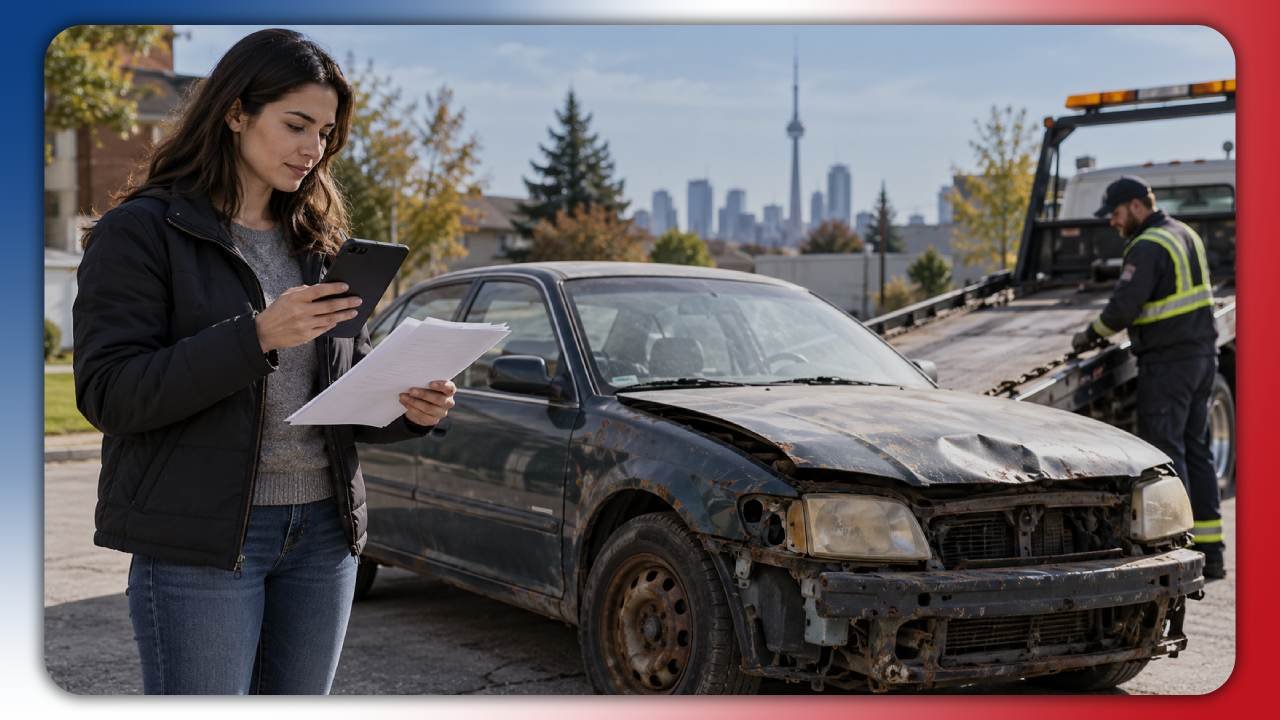
Confirm service coverage before sharing your final address. Toronto, Brampton, and Mississauga can involve different parking restrictions and towing access. Give buyers the real vehicle condition and collection constraints.
Compare an Accepted Quote With the Actual Pickup
Scrap Cars 4 Cash describes towing as included with accepted purchases. You can review its scrap car removal service for collection details and vehicle eligibility. Request a written, vehicle-specific offer before confirming the appointment.
Prices depend on condition, demand, missing parts, and pickup circumstances. A fixed public price cannot describe every end-of-life car. Ask whether the quoted amount remains valid when your submitted details match the vehicle.
Plan Access for Driveways, Garages, and Workshops
Use the Toronto pickup service areas directory to check the listed pickup locations in Toronto and the Greater Toronto Area. Provide your parking level, gate access, and key status before dispatch.
For a low garage, report measured clearance in feet and metres, such as 6 feet 6 inches (1.98 m). For narrow access, report width in feet and metres, such as 8 feet (2.44 m). These figures are examples, not guaranteed truck requirements.
The company also explains old car removal options for rusted, old, and non-running vehicles. Compare the service description with your car before requesting a quote. Confirm the collection address and any access restrictions with the dispatcher.
Common Questions About Scrap Buyer Registration in Ontario
Is every scrap car buyer required to register with OMVIC?
No. OMVIC registration applies to regulated motor vehicle dealers and salespeople. Check the buyer’s actual business activities before applying dealer rules to a recycler.
Can I verify a scrap buyer using the Ontario Business Registry?
Yes. Search the legal business name using Ontario’s public registry. A business listing confirms basic registry information, not every environmental or dealer permission.
Do I need a Used Vehicle Information Package to scrap a car?
Not for every qualifying scrap transaction. Ontario provides specific exemptions for certain transfers. Confirm buyer eligibility and the intended transaction with ServiceOntario before relying on an exemption.
Should I remove my licence plates before scrap car pickup?
Yes. Ontario licence plates remain with the plate holder. Remove the plates and retain the plate portion of your permit before handing over the vehicle.
Can I refuse a lower offer when the tow truck arrives?
Yes. You can decline an unaccepted revised offer. Keep your keys and documents until you approve the final payment and completed sale records.
Final Buyer Check Before You Book Scrap Car Collection
Verify scrap car buyer Ontario business identity, confirm the appropriate regulatory checks, and document the agreed payment before releasing your car. Your strongest protection combines a matching business name, clear ownership paperwork, and a receipt identifying the real purchaser. For a Toronto-area vehicle, request a quote through the scrap car removal service after completing your verification checklist. Confirm condition, pickup access, and payment terms before collection.