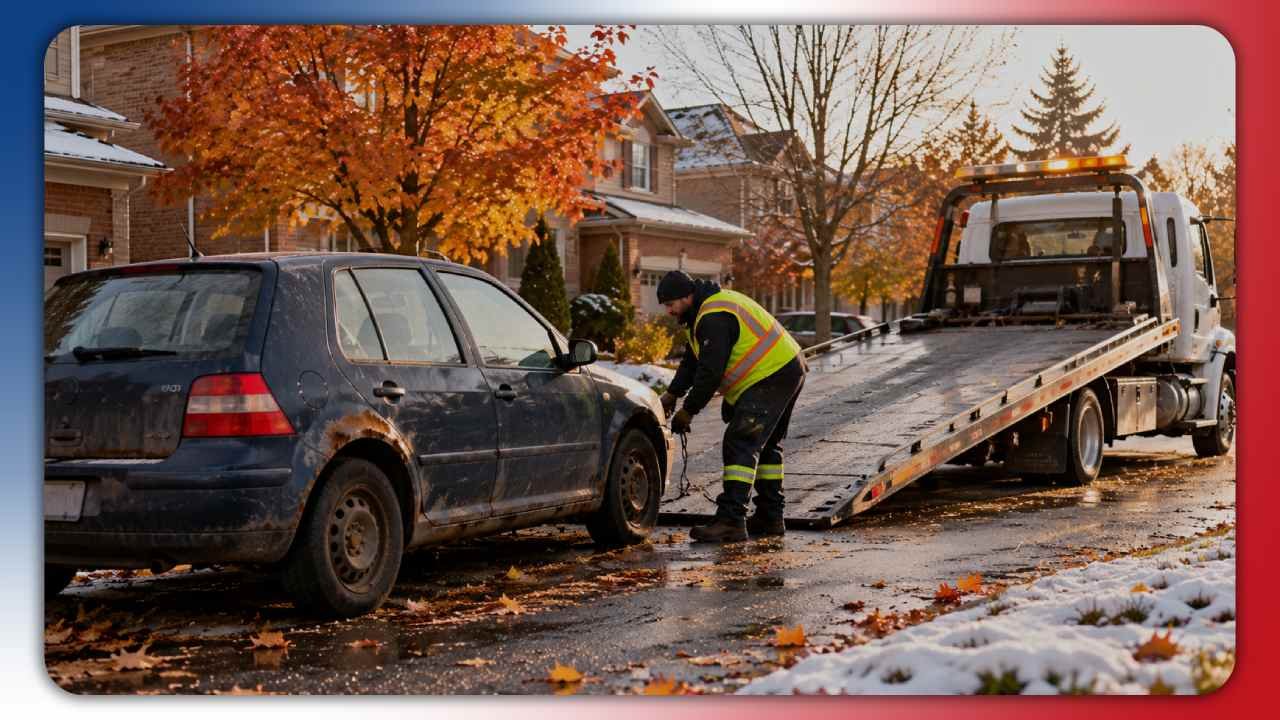
The best time to scrap a car in October, Ontario, often comes before freezing weather raises storage and removal costs. October through December works well when an unwanted vehicle needs repairs, insurance, parking, or difficult winter towing.
Fall does not guarantee Ontario’s highest scrap prices. Your strongest result comes from comparing a real buyer quote with the cost of waiting. A running car with dependable winter service deserves a different calculation than a rusted car sitting in a driveway.
Best Time to Scrap a Car in October in Ontario: The Seasonal Decision
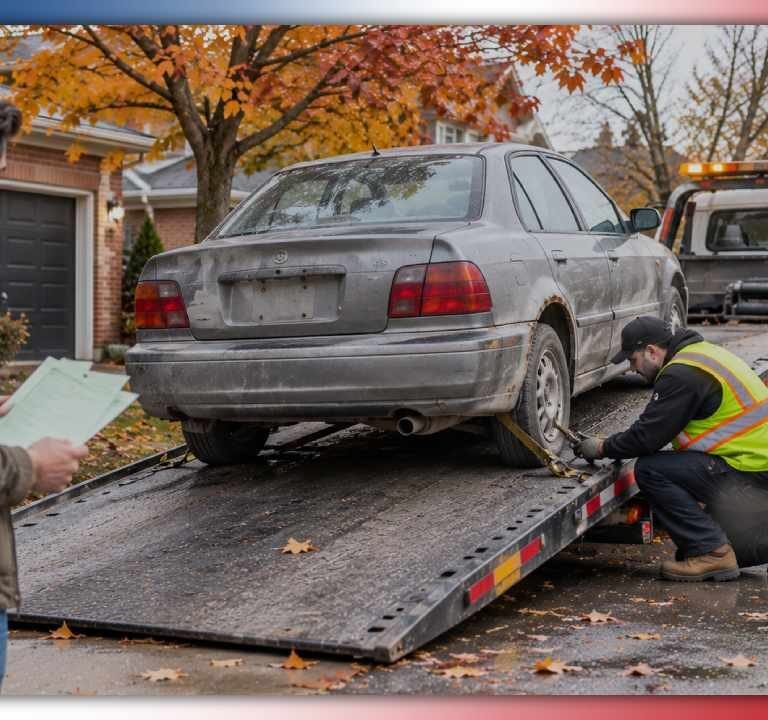
October offers a practical head start, especially before heavy snow limits access to your vehicle. A dry driveway lets a tow operator inspect tire movement, steering, wheel position, and clearance for equipment. You also have more time to compare offers without the pressure of an urgent December deadline.
November remains useful when you know winter repairs will exceed your budget. December still offers a workable disposal window, but freezing conditions can complicate dispatch. Choose your sale date using vehicle condition, parking restrictions, and current quotes rather than a calendar promise.
October: Time to Compare Offers
Request 3 vehicle-specific quotes during October. Tell each buyer the same vehicle year, make, model, mileage, condition, and pickup address. Compare net payment, included towing, transfer paperwork, and payment timing. Ask each buyer how long the quoted offer remains valid.
November: Time to Avoid Unnecessary Repairs
Schedule removal before buying winter tires for a car you have decided to retire. Compare the written repair estimate with the car’s actual resale prospects. An engine failure, corroded brake line, or unsafe frame can make direct removal more practical than another repair.
December: Time to Plan Towing Access
Confirm pickup access before snowfall blocks a lane or traps the wheels. Tell the driver about frozen brakes, missing keys, underground garages, and steep driveways. Keep a clear path and avoid attempting unsafe repairs merely to make the vehicle roll.
Best Time Scrap Car October Ontario: Prices Versus Costs
The highest scrap price and the smartest sale date are not always the same. Steel, aluminum, and reusable components affect offers independently. Scrap Cars 4 Cash publishes a guide describing stronger spring metal pricing and softer winter conditions. That published pattern does not guarantee an exact seasonal price for your car.
Get a current quote before making a decision. Ask whether the buyer values a complete vehicle, working transmission, original catalytic converter, or reusable body panels. Compare any later expected increase against the bills you would pay while waiting.
A Vehicle-Specific Quote Beats a Seasonal Guess
Provide accurate photos of the front, rear, underbody rust, and dashboard. Record the Vehicle Identification Number (VIN) when available. Note missing wheels, battery, or catalytic converter. Buyers assess complete vehicles differently from stripped shells, so consistent disclosures create fairer comparisons.
The Holding-Cost Calculation
Add your expected insurance, legal parking, storage, and required maintenance until your proposed future sale date. Subtract that total from any realistic expected price increase. For example, a hypothetical $120 increase does not help when keeping the car costs $180. Those figures illustrate arithmetic, not local rates.
Three Conditions That Favour Waiting
Keep the vehicle when you still need reliable winter transport, you can store it legally without ongoing costs, or you have strong evidence of repairable resale value. A running vehicle can attract a private buyer willing to pay more than a scrap recycler. Compare both options before accepting.
Winter Weather Risks That Increase the Urgency
Ontario road salt accelerates corrosion on brake lines, rocker panels, wheel arches, and underbody components. Freezing temperatures also expose weak batteries and starter problems. A car that already needs major repairs can deteriorate through another winter without providing useful transportation.
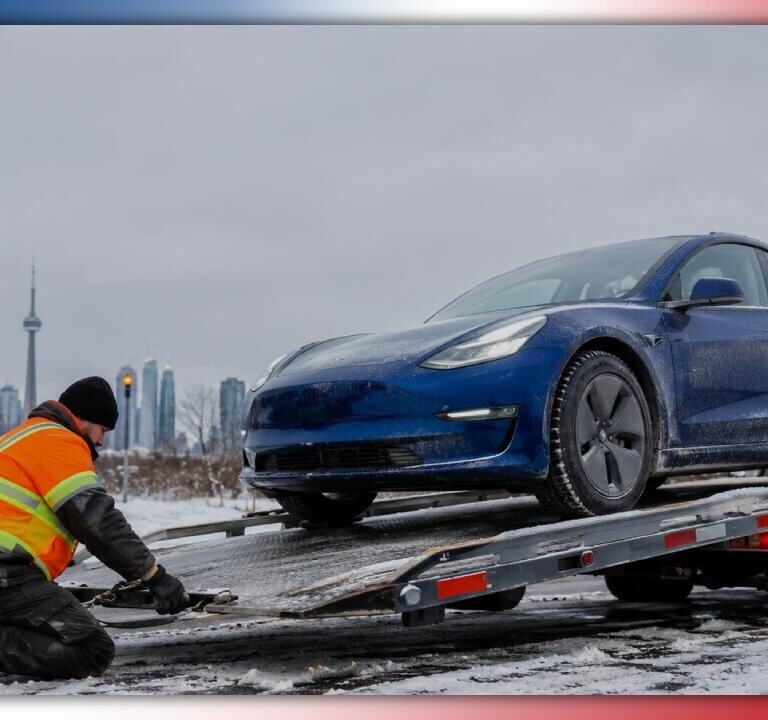
Snow and ice raise collection difficulty. A wheel that cannot turn, a parking brake that remains frozen, or a car trapped behind a snowbank changes towing requirements. Tell your buyer about those conditions before scheduling. Never stand near the winch line during loading.
Cold-Weather Mechanical Failures
Inspect the existing battery, cooling system, and brakes only when you intend to keep driving. A dead battery alone does not automatically make a car worthless. Repeated no-start failures combined with a damaged transmission or severe structural rust create a stronger case for recycling.
Snowbanks and Driveway Clearance
Provide the pickup address and describe the tow route. Mention narrow gates, shared driveways, low garages, and vehicles blocking access. For an example measurement, a 6-foot (1.8-metre) clearance differs sharply from a 10-foot (3.0-metre) opening. The tow operator must confirm actual equipment needs.
Vehicle Types Worth Assessing Before December
You can request quotes for non-running sedans, damaged SUVs, aging minivans, and light pickup trucks. Vehicle value depends on completeness, usable parts, weight, and collection logistics. Age alone does not prove a car belongs in recycling.
An accident-damaged vehicle with serviceable parts can receive a different assessment from a stripped vehicle of identical weight. Tell the buyer about insurance write-offs and financing interests. Ask your insurer or lender to confirm the release process when either party retains an interest.
High-Mileage Commuter Cars
Evaluate a commuter car after repeated repair bills or failed safety inspections. Record the odometer and major faults, such as overheating or transmission slipping. A working engine does not cancel out severe corrosion. Request repair and scrap comparisons before booking.
Rusted SUVs and Pickup Trucks
Check the frame and brake system through a qualified mechanic when you are considering further driving. SUVs and pickups can contain valuable drivetrains and recoverable components. A buyer needs the make, model, towing location, and missing-parts information for an accurate offer.
Stored Cars and Non-Running Vans
Remove abandoned personal property and confirm your right to sell the vehicle. Tell the operator when the vehicle last moved. A van with seized wheels or a car inside a basement garage needs more planning than a rolling vehicle parked outdoors.
How to Compare Ontario Scrap Offers Before Winter
To compare Ontario scrap offers before winter, request identical quotes from 3 buyers using a complete vehicle description. Ask whether towing comes with the accepted purchase. Check payment timing, potential deductions, and the correct company name on the sale record.
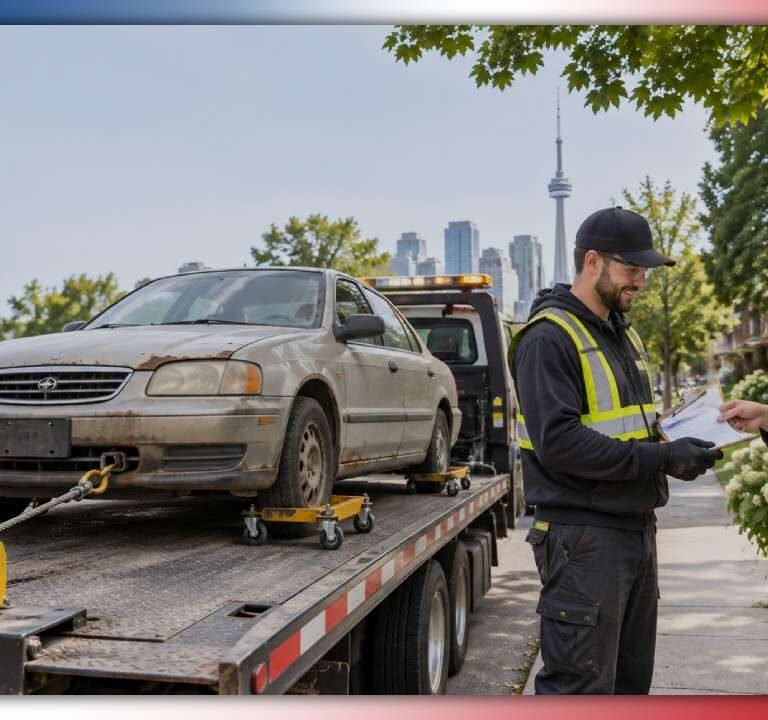
Use the scrap car removal service page to understand the pickup process before seeking a quote. The service describes vehicle information, ownership checks, collection logistics, and payment at pickup. A specific quote remains conditional on the details you provide matching the inspected vehicle.
Information to Send Every Buyer
Share the year, make, model, approximate mileage, visible damage, and exact pickup neighbourhood. State whether the wheels roll and steering turns. Mention missing keys or parts. Add clear photographs so the buyer can review the condition before dispatch.
Questions to Confirm Before Booking
Ask for the agreed payment amount and whether towing deductions apply. Confirm acceptable payment methods and the driver’s arrival window. Request the buyer’s business details for your records. Decline requests to sign blank transfer documents or misstate the sale value.
A Quick-Reference October-to-December Sale Plan
Use the following timetable as a planning checklist, not a guaranteed pickup schedule. Your vehicle condition and local weather determine practical timing.
| Task | Timing | Method | Difficulty |
| Collect 3 comparable quotes | October | Send identical photos and vehicle details | Easy |
| Review repairs and holding costs | October–November | Compare estimates with current sale offers | Moderate |
| Prepare transfer papers | Before booking | Check ownership, VIN, plates, and sale record | Moderate |
| Confirm access and tow setup | 1–2 days before pickup | Describe snow, locked wheels, and driveway access | Easy |
| Finalize payment and collection | At pickup | Inspect receipt and agreed payment | Moderate |
Ontario Documents and Ownership Transfer Steps
Prepare the Ontario vehicle permit, identification, and a documented bill of sale before the buyer arrives. Match the VIN on the vehicle with the permit. Resolve outstanding ownership or lien questions before accepting payment. Ask the buyer which documents apply to your specific scrap transaction.
Ontario’s standard used-vehicle sale guidance includes a Used Vehicle Information Package (UVIP), signed sale record, and transfer application. A transaction with an eligible registered vehicle wrecker can qualify for a UVIP exception. Verify the transaction category instead of assuming every recycler follows the same process.
Licence Plates and Permit Portions
Remove your licence plates before the tow truck departs. Keep the plate portion of the permit. Ontario generally associates licence plates with the owner rather than the car. Contact ServiceOntario about plate reuse, cancellation, or any registration matter affecting your circumstances.
Bills of Sale and Payment Records
Record the transaction date, vehicle VIN, buyer details, agreed amount, and payment confirmation. Keep photographs of the vehicle and signed paperwork. Ask the buyer for a receipt showing the actual purchaser. Retain records for future insurance and registration questions.
Insurance and Parking After Collection
Contact your insurer after the completed transfer and collection. Confirm the effective cancellation date rather than assuming removal cancels the policy. Inform a building manager or parking operator when the vehicle leaves a rented space. Keep written confirmation of any account changes.
GTA Pickup Conditions From Toronto to Mississauga
Toronto, Scarborough, North York, Brampton, and Mississauga have different traffic and property-access conditions. Busy downtown streets require safe loading space. Suburban properties offer different driveway layouts. Share the exact address and vehicle condition before requesting same-day or advance collection.
For high-mileage vehicles parked near homes or repair shops, review old car pickup options. The service describes accepted old cars, document checks, and towing with confirmed purchases. Same-day collection depends on dispatcher availability and the location, not the month alone.
Toronto Street and Laneway Pickups
Tell the driver about timed parking, narrow laneways, and loading restrictions. Arrange access to private property where needed. Do not block a public road to prepare the vehicle. Have the ownership documents ready before the driver arrives.
Peel Region Pickup Scheduling
Mississauga and Brampton requests need accurate addresses and access instructions. Consider school traffic, industrial-yard gates, and winter weather advisories. Check local scheduling details directly with the buyer. Published price ranges are not guaranteed payouts.
Recycling Outcomes and Responsible Vehicle Disposal
An end-of-life vehicle enters an appropriate dismantling and recycling process after collection. A recycler can recover usable components before separating metals. Batteries, fuels, oils, tires, and refrigerants need suitable handling. Ask your buyer where the car will go and keep the transfer record.
Scrap-car recycling differs from private resale. Your car’s metal value depends on ferrous steel and non-ferrous materials, including aluminum and copper. Reusable parts can change the buyer’s offer. Do not remove valuable components after you have accepted a quote based on a complete vehicle.
Parts Recovery Before Metal Processing
A dismantler can assess engines, transmissions, wheels, body panels, and catalytic converters for reuse or recovery. Original intact components can affect valuation. Buyers need honest information about missing parts before quoting.
Safe Handling of Fluids and Batteries
Leave hazardous dismantling to qualified operators. Do not drain fuel or coolant onto the ground. Ask how the operator manages used oil, lead-acid batteries, refrigerants, and tires. Responsible handling protects nearby drains and soil.
The Practical October–December Decision
Choose an October or November sale when the car is no longer useful and winter ownership costs are imminent. December remains reasonable when the vehicle has already failed and you can arrange access. Never hold a dangerous vehicle solely to chase an uncertain spring metal price.
Compare a real current offer with your alternatives. Repair a sound vehicle when projected use justifies the repair. Sell privately when the car has clear roadworthy resale value. Arrange recycling when faults, costs, and safety concerns make continued ownership impractical.
Additional Timing Factors Before You Accept an Offer
Ask your buyer whether the quoted amount depends on recent metal prices or on the car’s specific reusable parts. A steel-price movement does not change every vehicle offer equally. A running engine, intact exhaust components, and suitable wheels create different recovery opportunities. Photograph those features before comparing bids. Keep your comparison focused on the payment you will receive rather than a national average.
Check your legal parking deadline before delaying a sale. Apartment managers, condo boards, municipal parking authorities, and private storage companies impose different rules. A car that cannot move can become a property-management problem. Ask the relevant operator for the exact policy and the applicable deadline. Never assume a neighbour’s driveway or public street offers free long-term storage.
The Repair-or-Retire Checklist
Request a written mechanical estimate before authorizing expensive work. Separate safety repairs from optional cosmetic work. Ask how many months you realistically plan to drive the car. Compare repair cost, insurance, operating expenses, and a replacement option. When a repair does not support safe, useful transportation, a cash offer becomes a practical alternative.
The Winter Pickup Preparation Checklist
Clear movable belongings, toll transponders, parking tags, and personal documents. Photograph the dashboard mileage and exterior condition. Find the ownership permit and spare keys. Arrange access for the registered owner or an authorized representative. Inform the buyer about fluid leaks or missing tires. Do not push or tow an unsafe vehicle yourself to reach the street.
Confirm the final offer in writing before collection. Review cancellation terms and tell the buyer about any change in vehicle condition. Ask whether the driver will inspect the car before completing payment. Keep the vehicle parked safely until professional loading begins. A clear process protects both your payment and the driver’s ability to complete the pickup.
Frequently Asked Questions
Is October the best time to scrap a car in Ontario?
Yes, for some unwanted vehicles. October often simplifies inspection and towing before severe weather. Spring can offer stronger metal prices, so compare actual quotes and holding costs.
Do scrap car prices always rise before winter?
No. Steel demand, reusable parts, and local buyer activity determine offers. Ontario sources describe mixed fall conditions and often softer winter prices.
Can I scrap a car in Ontario during December?
Yes. Buyers operate during winter, subject to availability and access. Disclose frozen wheels, snowbanks, garage restrictions, and non-running conditions before booking.
Do I need to remove the licence plates before scrapping?
Yes. Remove your Ontario licence plates and retain the plate portion of your permit. Keep the bill of sale and verify applicable ownership-transfer requirements.
Is free towing available for unwanted cars in the GTA?
Yes, with accepted Scrap Cars 4 Cash purchases. Vehicle condition, pickup access, and the final agreement determine the booking. Confirm all terms before accepting.
Book an Ontario Scrap Car Quote Before Winter
The best time scrap car October Ontario choice comes down to real value, safety, and winter ownership costs. Collect accurate vehicle details, compare written offers, and decide before unnecessary repairs or snow complicate collection. Request a vehicle-specific quote using Mississauga scrap pickup details and confirm towing, payment, and ownership steps before booking.