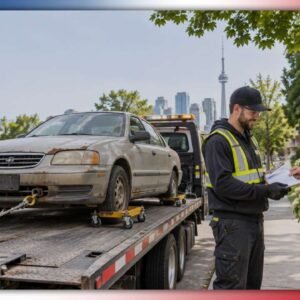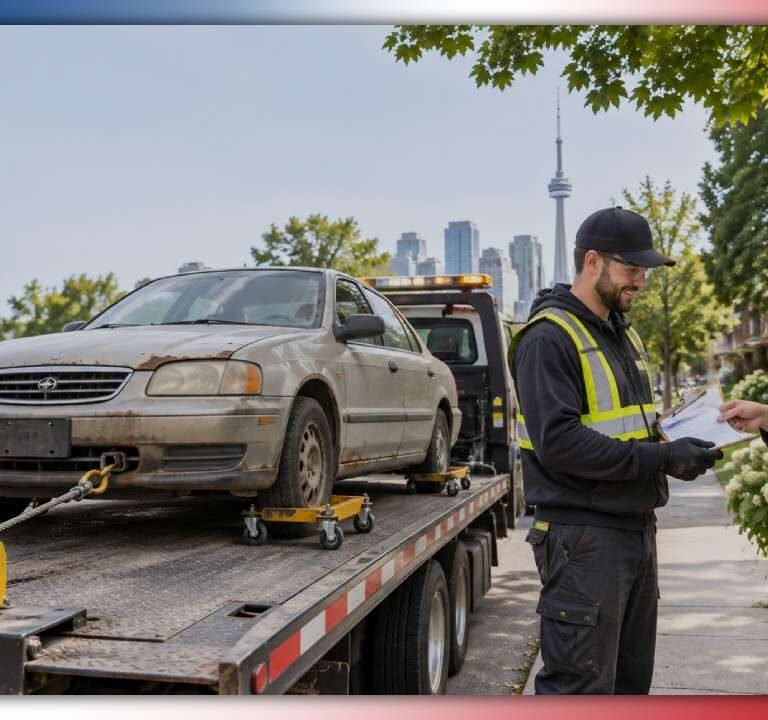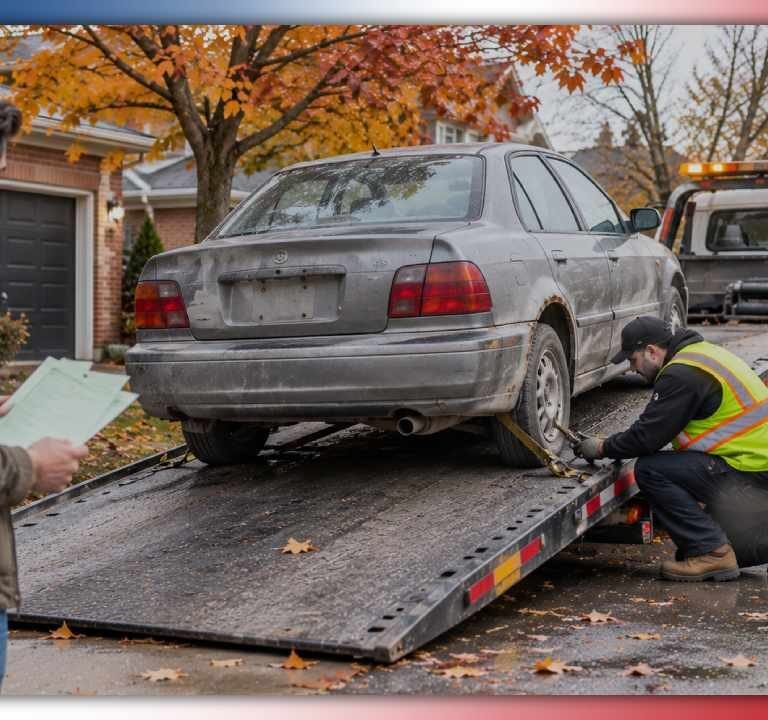
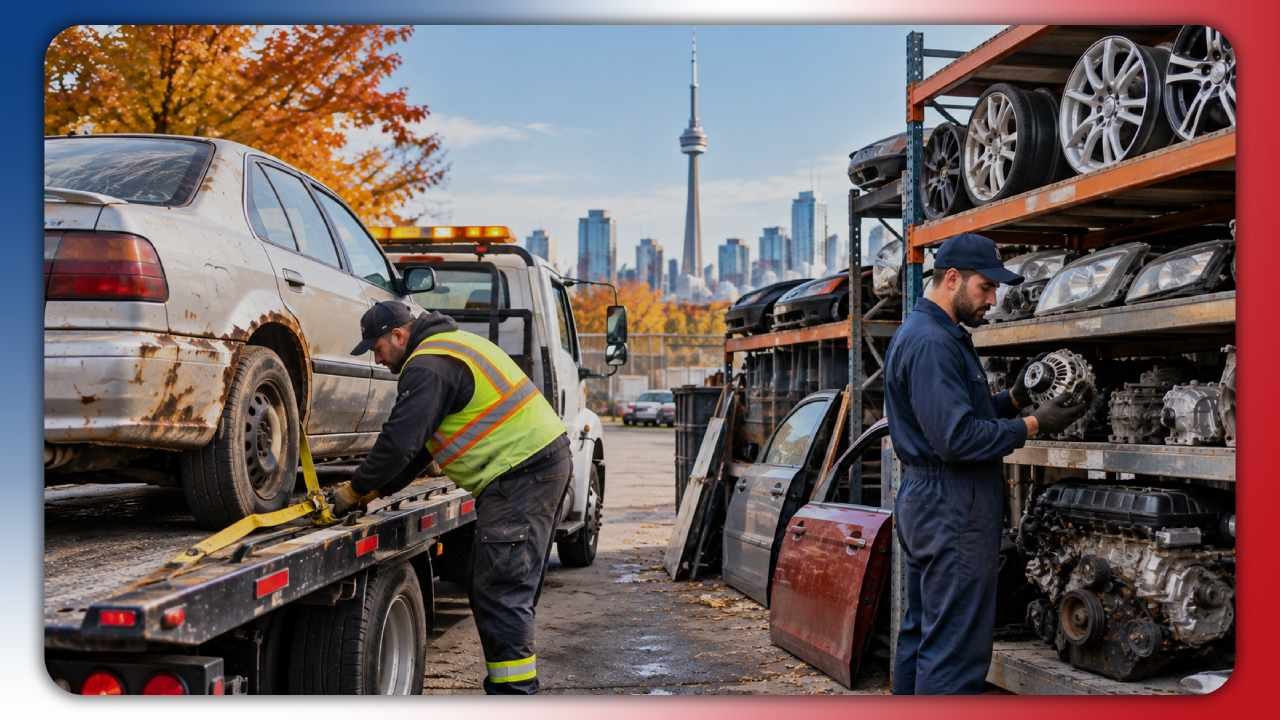
Scrap Your Car vs Selling for Parts usually favours scrapping when you need dependable cash without dismantling work. Selling individual components can pay more when demand, storage and mechanical skills support the extra effort. You should compare net proceeds, not advertised asking prices. The final winner depends on your vehicle, buyer offers, your time and the remaining shell.
Toronto drivers often face that decision after engine failure, collision damage or repeated repair bills. A complete car contains recyclable metal and reusable components. A dismantled car separates those sources of value, but creates additional costs and delays.
Scrap Your Car vs Selling for Parts: The Toronto Profit Difference
Scrapping provides one negotiated payment; parting out creates several uncertain sales. Neither approach guarantees the highest return for every vehicle. A dismantler values its remaining metal, engine, transmission, wheels and other usable components together. Private buyers pay only for the individual components they actually purchase.
Compare a written complete-car offer against realistic proceeds from specific parts, such as an alternator, starter, headlights and tires. Subtract listing fees, packaging, storage and the shell removal charge. Assign a value to every hour you spend working. Never count an unsold part as cash.
Whole-Vehicle Scrap Offers
Scrap Cars 4 Cash publishes a general CAD $250–$2,000 range for Greater Toronto Area vehicles. The range is not a guaranteed quote. The company says larger trucks and newer write-offs can receive higher offers. Individual pricing depends on model, condition, access and component completeness. Obtain a written price before scheduling removal.
Individual-Parts Sale Proceeds
Parts revenue varies with fitment, mileage, condition and verified demand. A tested engine often attracts a narrower buyer group than a clean set of wheels. Some advertised prices never convert into completed sales. You need evidence from recently completed transactions, not just active listings.
Car Condition and the Strongest Resale Components
A complete car with working components generally attracts more recycling value than an empty shell. Check the engine, transmission, catalytic converter, wheel assemblies and electronic modules before choosing a sale method. Tell buyers exactly which components remain fitted.
Engines, Transmissions and Electronic Modules
A running engine with service records offers more credible value than an untested engine. Buyers need the exact year, make, model and engine code. Photographs of identification labels and diagnostic reports help confirm compatibility. Transmission buyers also ask about mileage, shifting behaviour and failure symptoms.
Electronic components include engine control modules, infotainment screens and climate-control units. Modern modules sometimes require coding after installation. That restriction limits the potential buyer pool. Never promise compatibility without checking model numbers and installation requirements.
Wheels, Tires, Lights and Interior Equipment
A matched set of alloy wheels can attract buyers when the rims remain straight. Photograph wheel dimensions, bolt patterns and tire date codes. Headlight assemblies need intact mounting tabs and clear lenses. Interior items, such as powered seats or factory stereos, need functional testing and safe storage.
Keep saleable items dry and labelled. A damaged connector or cracked housing can eliminate a promising transaction. Compare the time required for removal against the likely sale value before lifting any tool.
Catalytic Converters and Hazardous Components
Catalytic converters can influence whole-vehicle quotes through recoverable precious metals. Do not assume every converter attracts the same premium. Confirm ownership and any recycler documentation requirements before discussing a separate sale. Never remove emissions equipment from a vehicle you intend to drive.
Avoid do-it-yourself handling of high-voltage hybrid batteries, refrigerants or damaged fuel systems. Qualified specialists need appropriate equipment and disposal processes. A professional auto recycler can assess these components without exposing you to unnecessary hazards.
Realistic Net Profit After Dismantling Expenses
Subtract every selling expense before comparing the totals. Your net parts profit equals collected sales minus direct costs, labour value and final shell disposal. Your net scrap profit equals the confirmed cash offer minus any pickup or administration charges.
Consider a purely illustrative Toronto scenario. Your complete-car buyer offers $650 with towing included. You instead collect $1,050 from parts. Supplies and disposal cost $90. Shell collection costs $160. Twelve labour hours at $25 each cost $300. Your calculated parts net becomes $500, which trails the whole-car offer by $150.
The $650 and $1,050 figures above illustrate a method, not current market quotations. Replace every value with confirmed offers. A different vehicle with rare, tested components can reverse the comparison.
Labour, Tools and Buyer Delays
Track time spent inspecting, removing, cleaning, photographing and listing each part. Include messages, appointments, packing and returns. A single no-show wastes an appointment without generating revenue. Mechanical tools, such as a torque wrench and lifting stands, also carry purchase and maintenance costs.
Do not work beneath a vehicle supported only by a jack. Use suitable stands and qualified help for heavy assemblies. Your safety remains more valuable than an uncertain resale premium.
Storage, Transport and Remaining Shell
Dismantling creates a shell that still needs removal. Ask the recycler whether a vehicle without its engine, wheels or converter qualifies for free towing. Some buyers reduce their quote when key components disappear. Confirm the new price before removing any part.
Toronto property rules also affect storage. The city restricts unusable vehicles and vehicle parts in parking garages. Check property standards, your lease and condominium rules before storing a partly dismantled car. Source: City of Toronto property guidance.
Quick Reference for Scrap and Parts Sale Tasks
A written quote gives you the fastest reliable comparison point. The following timing estimates describe planning tasks, not guaranteed service durations.
| Task | Planning time | Method | Difficulty |
| Get complete-car quotes | 20–40 minutes | Contact 2–3 buyers with vehicle details | Easy |
| Check used-part demand | 1–2 hours | Review completed listings and fitment | Moderate |
| Inspect and test components | 2–4 hours | Record condition, photos and part numbers | Moderate |
| Dismantle selected parts | 4–16 hours | Use qualified assistance and proper tools | High |
| Sell remaining shell | 30–60 minutes to arrange | Confirm revised pickup terms | Moderate |
| Complete transfer records | 30–60 minutes | Sign receipt and verify ownership details | Moderate |
How to Compare Scrap Your Car vs Selling for Parts Offers
To compare Scrap Your Car vs Selling for Parts offers, request a complete-car price before removing components. Record the vehicle identification number (VIN), year, model, mileage and visible damage. Disclose missing keys, locked wheels and any collision history.
Use compare junk car buyers to understand the differences between cash buyers and weight-based yards. Request a quote that identifies the vehicle and confirms towing charges. A verbal range is less useful than a documented amount.
Build a Parts Inventory with Verified Demand
List the 5 most promising components first. For example, check a complete wheel set, headlight pair, transmission, alternator and factory infotainment unit. Record tested condition and model compatibility. Compare realistic completed-sale amounts against labour and shipping.
Calculate net parts proceeds only after subtracting expected unsold inventory. Include any cost to remove the shell. Use calculate your scrap value to compare how metal weight and fitted components affect a full-car offer.
Check Pickup, Payment and Quote Conditions
Ask who pays for towing, when payment occurs and whether inspection can change the quote. Confirm access limitations involving underground parking, narrow driveways or missing wheels. Photograph the vehicle before collection and retain the final bill of sale.
Never accept an unexplained deduction after a tow truck arrives. Request a fresh written price if the buyer identifies undisclosed damage. Walk away if the buyer refuses basic ownership and payment documentation.
Vehicles That Make More Sense to Scrap Whole
Choose a complete-car sale when mechanical defects, limited storage or urgent removal make dismantling impractical. Examples include a rusted compact with failed transmission, a flood-damaged sedan or a collision-damaged SUV. Their individual parts often require extensive testing.
A non-running commuter car also creates transport problems for private buyers. A recycler can handle the car as one unit. Compare bids from Toronto, Scarborough, Etobicoke and North York collection services rather than choosing the first advertisement.
Consider a vehicle weighing 3,000 lb (1,361 kg). Vehicle weight provides part of its metal value, but buyer offers also reflect reusable equipment and collection costs. Never calculate a guaranteed payout from weight alone.
Urgent Pickup and Uncertain Mechanical History
Time-sensitive sales favour a complete vehicle when parking expires or a property manager demands removal. Unverified engines and transmissions also deter used-part buyers. Clear ownership records and accessible pickup space help avoid delays.
Cars with Major Structural or Flood Damage
Severe rust and flooding can damage electrical connectors, modules and mechanical parts. Avoid selling untested safety-sensitive components as working. Whole-car recycling reduces the risk of inaccurate condition claims and later disputes.
Vehicles That Support a Profitable Parts Strategy
Parting out makes sense when verified component demand exceeds the full-car offer after every expense. Owners with mechanical experience, permitted storage and matching spare-vehicle needs have a stronger starting position. Rare trim pieces and discontinued original equipment sometimes attract committed buyers.
A donor car with a recently replaced transmission or a documented low-mileage engine presents a clearer proposition. Keep invoices and diagnostic records. Buyers value proof more than optimistic descriptions. Set a firm selling deadline so unsold stock does not accumulate indefinitely.
High-Demand Donor Models
Look for compatible components among common Toronto vehicles, such as Honda Civic, Toyota Corolla and Ford F-150. Demand varies by model year and equipment package. Check the exact fitment before quoting a price. A popular badge alone does not guarantee profit.
A Limited Hybrid Selling Strategy
A selective approach can work when 1 or 2 easily removable accessories have documented buyers. Ask the scrap purchaser how removal changes the remaining vehicle quote. Compare the combined net against the original complete-car bid. Avoid removing safety equipment or regulated components without specialist advice.
Ontario Ownership, Bills of Sale and Disposal Records
Transfer the vehicle correctly even when the buyer intends to dismantle or recycle the car. Ontario instructs sellers to check the VIN, ownership documentation and outstanding liens. Standard private vehicle sales generally require a Used Vehicle Information Package (UVIP); applicable exemptions need case-specific confirmation.
Prepare the vehicle portion of the permit and a signed bill of sale. Keep your licence plates and the plate portion. Ontario also provides a process to update the vehicle status to sold at ServiceOntario. Confirm the buyer identity and preserve transaction records. Source: Ontario government vehicle sale and permit guidance.
Private Parts Sales and the Remaining Vehicle
Selling a wheel or headlight does not transfer ownership of the complete vehicle. You remain responsible for the leftover car until the actual vehicle transfer occurs. Record the final buyer name, purchase date, price and vehicle identification details.
Check debts before selling a financed vehicle. An outstanding lien does not disappear because you dismantle the car. Ask the lender how to settle the account before transferring ownership.
Responsible Handling of Fluids and Batteries
Used engine oil, coolant, brake fluid and automotive batteries require appropriate handling. Never pour fluids into drains or onto soil. Contact a suitable local collection service or authorized recycler for the specific material. Keep damaged lithium-ion batteries away from informal dismantling.
Toronto Pickup Logistics and Local Selling Conditions
Collection access affects the final return as much as the advertised offer. Toronto driveways, condominium garages and street parking areas present different loading conditions. State the exact vehicle location and whether its wheels rotate.
A tow operator needs safe access to a disabled vehicle. Confirm any underground clearance before booking. For illustration, a 7 ft (2.13 m) garage clearance is a site measurement, not a promise that a specific tow truck fits. Ask the dispatcher to verify equipment dimensions.
Private parts sales require repeated meetings. Arrange safe public pickup when practical, and avoid exposing your address unnecessarily. Store small components securely. Photograph serial numbers and describe defects clearly to reduce disputes.
A Toronto Decision Checklist Before You Sell
Make your final decision with 4 verified figures: whole-car offer, sold-parts revenue, disposal costs and labour value. Add a deadline that reflects your parking and storage situation. Compare the final results using the same currency and the same time period.
Keep an intact vehicle when the full-car offer is competitive. Consider parting out only when tested demand supports a meaningful premium. Ask for a second written vehicle quote when your first estimate appears low. Do not assume every missing component leaves scrap value unchanged.
For a Toronto vehicle that needs expensive repairs, distinguish salvage value from roadworthy resale value. A working, roadworthy car sometimes earns more through a standard sale. A failed engine or major structural issue can make recycling the safer commercial choice.
Frequently Asked Questions
Is selling car parts more profitable than scrapping in Toronto?
Sometimes. Selling tested, high-demand components can earn more, but labour, storage and unsold parts reduce net profit.
Can I remove the wheels before selling my scrap car?
Yes, if the buyer agrees. Confirm the revised quote and towing equipment first. Missing wheels can complicate collection.
Do Toronto scrap car buyers include free towing?
Some do. Scrap Cars 4 Cash advertises free towing for accepted vehicles. Confirm the terms for your location and condition.
Do I need ownership papers to scrap my vehicle in Ontario?
Yes, prepare proof of ownership. Ask about the applicable transfer documents and any UVIP exemption before collection.
Can a damaged vehicle still contain valuable parts?
Yes. An accident-damaged car can retain usable wheels, lights or drivetrain components. Test every component before listing.
Choose the Highest Net Return for Your Toronto Car
The stronger option is the one that puts more verified money in your hands after all costs. Scrapping offers speed and a single documented transaction. Parts sales reward skill, storage and proven buyer demand. Compare 2 written scrap offers with realistic completed-sale values before dismantling anything. For a complete-car valuation and pickup options, request old car removal through Scrap Cars 4 Cash.