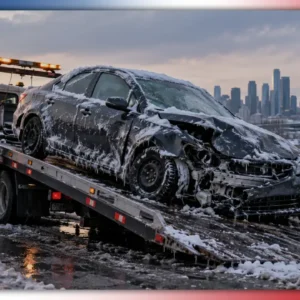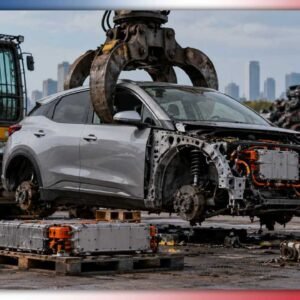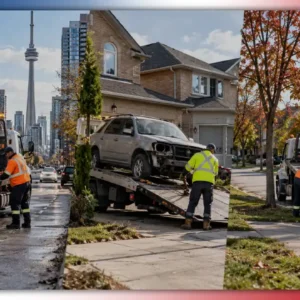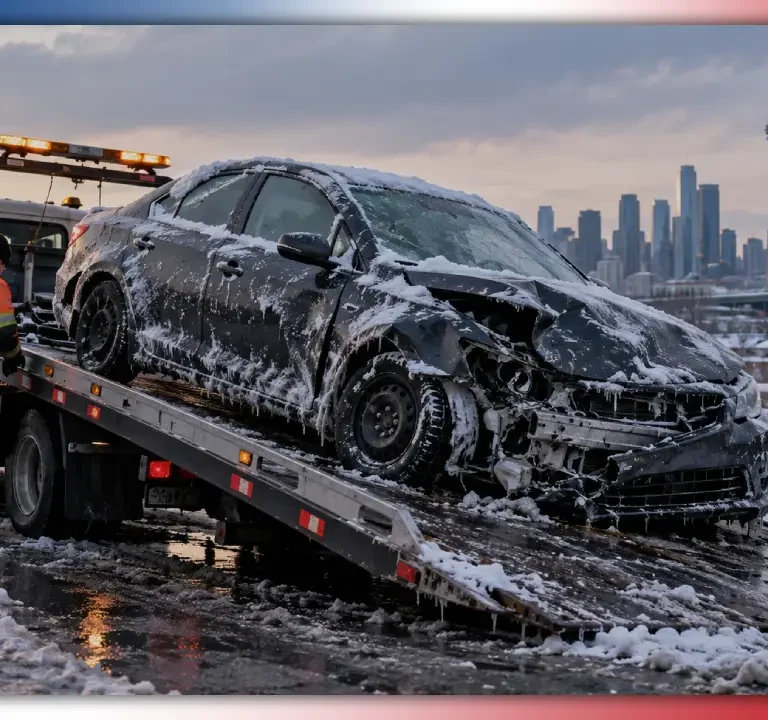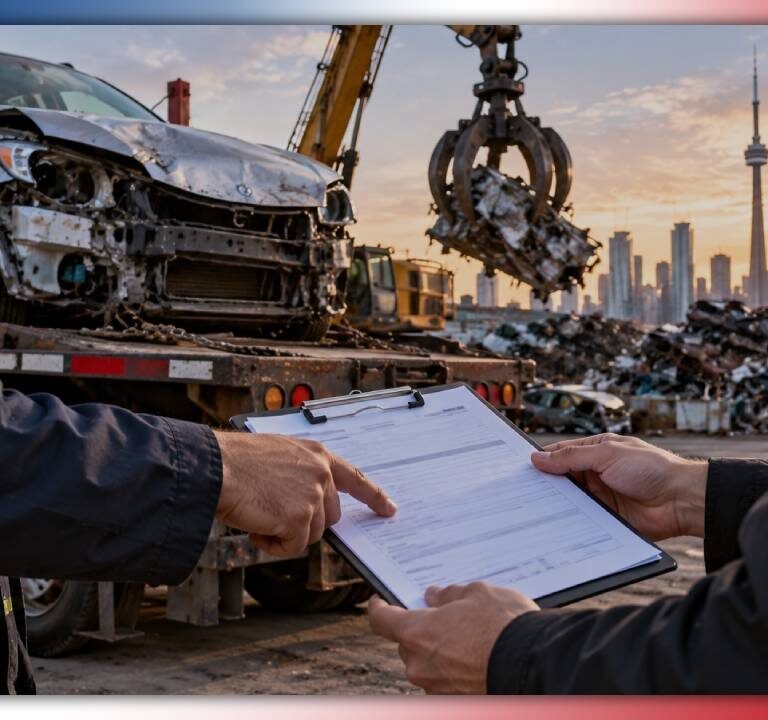
Scrap your old car when repair costs exceed 50% of its market value. Repair or scrap old car in Ontario choices depend on 3 numbers: repair estimate, market value, and scrap payout.
Fix the car when the estimate stays under 50% and the frame is solid. Scrap the car when rust, engine failure, or repeat breakdowns push costs higher.
Read on for the exact formula, 5 Ontario warning signs, and the paperwork for each choice.
How Do You Decide to Repair or Scrap Old Car in Ontario?
Divide the repair estimate by the car’s market value, then multiply by 100. The result is your repair percentage.
A car worth $6,000 with a $2,400 repair estimate scores 40%. Repair the car. A $4,000 estimate scores 67%. Scrap the car.
How to Calculate the 50% Rule for Your Car
To calculate the 50% rule for your car, follow these 3 steps:
- Look up the market value using valuation tools such as Canadian Black Book and Kijiji Autos listings.
- Collect a written repair estimate from a licensed mechanic.
- Divide the estimate by the market value and multiply by 100.
Repair the car at 49% or lower. Scrap the car at 50% or higher.
Compare 3 to 5 similar listings within 100 km (62 miles) to confirm the market value. Match the year, trim, and mileage of your car.
Why Does the 50% Rule Fail on Cars With Repeat Repairs?
Add every repair from the past 12 months to the new estimate. Three $900 repairs in 1 year total $2,700 and signal a failing car.
Water pumps, radiators, and brakes often fail one after another. Each small bill hides the growing total.
Which Repairs Are Worth Paying For on an Old Car?
Pay for repairs that stay under 50% of market value and restore safe driving. 4 repairs usually pass the test: brake pads, batteries, sensors, and alternators.
Which Minor Repairs Extend an Old Car’s Life?
- Replace worn brake pads and rotors.
- Swap a dead battery.
- Fix faulty oxygen sensors.
- Rebuild or replace a failing alternator.
Brake, battery, sensor, and alternator jobs cost little and rarely shorten the car’s lifespan. Fresh brake pads and a new alternator keep a solid car on the road for years.
What Signs Show an Old Car Is Worth Keeping?
Keep the car when mileage stays low to moderate, rust stays cosmetic, and the engine and transmission run smoothly. A full service history adds years of use after a repair.
Check mileage as well. Cars past 250,000 km (155,343 miles) need a closer look at the engine and transmission before any repair.
Ontario has no yearly safety inspection for private cars. Book your own inspection to find hidden wear before the next breakdown.
Which 5 Problems Mean You Should Scrap Your Old Car?
Scrap the car when any of these 5 problems appears:
- Structural rust on the frame, subframe, or suspension mounts
- Engine or transmission repair costing near the car’s value
- 3 or more major systems failing at once
- Repeat repairs every few months
- Damage to airbags, steering, brakes, or frame
Why Does Frame Rust End a Car’s Life in Ontario?
Road salt corrodes frames, subframes, and rocker panels during every Ontario winter. Scrap the car when rust weakens the frame or main suspension mounts.
A rust hole the size of a fist, about 4 inches (10cm), signals advanced corrosion. Structural rust also fails the Safety Standards Certificate (SSC) inspection.
Ask the mechanic to inspect these 4 areas on a hoist:
- Frame rails
- Rocker panels
- Subframe mounts
- Suspension mounting points
When Do Engine Costs and Multiple Failures Justify Scrapping?
Scrap the car when an engine or transmission repair approaches the car’s market value. A $5,000 transmission on a $5,500 car fails the 50% rule by a wide margin.
Scrap the car when the engine, transmission, and electrical system fail together. A failed alternator, water pump, and starter within months confirm the same pattern.
Frame damage, airbag faults, steering problems, and weak brakes end the repair debate. No repair bill outweighs a safety failure.
How Does Repair Cost Compare With Replacement Cost?
Compare the repair estimate to 12 months of payments on a replacement car. Repair the car when the estimate costs less than those 12 payments.
A $3,300 repair costs less than 12 payments of $450, which total $5,400. The repair wins on cash.
Replacement also adds 13% sales tax, possible insurance increases, and financing interest. A $9,000 replacement car adds $1,170 in tax alone.
When Can You Override the 50% Rule?
Override the 50% rule only when all 3 conditions hold:
- The repair costs less than 12 replacement payments.
- The frame and suspension mounts show no structural rust.
- The repair fixes 1 failed part, not several systems.
What Do You Gain From Replacing an Old Car?
Newer vehicles add safety features that older cars lack. Examples include rear-view cameras, emergency front braking, blind-spot monitoring, and lane-keeping assist.
A factory warranty also covers repair bills during the warranty period. Weigh these gains against the 13% sales tax and the monthly payment.
How to Get an Accurate Repair Estimate Before You Decide
To get an accurate repair estimate, book a full inspection with a licensed Ontario mechanic. An inspection takes about 1 hour of labour.
- Request a written estimate that itemizes parts and labour.
- Ask the mechanic to rank every repair by safety risk.
- Request a list of repairs needed in the next 12 months.
- Collect a second estimate from a different shop.
A second estimate protects you from an inflated quote. Compare both quotes to the market value before you spend anything.
Ask each shop to price used parts from auto recyclers, such as engines, alternators, and body panels. Used parts often lower the estimate.
What Does the Ontario Safety Standards Certificate Mean for Your Decision?
Ontario requires an SSC before a used vehicle receives a new permit for road use. An SSC stays valid for 36 days, so schedule the inspection close to the sale date.
Scrapping skips the SSC entirely. A licensed recycler buys the car as-is, with no safety inspection and no repairs.
An SSC inspection checks brakes, steering, suspension, lights, tires, exhaust, and structural body condition. A car with failing brakes and rusted mounts fails on 2 counts.
Selling an unrepaired car as-is to a private buyer cuts the price. A car needing a $1,000 repair can lose $1,500 or more in asking price.
What Are Your Options Besides Repairing or Scrapping?
Sell, part out, trade in, or donate the car when neither repair nor scrap fits. Each option changes your net cash and your effort.
Which Options Can Pay More Than Scrap Value?
- Sell the car privately to a driver, with an SSC ready.
- Sell the car as-is to a buyer who fixes cars, such as a mechanic or hobbyist.
- Trade in the car at a dealership toward a replacement vehicle.
- Donate the car to a registered Canadian charity.
Private sales to drivers require a Used Vehicle Information Package (UVIP), and buyers expect an SSC. Mechanics, hobbyists, and parts dealers buy cars for engines, transmissions, and body panels.
Compare every offer to the scrap quote. The scrap quote shows the minimum payout you can accept.
How Much Cash Do You Get When You Scrap an Old Car in Ontario?
Most Greater Toronto Area (GTA) vehicles sell for $250 to $2,000 at Scrap Cars 4 Cash. Larger trucks and newer write-offs pay more.
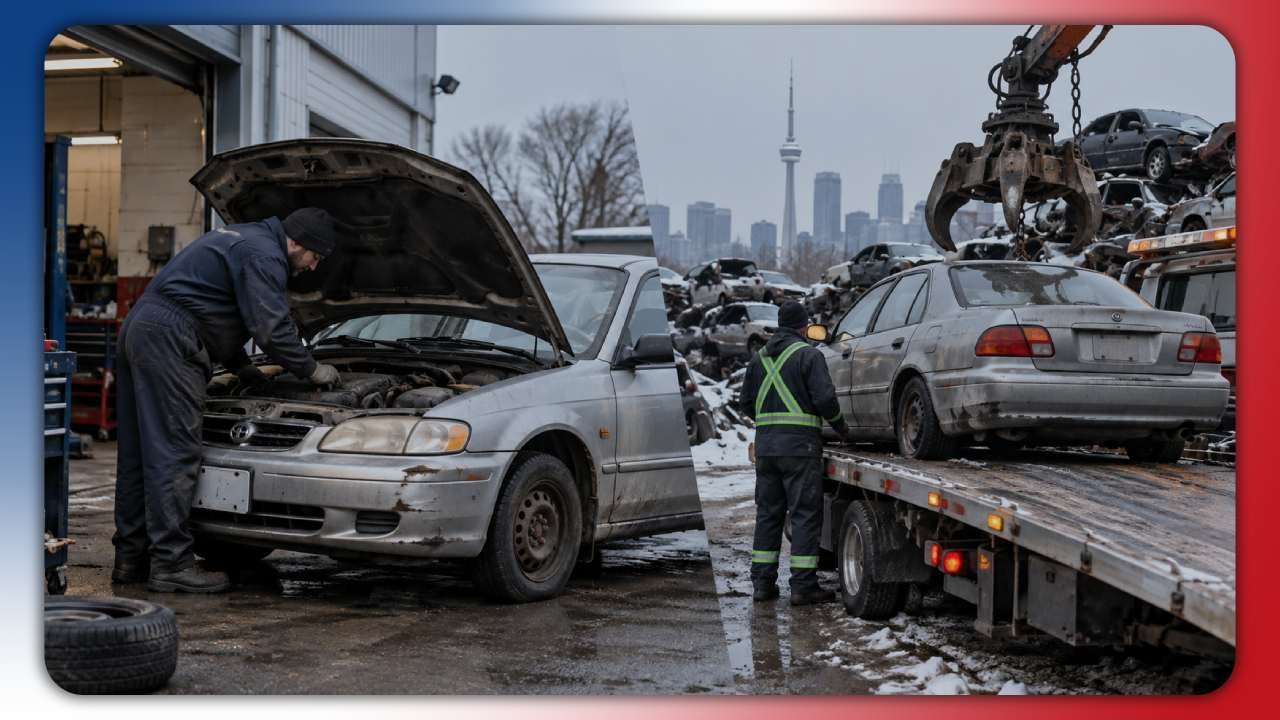
Scrap Cars 4 Cash tows every vehicle for free and usually picks up the same day. Durham Region drivers can book Oshawa scrap car removal directly. The quote you receive by phone is the cash you receive at pickup.
What Lowers Your Scrap Car Payout?
- Missing parts such as the engine, transmission, or catalytic converter
- Weekly drops in scrap metal prices
- Hard-to-reach pickup locations
- Low vehicle weight
Scrap metal prices shift weekly, so a quote today differs from a quote next month. Request your quote as soon as the repair estimate lands.
How to Get the Highest Scrap Quote
To get the highest scrap quote, prepare these 4 details before you call:
- Year, make, and model
- Current condition and whether the car runs
- Presence of the engine, transmission, and catalytic converter
- Exact pickup address and vehicle access
Ask 2 recyclers for a quote and confirm free towing. Confirm the quoted price stays unchanged at pickup.
What Does a Parked Scrap Car Cost You Every Month?
A parked scrap car still costs insurance and registration. Street parking adds ticket risk, and every week of delay exposes your quote to scrap metal price drops in 2026.
How Does Vehicle Weight Change the Scrap Value?
Heavier vehicles contain more steel and pay more. A 5,500 lb (2,495kg) pickup truck outweighs a 3,000 lb (1,361kg) compact car by 2,500 lb (1,134kg).
A complete car with its engine and catalytic converter pays more than a stripped shell. Keep every major part on the car until pickup.
How to Decide Between Repair and Scrap in 6 Steps
To decide between repair and scrap, follow these 6 steps:
- Look up the market value of your car.
- Book a full inspection with a licensed mechanic.
- Collect a written repair estimate.
- Divide the estimate by the market value.
- Repair the car if the result stays under 50%.
- Request a free scrap quote if the result reaches 50% or higher.
Request the scrap quote before you approve any repair. The scrap quote sets your car’s minimum value.
A $7,000 car with a $2,800 estimate scores 40%. Repair the car. The same car with a $4,200 estimate scores 60%. Request the scrap quote.
What Documents Do You Need to Scrap a Car in Ontario?
Bring your signed vehicle permit (ownership) and government photo ID. Sign the back of the permit under “Sold” and write the recycler’s name as buyer.
Which Documents Does a Licensed Recycler Require?
- Signed vehicle permit (ownership)
- Government photo ID, such as a driver’s licence or passport
- Keys for the car
Missing ownership slows the sale without blocking the sale. The recycler verifies your photo ID, runs a Vehicle Identification Number (VIN) check, and requires a signed affidavit.
A UVIP applies to private sales, so licensed recycler sales skip the UVIP. Scrap Cars 4 Cash completes the Ministry of Transportation Ontario (MTO) ownership transfer paperwork. Book Richmond Hill car removal for York Region pickups.
How to Prepare Your Car for Scrap Pickup
To prepare your car for scrap pickup, complete these 5 tasks:
- Remove your Ontario licence plates.
- Clear the trunk, glove box, and under-seat areas, including toll transponders such as 407 Express Toll Route devices.
- Clear snow, debris, and parked vehicles from the tow truck’s path.
- Hand the keys and signed permit to the driver.
- Cancel your insurance policy after pickup.
Keep the plates for your next vehicle or return them to ServiceOntario.
What Happens to Your Car After Pickup?
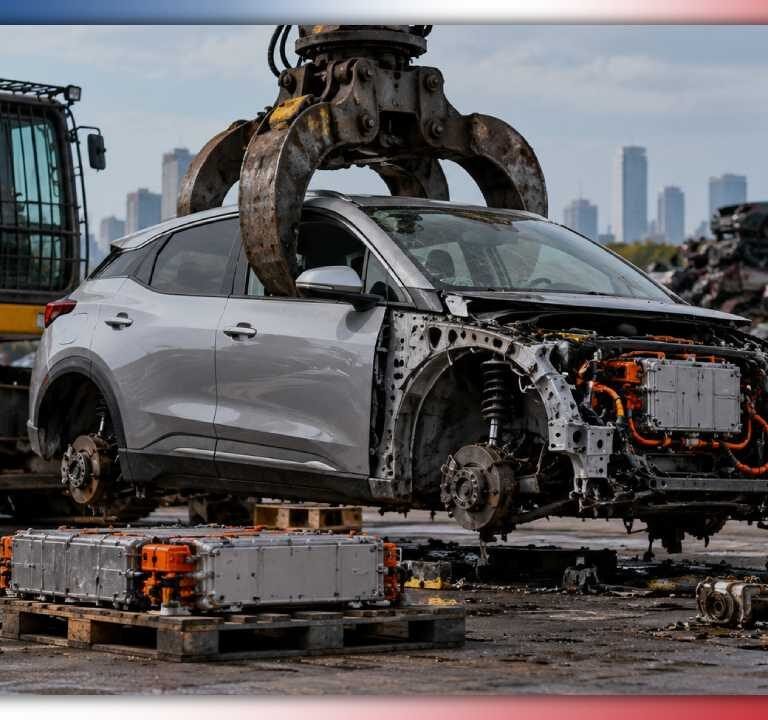
Licensed recyclers drain engine oil, transmission fluid, brake fluid, coolant, and gasoline before crushing. Recyclers also remove the battery and tires.
Recyclers salvage reusable parts first. Magnets then separate steel and iron from aluminum and copper, and the metals return to manufacturing. Ontario environmental rules govern every step.
Repair or Scrap Old Car in Ontario: Quick Reference Table
Use the table to plan the timing, method, and difficulty of each task.
| Task | Timing | Method | Difficulty |
| Check market value | Same day | Compare 3 online valuation sources | Easy |
| Mechanic inspection | About 1 hour of labour | Book a licensed Ontario mechanic | Easy |
| Written repair estimate | After the inspection | Request itemized parts and labour | Easy |
| Apply the 50% rule | 5 minutes | Divide the estimate by market value | Easy |
| Safety Standards Certificate | Valid for 36 days | Book an inspection station | Medium |
| Scrap quote | Same day | Call with year, make, model, condition | Easy |
| Scrap pickup | Usually same day | Free towing by the recycler | Easy |
| Plates and paperwork | Before pickup | Remove plates, sign the permit | Easy |
FAQs About Repairing or Scrapping an Old Car in Ontario
Is It Worth Repairing a 15-Year-Old Car in Ontario?
Yes, when repairs stay under 50% of market value and the frame has no structural rust. Scrap the car when either condition fails. A mechanic’s inspection confirms both conditions in about 1 hour.
Can You Scrap a Car in Ontario Without Ownership?
Yes. The recycler verifies your government photo ID, runs a VIN check, and requires a signed affidavit. Lost paperwork delays the sale without blocking the sale.
Do You Need a UVIP to Scrap a Car in Ontario?
No. A UVIP applies to private sales, and licensed recycler sales skip the document. You save the ServiceOntario trip and the package fee.
Can You Scrap a Car That Does Not Run?
Yes. Scrap Cars 4 Cash tows every vehicle for free, running or not. Seized engines, flat tires, and accident damage all qualify.
How Much Cash Do You Get for a Scrap Car in the GTA?
Most vehicles sell for $250 to $2,000 at Scrap Cars 4 Cash. Larger trucks and newer write-offs pay more.
Next Step: Get a Free Scrap Quote in the GTA
Repair the car under 50% of market value, and scrap the car at 50% or higher. The decision becomes simple once you hold the estimate, the market value, and the scrap quote. Scrap Cars 4 Cash tows every vehicle for free and pays $250 to $2,000 on most GTA vehicles. The North York headquarters often delivers the fastest response. Request your free quote from the team handling North York scrap pickup today.