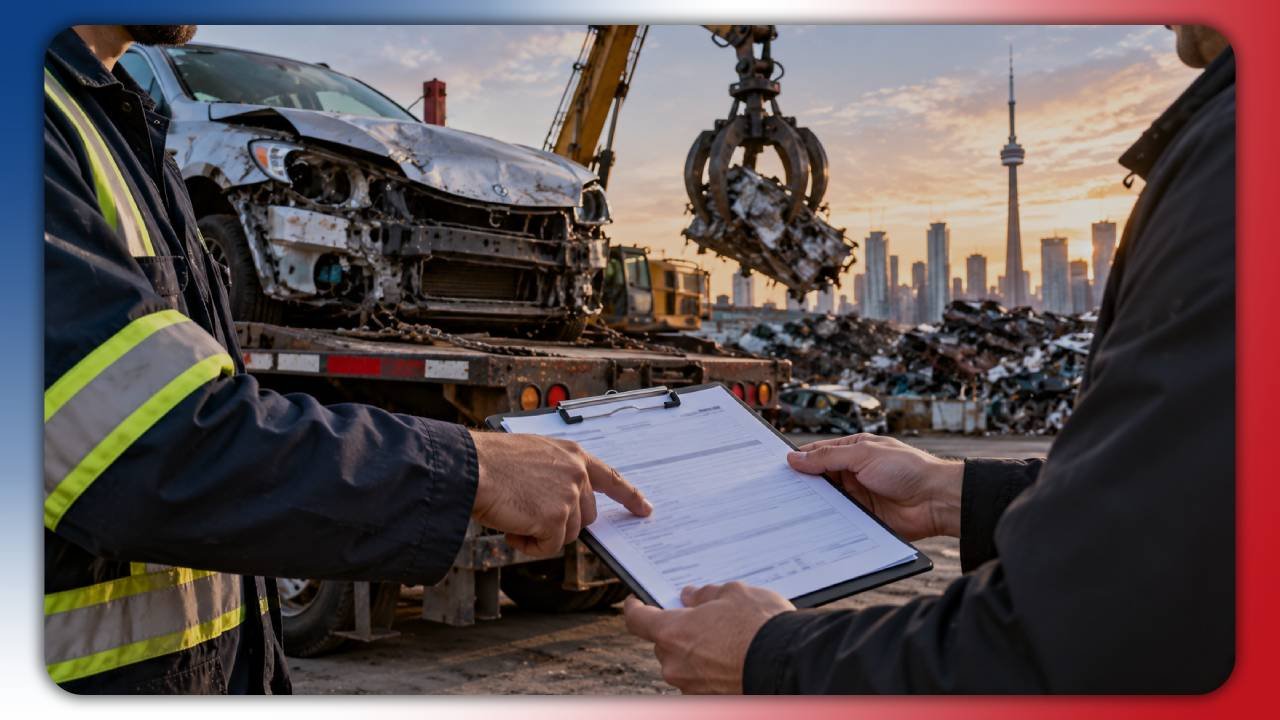
The phrase certificate of destruction Ontario refers to documentation of a vehicle entering dismantling or recycling. No general Ontario rule requires every private seller to obtain a consumer-facing certificate with that exact title. However, Ontario requires certain recyclers to complete a separate processing certificate under Regulation 347. You also need a documented sale and the correct vehicle-status update.
Confusing those 3 records creates avoidable problems. You should ask who receives the car, record the transaction, and check your ServiceOntario record. The following steps explain what each document proves and when you need additional confirmation.
What Does a Certificate of Destruction Ontario Record Prove?
The term certificate of destruction Ontario often describes a recycler’s record of a car’s final disposal. The document usually identifies the vehicle, recycler, and relevant processing event. A buyer’s promise to recycle the car does not prove the recycler already crushed the vehicle.
You should distinguish a collection receipt from evidence of completed processing. Ask the buyer to describe the document before pickup. A receipt can record a transfer today, while a processing record can follow later.
What Information Should a Disposal Record Contain?
A useful disposal record identifies 6 details: the vehicle identification number, year, make, model, processing date, and business identity. The recycler can add its address, contact details, and registration information when applicable. Check whether the document confirms receipt, depollution, dismantling, or actual destruction.
Compare the 17-character Vehicle Identification Number (VIN) against your permit and the vehicle itself. The VIN normally appears near the dashboard or driver’s door opening. Ask for a corrected record when a digit differs.
How Is a Certificate Different From a Bill of Sale?
A bill of sale records a transaction; a destruction record describes processing or disposal. Your bill of sale should identify both parties, the VIN, sale date, and agreed consideration. Keep a signed copy even when the buyer provides another receipt.
A certificate does not replace a signed transfer on the Ontario vehicle permit. A bill of sale also cannot prove that crushing already occurred. Keep both document types whenever the recycler supplies both.
Is a Certificate of Destruction Ontario Requirement for Every Scrap Car?
No. Ontario does not list a universal consumer-facing certificate of destruction Ontario sellers must collect for every ordinary scrap-car sale. The province instead sets specific documentation duties for vehicle transfers and end-of-life processing. Your circumstances determine which records apply.
Some businesses call their receipt a scrap certificate or a certificate of destruction. A document’s heading does not change its legal function. Ask the company what action the document records and whether ServiceOntario needs additional information.
Which Certificate Does Ontario Regulation 347 Require?
Regulation 347 creates a specific processing certificate for end-of-life vehicles. A person completing removal of listed hazardous items must issue that certificate when the conditions apply. The certificate confirms the specified items no longer remain in the vehicle. The certificate follows requirements for processing and record retention.
The Regulation 347 certificate serves the recycling chain, including the facility crushing, shredding, or shearing the vehicle. Ontario’s guidance calls for particular operator details and a statement about removed materials. Regulation 347 requires relevant parties to retain a copy for at least 2 years.
That processing certificate differs from a universal government-issued certificate naming the former owner. You can request available disposal evidence without claiming every facility must hand you its regulatory copy. Ontario’s end-of-life vehicle guidance explains the distinction.
Does a Certificate Change Your Vehicle Registration?
No. A certificate does not automatically mark your vehicle as sold in Ontario’s registration system. ServiceOntario provides a separate process to change a vehicle’s status after sale. You must check who will complete that step and keep proof.
A branded vehicle also follows Ontario’s vehicle-branding rules. The word “destroyed” on a private receipt does not automatically assign an “Irreparable” brand. Confirm your permit status through the provincial system rather than relying on a recycler’s description.
What Documents Should You Prepare Before Scrapping Your Car?
Prepare your Ontario vehicle permit, identification, a signed sale record, and any required authorization before collection. You should also confirm whether a Used Vehicle Information Package (UVIP) applies to your transfer. Ontario’s general used-vehicle sale rules require a UVIP in covered transactions; exemptions depend on the transaction.
Use the site’s Ontario scrap paperwork guide to review its pickup checklist. Treat the provincial pages as the authority for legal requirements. Ask ServiceOntario about an unusual transfer before you sign.
Which Permit Portions and Licence Plates Should You Keep?
Keep your licence plates and the plate portion of your Ontario permit. Sign the vehicle portion for the buyer when completing an applicable ownership transfer. Check the VIN on the permit before signing anything.
Remove your plates before the tow truck leaves. Ontario plates belong to the plate holder, not the vehicle. You can keep plates for a future vehicle or return unused plates to ServiceOntario.
Take a photograph of the signed sale record and vehicle before collection. Remove registration cards, parking permits, toll transponders, and personal documents from the cabin. Keep your licence plate screws in a small container.
What Changes for Financed, Leased, or Inherited Vehicles?
Obtain written authority before releasing a vehicle you do not own outright. A lender can hold a lien against a financed vehicle. A leasing company normally owns its leased vehicle until the contract provides otherwise.
For a financed car, ask the lender about settlement and lien release. For a leased car, request the lessor’s disposal instructions. An inherited car, confirm the estate representative’s authority and ServiceOntario’s transfer requirements.
A jointly owned vehicle also needs the correct signatures or authorizations. Never rely on a neighbour’s or property manager’s permission alone. The registered owner or legally authorized representative must approve the sale.
How to Request a Certificate of Destruction From a Recycler
To request a certificate of destruction from a recycler, ask what written proof the company supplies before booking. Identify the buyer, destination facility, and expected document timing. Ask whether the company issues proof at pickup or after processing.
A company can collect a car and deliver the vehicle to another recycling site. Ask which business issues the final record in that arrangement. Get the answer in writing or retain the message confirming the process.
How to Check a Recycler’s Environmental Registration
To check a recycler’s environmental registration, search Ontario’s Access Environment records for the operating facility. End-of-life vehicle sites generally operate under applicable Environmental Activity and Sector Registry (EASR) requirements or environmental approvals. A towing company and a processing site can have different roles.
Ask for the physical facility name and location. Match the business identity against any available registration or approval. The Resource Productivity and Recovery Authority (RPRA) administers separate producer-responsibility programs. RPRA does not license every dismantling yard.
How to Check the Certificate Details
To check the certificate details, match the VIN and processing description against your other records. Confirm the company name, relevant date, and whether the statement describes collection or completed processing. Request a correction for incorrect information.
Keep a digital copy in your records. Save the email, text message, or invoice showing when the business supplied the document. No provincial rule establishes a universal consumer certificate turnaround time, so agree on timing beforehand.
How to Update Your Ontario Vehicle Records After Scrapping
To update your Ontario vehicle records after scrapping, report the sale through the applicable ServiceOntario process. Ontario advises sellers to change a sold vehicle’s status and bring the required information. Do not assume the tow driver completed your account update.
Keep the transaction date, buyer’s name, VIN, permit, and signed bill of sale together. Ask ServiceOntario which documents apply to your case. Record any confirmation that the provincial system reflects the sale.
How to Report the Sale to ServiceOntario
To report the sale to ServiceOntario, prepare a letter containing the VIN, sale date, and buyer’s identity. Ontario directs sellers to visit ServiceOntario to change a vehicle’s status to “sold.” Bring your original permit and supporting sale record.
Contact ServiceOntario before visiting when your permit is missing or your vehicle belongs to an estate. Avoid assuming a recycler’s certificate automatically removes your name. Keep evidence of the status change with your disposal documents.
How to Close Your Insurance Policy
To close your insurance policy, contact your insurer after the transfer and pickup details are confirmed. Give the insurer the sale date and available proof. Ask the representative about the effective cancellation date and any remaining coverage obligations.
Different insurers request different records, including a bill of sale or pickup receipt. Do not assume every insurer demands a certificate of destruction. Save written cancellation confirmation and confirm any final premium adjustment directly with the insurer.
How Do Ontario Recyclers Process End-of-Life Vehicles?
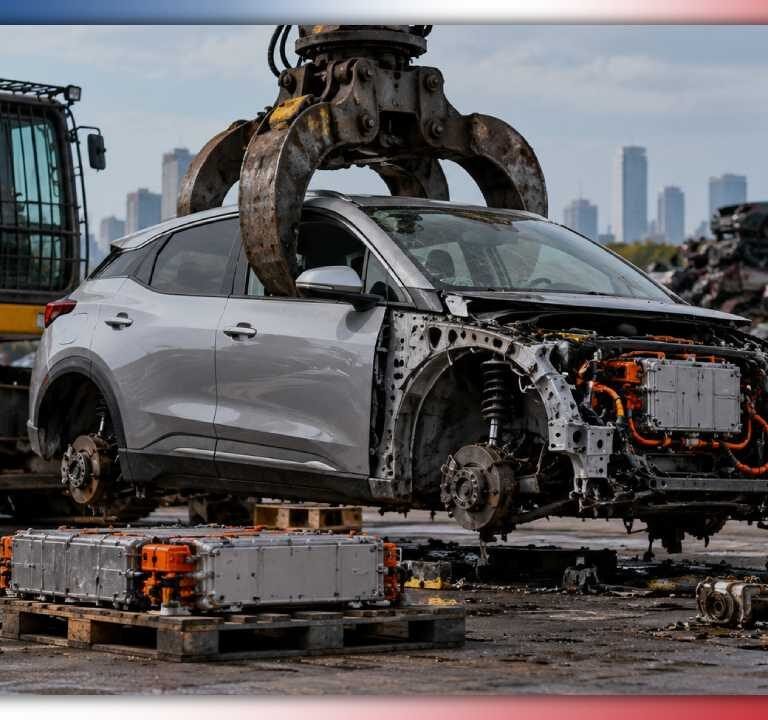
Ontario regulates end-of-life vehicle (ELV) waste disposal activities to control hazardous materials and protect the environment. A recycler assesses the vehicle, removes regulated items, and directs reusable components or metals to appropriate recovery streams. Processing depends on the vehicle and the facility’s operations.
Ontario Regulation 85/16 governs qualifying end-of-life vehicle site activities. Regulation 347 sets removal and certification rules before a vehicle undergoes crushing, shearing, or shredding. The rules focus on environmental handling rather than promising a particular cash amount.
What Must Recyclers Remove Before Crushing?
Before crushing, recyclers must remove listed materials such as batteries, tires, fluids, lead-containing components, and mercury switches. Regulation 347 also identifies asbestos waste and other specified materials. The applicable rule covers hazardous materials remaining before crushing, shearing, or shredding.
Common vehicle fluids include gasoline, engine oil, coolant, and brake fluid. Facilities must handle recovered materials through suitable storage and management processes. Ask the receiving business how the car reaches an appropriate end-of-life facility.
What Does an Irreparable Vehicle Brand Mean?
An “Irreparable” Ontario vehicle cannot return to road use in the province. Ontario permits parts or scrap use for vehicles holding that brand. A “Salvage” brand has different repair and inspection rules.
A buyer cannot treat a non-running vehicle as officially irreparable solely because its engine failed. Confirm the actual brand through the permit or vehicle history. Vehicle-brand records and recycler disposal documents solve different questions.
What Should You Do When a Recycler Cannot Provide Proof?
Request a signed bill of sale immediately and ask for a written explanation of the missing certificate. State the VIN, collection date, and name of the person who accepted the vehicle. Keep messages, invoices, and payment confirmation.
Contact the buyer’s office if the tow driver cannot answer your question. Ask for the final processing site’s details when another facility receives the vehicle. A missing consumer certificate does not, by itself, prove an illegal recycling operation.
Contact ServiceOntario separately to check the vehicle’s recorded status. Contact Ontario’s Ministry of the Environment, Conservation and Parks when you have evidence of improper waste handling. Explain the facts rather than making unsupported accusations.
For a disputed vehicle transfer, retain your sale record and ask a qualified legal professional for advice. A signed record helps establish the transaction date. The provincial vehicle-status check provides a separate administrative record.
How Do You Prepare for Scrap Car Pickup in Toronto and the GTA?
Share accurate vehicle and access details before booking a tow truck. Scrap Cars 4 Cash describes pickup across Toronto and the Greater Toronto Area (GTA). Its pages cover places such as Etobicoke, Scarborough, Mississauga, Brampton, Vaughan, and Markham.
Provide the year, make, model, mileage, VIN, and photos. State whether the vehicle starts, rolls, steers, and has all 4 wheels. Identify missing keys, severe collision damage, or restricted parking access.
For an unused vehicle, review the company’s old car removal service before requesting a quote. The page explains documentation checks and condition-based assessment. Free towing applies to accepted vehicle purchases under the company’s published service terms.
What Pickup Details Affect the Quote and Schedule?
Vehicle condition, completeness, metal value, and access affect the quoted offer. Scrap Cars 4 Cash evaluates the specific vehicle before confirming payment. Its service-area pages ask owners to disclose parking restrictions and vehicle condition.
For an underground garage, share the measured clearance in feet and metres, plus the parking level and ramp conditions. For example, report 6 feet 6 inches (1.98 metres), not an estimate. A driveway, mention narrow gates or blocked approaches. The dispatcher must confirm equipment suitability and availability.
Do not assume the same payout applies to a sedan, van, and SUV. Ask for the confirmed vehicle-specific offer before authorizing pickup. Your final offer depends on the vehicle details and pickup access you confirm with the buyer.
What Tasks Should You Complete Before and After Pickup?
Complete 8 tasks to keep your sale, registration, and disposal records organized. The timing column shows when to act, not a guaranteed processing deadline. Ask the buyer and ServiceOntario about unusual ownership circumstances.
| Task | Timing | Method | Difficulty |
| Verify VIN and permit | Before booking | Compare vehicle with permit | Easy |
| Check lien or authority | Before booking | Ask lender or estate trustee | Variable |
| Confirm written record | Before pickup | Ask buyer what proof follows | Easy |
| Remove licence plates | Before pickup | Keep both plates and plate portion | Easy |
| Sign sale paperwork | At handover | Record VIN, date, buyer, terms | Easy |
| Request processing proof | At pickup / afterward | Ask receiving facility | Variable |
| Update sold status | After sale | Visit ServiceOntario with records | Moderate |
| Close insurance | After confirmed transfer | Contact insurer and save confirmation | Easy |
Keep your original signed documents accessible until the transfer finishes. Store digital copies in a folder labelled with the VIN and sale date. No universal 7-year personal retention rule applies to every Ontario scrap-car seller; retain your evidence while relevant.
Frequently Asked Questions About Scrapping Cars in Ontario
Do Ontario Sellers Legally Need a Certificate of Destruction?
No. Ontario has no universal consumer-facing certificate requirement for every scrap-car seller. Relevant recycler-processing certificates follow separate environmental rules.
Does a certificate of destruction remove my name from registration?
No. Complete the applicable ServiceOntario sold-status process and keep its confirmation. A private disposal document does not update the record automatically.
Can I scrap a car without its Ontario ownership permit?
No, not through an ordinary documented transfer without resolving ownership. Ask ServiceOntario about replacement documents and special circumstances before booking collection.
Does a scrap-car bill of sale replace a certificate?
No. The bill of sale proves transaction details. A processing certificate or disposal confirmation records a different event.
Can I request proof of recycling after the vehicle leaves?
Yes. Contact the buyer and ask which facility handled the vehicle. Request available records and verify the sale status separately.
What Is the Safest Next Step for Your Scrap Car?
Confirm the buyer, document the transfer, keep your licence plates, and update ServiceOntario. Request any available disposal confirmation and verify the vehicle’s actual status. If you live in Toronto or the GTA, ask Scrap Cars 4 Cash about its scrap car removal options. Share your car’s condition and location to receive a verified quote and arrange an eligible pickup.