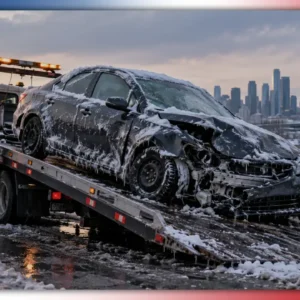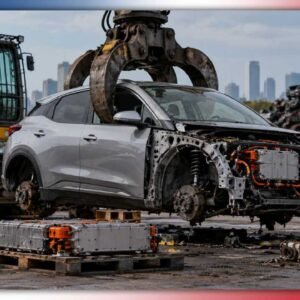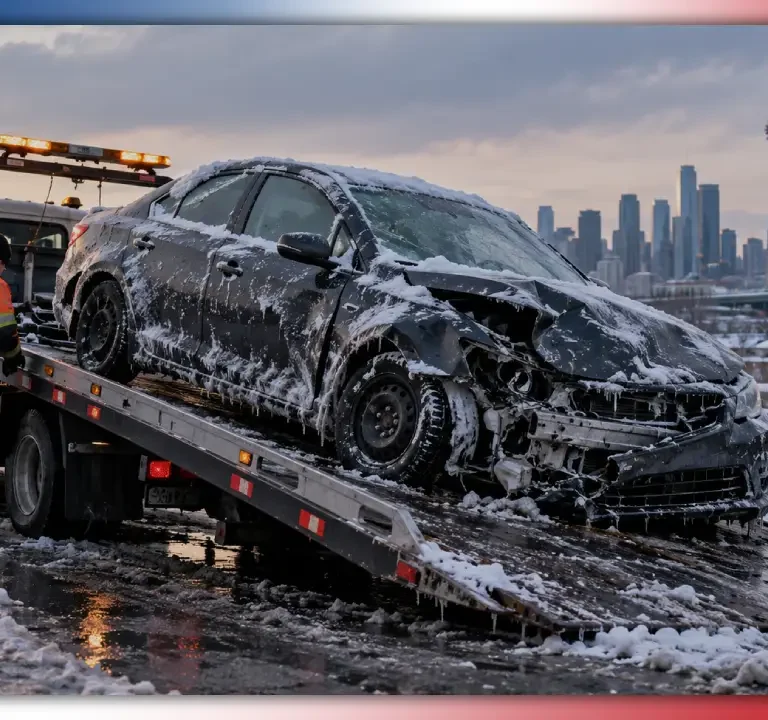
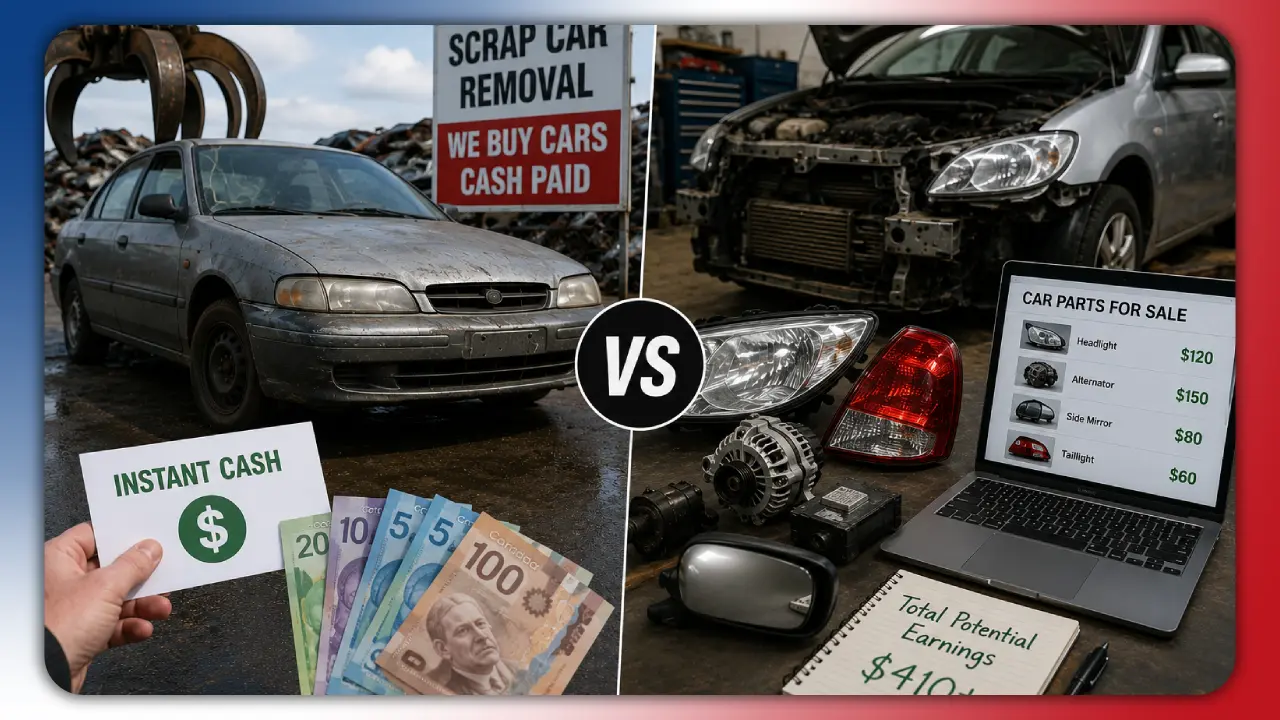
Selling your car for parts earns more cash than scrapping it whole in most cases. Parting out a vehicle brings $1,000 to $3,000, while scrapping the same car whole brings $150 to $800. Scrapping wins when speed and zero effort matter more than maximum profit.
This guide compares scrap car vs sell for parts across payout, time, and effort. You get exact numbers, a break-even formula, and a decision table built for Ontario vehicle owners in 2026.
Your final choice depends on 3 things: your car’s condition, the parts market for your specific make and model, and how many hours you can spend on removal and sales. The sections below walk through each factor with real numbers.
Most drivers assume scrapping and parting out pay roughly the same amount. The data below shows a gap of 300% to 500% between the two options for vehicles with working engines and transmissions.
What Is the Difference Between Scrapping a Car and Selling It for Parts?
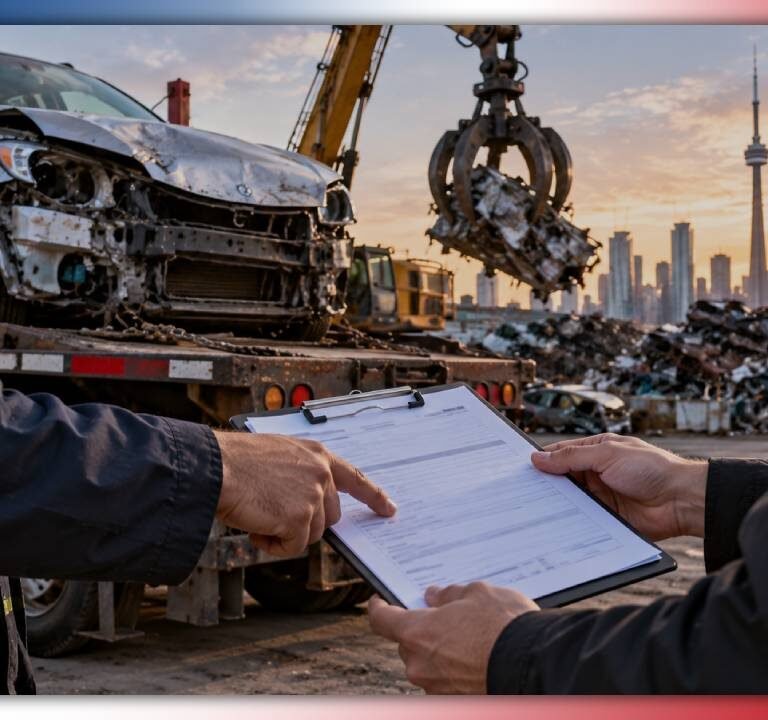
Scrapping a car means selling the whole vehicle to a licensed recycler for its metal weight and remaining components. Selling for parts means removing individual components yourself, such as the engine, transmission, or catalytic converter, and selling each one separately through online marketplaces.
A licensed recycler in Ontario handles ownership transfer through the Ministry of Transportation (MTO) as part of a scrap sale. Parting out a vehicle leaves that paperwork responsibility with you until the stripped shell finally goes to a recycler.
A scrap sale takes 1 day from quote to pickup. Parting out a vehicle takes 2 to 8 weeks, depending on how many buyers you need to find for each component.
Three factors separate the two paths:
- Payout amount: parting out usually pays 3 to 5 times more than scrapping
- Time investment: scrapping takes hours, parting out takes weeks
- Skill requirement: parting out needs mechanical tools and hands-on experience
Who Buys Scrapped Cars vs Parted-Out Vehicles?
Licensed scrap recyclers such as Scrap Cars 4 Cash buy complete vehicles regardless of running condition. These recyclers pay based on vehicle weight, metal content, and any remaining resale-grade parts.
Individual buyers, independent mechanics, and body shops buy parted-out components through marketplaces including Facebook Marketplace, Kijiji, and eBay Motors. Each platform charges different fees and attracts a different buyer pool.
How Vehicle Age Changes Your Best Option
A vehicle built in 2018 or later usually holds more parts value because its electronics, sensors, and airbags remain in demand. A vehicle built before 2010 often earns more through scrapping alone, since replacement parts for older models grow scarce and buyers turn to newer alternatives.
Mid-age vehicles from 2010 to 2017 sit in a middle zone. Their engines, transmissions, and body panels still attract buyers, while their electronics carry less resale value than newer sensor-heavy models.
How Regional Demand Across Ontario Affects Your Payout
Parts demand varies by city across the Greater Toronto Area (GTA). Toronto, Mississauga, and Brampton hold larger populations of independent mechanics and body shops, which raises demand for common replacement parts like alternators, starters, and body panels.
Smaller markets such as Aurora, Whitby, or Oshawa may take longer to find buyers for specialty components. Scrapping becomes the faster option in these areas since a licensed scrap car removal service can pick up your vehicle the same day, regardless of local parts demand.
How Much Money Can You Make Scrapping a Car in 2026?
Scrapping a car in Ontario pays $150 to $800, based on vehicle weight and current metal content. A typical sedan weighing 1,300 kg (2,866 lbs) yields $270 to $420 in base scrap value alone, before any parts bonus.
What Determines Your Car’s Scrap Metal Value
4 factors set your scrap payout:
- Vehicle weight: heavier vehicles such as trucks and SUVs contain more steel
- Steel price per tonne: Ontario rates average $180 to $280 CAD per tonne in 2026
- Catalytic converter condition: an intact converter adds $100 to $500
- Running condition: a running engine adds a resale bonus of 30% to 50%
Average Scrap Car Prices by Vehicle Type
A Honda Civic, Toyota Corolla, or comparable compact sedan scraps for $150 to $350. A Ford F-150, Dodge Ram, or comparable full-size truck scraps for $400 to $800 because of its higher steel weight of 1.8 to 2.5 tonnes (3,968 lbs to 5,512 lbs).
Scrap prices shift monthly with global steel demand. Construction booms in spring and fall typically push per-tonne rates up by 5% to 10% across Ontario recyclers.
An SUV or minivan such as a Honda CR-V, Toyota RAV4, or Dodge Grand Caravan scraps for $300 to $600. Its combined weight of 1.6 to 2 tonnes (3,527 lbs to 4,409 lbs) sits between a compact sedan and a full-size truck.
Vehicles with missing catalytic converters, a common theft target across Ontario in recent years, scrap for 15% to 30% less than identical vehicles with the part intact. Report a missing converter to police before requesting a scrap quote, since some recyclers ask for a police file number.
How Much Money Can You Make Selling Car Parts Individually?
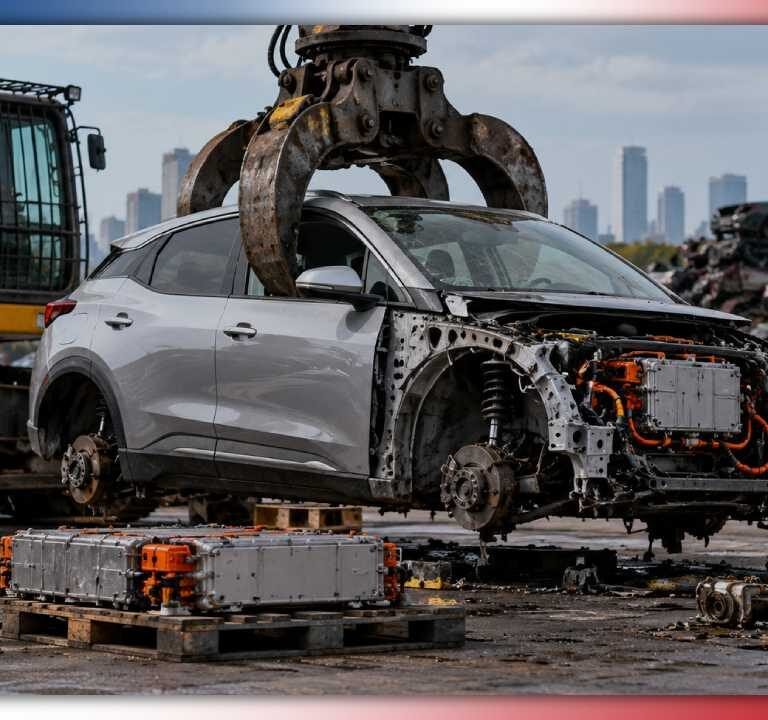
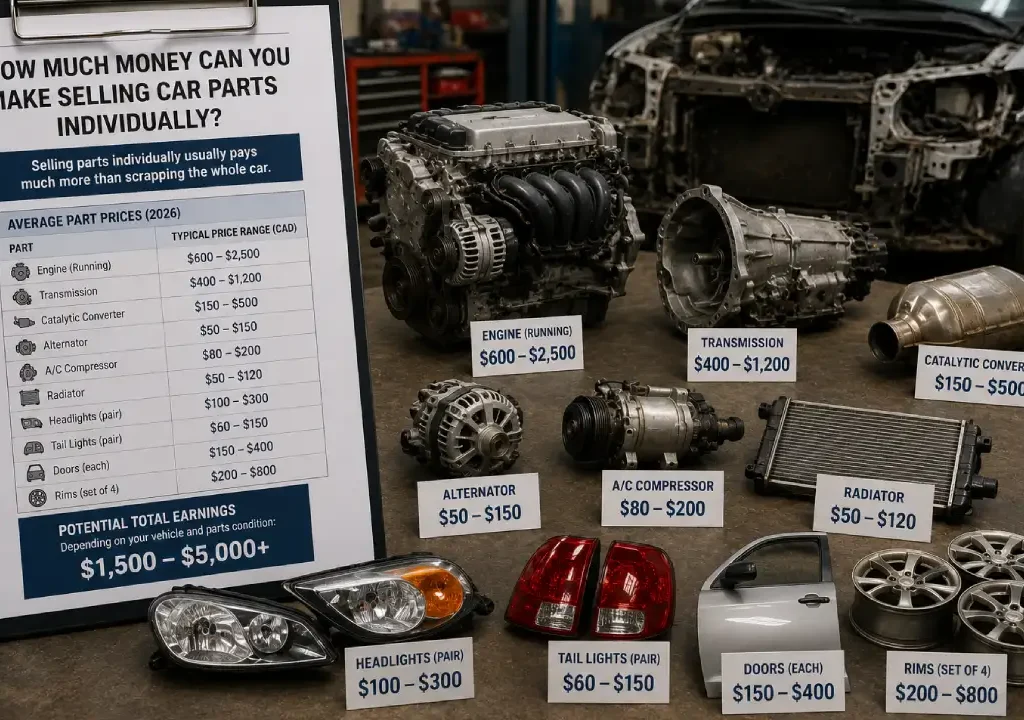
Selling car parts individually earns $1,000 to $3,000 for a typical vehicle with working components. High-demand parts such as the engine, transmission, and catalytic converter drive most of that value.
The 5 Most Valuable Parts to Sell Separately
5 components account for most of a parted-out car’s value:
- Engine: $500 to $3,000 depending on mileage, make, and whether it still runs
- Transmission: $300 to $1,500, with automatics worth more than manual units
- Catalytic converter: $100 to $1,000 based on platinum, palladium, and rhodium content
- Alloy wheels: $30 to $50 (13.6 kg to 22.7 kg) per wheel in good condition
- Doors and body panels: $50 to $200 each, higher for undamaged panels with working electronics
Tools and Time You Need to Part Out a Car
To part out a car, you need a socket set, a floor jack rated for 2 tonnes (4,409 lbs), 2 jack stands, and a fluid drain pan. Removing the engine and transmission takes 6 to 10 hours for an experienced mechanic working alone.
Full disassembly of a sedan takes 40 to 60 hours spread across 2 to 8 weeks. That timeline includes photographing parts, listing them online, and coordinating pickup with each buyer.
Safety Precautions Before You Start Removing Parts
Disconnect the battery before touching any electrical component to prevent short circuits or airbag deployment. Drain the fuel tank, engine oil, coolant, and transmission fluid into separate containers before removing the engine or transmission.
Wear safety glasses, gloves rated for automotive work, and steel-toe boots throughout the process. Jack stands rated for at least 2 tonnes (4,409 lbs) per pair keep the vehicle stable while you work underneath it.
How to Calculate Your Break-Even Point Between Scrapping and Parting Out
To calculate your break-even point, subtract your scrap offer from your estimated parts total, then divide the remainder by your hourly wage. This number tells you whether your time investment pays off compared to your regular income.
For example, a $2,000 parts total minus a $400 scrap offer leaves $1,600 in additional earnings. At 50 hours of labor, that works out to $32 per hour. Compare that hourly rate against what you earn elsewhere before choosing to part out your car.
The table below breaks down the timing, method, and difficulty for each step in both paths.
| Task | Timing | Method | Difficulty |
| Scrap car pickup | 1 day | Call a licensed recycler | Easy |
| Remove catalytic converter | 30 to 45 minutes | Hand tools, hoist or ramps | Moderate |
| Remove engine and transmission | 6 to 10 hours | Hoist, engine crane, sockets | Hard |
| List and sell individual parts | 2 to 8 weeks | Online marketplaces | Moderate |
| Scrap remaining shell after parting out | 1 to 2 days | Call a licensed recycler | Easy |
When Should You Scrap Your Car Instead of Selling Parts?
Scrap your car when it lacks a driveway, garage, or storage space of at least 15 feet by 8 feet (4.6m by 2.4m). Scrap your car when you need cash within 24 hours rather than weeks of listing and negotiating.
3 situations favor scrapping over parting out:
- Your car is a common model with a saturated used-parts market
- Your car has extensive rust or flood damage affecting most components
- You lack mechanical tools or hands-on experience removing major parts
A dedicated scrap car removal service picks up vehicles in any condition, including cars that no longer start. Choosing that route removes the storage and disposal problem in a single visit.
When Should You Sell Your Car for Parts Instead of Scrapping?
Sell your car for parts when it holds rare or discontinued components still in demand among enthusiasts. Sell your car for parts when the engine and transmission still run and show low mileage under 160,000 km (99,000 miles).
2 vehicle types earn the most from parting out:
- Rare or discontinued models with active enthusiast communities and forums
- Recent models under 8 years old with intact electronics, sensors, and airbags
Vehicles recovered from a collision often still carry valuable, undamaged components on the opposite side of the impact. An accident-damaged car removal specialist can assess which parts still hold resale value before towing the rest away.
What Are the Hidden Costs of Parting Out a Car Yourself?
Parting out a car costs money before it earns money. Marketplace fees, storage space, and disposal costs all cut into your final profit.
4 hidden costs reduce your parting-out earnings:
- Marketplace fees: eBay Motors keeps 10% of your final sale price
- Payment processing: PayPal charges a flat $0.30 plus 2.9% per transaction
- Fluid disposal: proper disposal of oil and coolant costs $20 to $50
- Storage: a parted-out shell sitting for 8 weeks may violate municipal property bylaws
Buyer communication adds a fifth cost most owners underestimate: time. Answering questions, negotiating prices, and rescheduling pickups for individual buyers can add 10 to 15 hours across the full sale.
A sixth cost applies to owners without a truck or trailer: delivery. Buyers of heavy components like engines and transmissions often expect the seller to arrange transport, which can cost $30 to $80 per delivery within the GTA.
How to Scrap or Sell a Car for Parts Legally in Ontario
To scrap or sell a car for parts legally in Ontario, you must transfer ownership through the Ministry of Transportation (MTO) and surrender your license plates. A licensed recycler handles this paperwork for you automatically when you scrap the whole vehicle.
Parting out a car yourself still requires plate surrender and a bill of sale for the remaining shell. Skipping this step leaves you responsible for future tickets or towing fees tied to the vehicle identification number (VIN).
Ontario also requires proof of ownership before any recycler can legally process your vehicle. Keep your original registration or a certified copy ready before you call for a quote.
Remove your license plates before pickup and return them to a ServiceOntario location, or transfer them to a replacement vehicle. Cancel your insurance policy on the same day the vehicle leaves your property to avoid paying for coverage on a car you no longer own.
Frequently Asked Questions
Is it better to scrap a car or sell it for parts?
Yes, selling for parts earns more money in most cases, typically $1,000 to $3,000 versus $150 to $800 for scrapping whole. Your final answer still depends on your available time and mechanical skill.
Can you scrap a car without a title in Ontario?
No, Ontario requires proof of ownership before a licensed recycler can process your vehicle. A certified copy of your registration satisfies this requirement in most cases.
How long does it take to sell a car for parts?
Selling a car for parts takes 2 to 8 weeks, depending on how many buyers you need to find for each component. Popular models with strong parts demand often sell faster than rare or discontinued vehicles.
Do scrap yards pay more for running cars?
Yes, running vehicles earn a resale bonus of 30% to 50% above non-running equivalents. A working engine and transmission drive most of that added value.
Is scrapping a car bad for the environment?
No, licensed recyclers drain fluids and recycle steel, aluminum, and copper responsibly, which reduces landfill waste. Many recyclers also refurbish and resell working components instead of melting them down.
Final Decision: Scrap Car vs Sell for Parts in 2026
Scrap car vs sell for parts comes down to your available time, tools, and storage space. Choose parting out when your vehicle holds high-demand components and you can invest 40 to 60 hours across several weeks. Choose scrapping when you want same-day cash without lifting a wrench. Get a free, same-day quote through the cash for cars program at Scrap Cars 4 Cash and turn your decision into cash today.