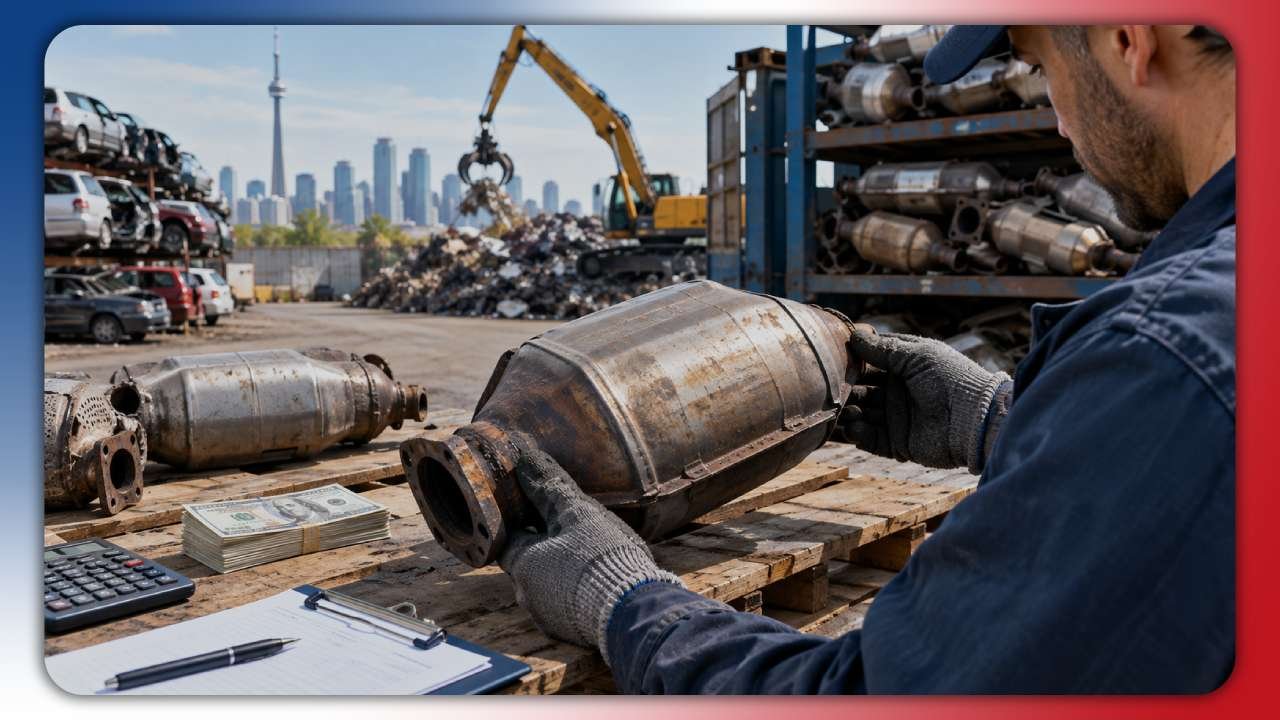
Your catalytic converter junk price in Toronto and the GTA ranges from $50 to $1,800 in 2026. The exact catalytic converter scrap cost depends on your vehicle’s make, model, and whether the unit is original equipment manufacturer (OEM) or aftermarket.
Three precious metals set that price: platinum, palladium, and rhodium. Rhodium alone can add hundreds of dollars to a single converter. This guide breaks down real Toronto and GTA numbers by vehicle type. It also shows you how to identify your converter and explains Ontario’s legal steps.
You do not need to guess at a number or trust an outdated blog post. Local scrap buyers reprice converters weekly as platinum, palladium, and rhodium markets move, so an accurate quote takes minutes, not days.
What Is the Catalytic Converter Junk Price in Toronto Right Now?
Toronto and GTA scrap buyers pay $50 to $1,800 for a used catalytic converter in 2026. Small aftermarket units sit near the bottom of that range. OEM converters from Toyota, Honda, and hybrid models sit near the top.
Local recyclers report an average gas converter price near $75 at the door. Diesel converters from 2008 and later Dodge, Ford, and GM trucks often bring $180 to $700. Newer diesel units carry more catalyzing metal to meet stricter emissions rules.
Metal markets shift the number daily. Ask a licensed buyer for a current quote instead of relying on a price you saw last year. The GTA converter market also follows a seasonal pattern. Summer months bring the lowest offers because fewer vehicles change hands. Fall brings a modest increase as drivers prepare their vehicles for winter and repair shops replace failing units. Sell in early fall if timing is flexible, since demand and price both climb before the cold season arrives.
How the GTA Market Affects Catalytic Converter Prices
The Greater Toronto Area hosts the highest concentration of licensed converter buyers in Canada, and that competition pushes payouts above what most other provinces see for the same converter. Buyers in North York, Scarborough, Mississauga, and Brampton compete directly for volume, which keeps quotes closer to true metal value than in smaller markets with fewer buyers.
Seasonal demand still matters. Spring and fall bring more vehicle turnover ahead of summer and winter driving, which increases the number of units on the market and keeps competing buyers active. December and July typically run slower, and quotes during those months tend to sit at the lower end of the ranges above.
Catalytic Converter Theft in the GTA: Why the Rules Exist
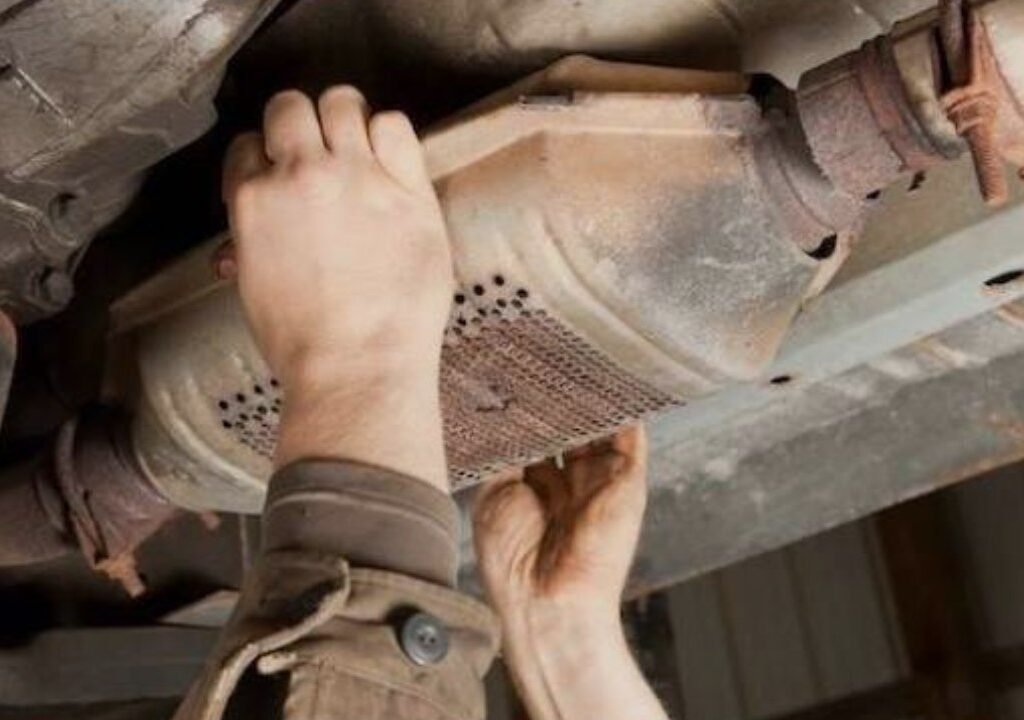
Catalytic converter theft has hit Southern Ontario hard in recent years. Halton Regional Police and OPP detachments in Brant, Norfolk, and Haldimand County all reported sharp spikes in reported thefts, with Halton alone logging 29 thefts in the Milton-Halton Hills area in a single week during one of the worst stretches. Thieves target the part because a converter can be removed from underneath a parked vehicle in under two minutes, then sold for cash to an unregulated buyer with no questions asked.
Documentation requirements at licensed buyers exist to close that gap. A buyer who checks identification and keeps a transaction record makes a stolen converter far harder to resell, which is why a seller with proper paperwork gets a smoother transaction and a fair catalytic converter junk price instead of a rushed, discounted cash offer from an unregulated buyer.
What Determines Your Catalytic Converter Junk Price
Five factors set that price: precious metal content inside the honeycomb core, OEM or aftermarket status, the vehicle’s make and model, the converter’s physical condition, and the current market price of platinum, palladium, and rhodium.
- Precious metal content: OEM units carry more PGM coating per unit than aftermarket units, which directly sets the base payout.
- OEM versus aftermarket construction: Aftermarket replacements use the minimum metal load needed to pass an emissions test, so they pay far less.
- Vehicle make, model, and year: Hybrid and performance engines run cooler or hotter under different loads, so manufacturers add more metal to meet emissions standards for those platforms.
- Physical condition: A cut, crushed, or gutted converter loses recoverable metal and pays less than an intact unit.
- Market price of PGMs: Rhodium, palladium, and platinum move weekly, so a quote in January can differ from a quote in June for the same converter.
OEM vs Aftermarket Catalytic Converters: Why the Price Gap Is So Large
An OEM converter pays 3 to 10 times more than an aftermarket unit from the same vehicle. Aftermarket replacements, sold under brands such as Walker or MagnaFlow, carry the minimum PGM load needed to pass an emissions test. OEM units are engineered to the vehicle manufacturer’s original emissions target, so they carry a heavier platinum, palladium, and rhodium load.
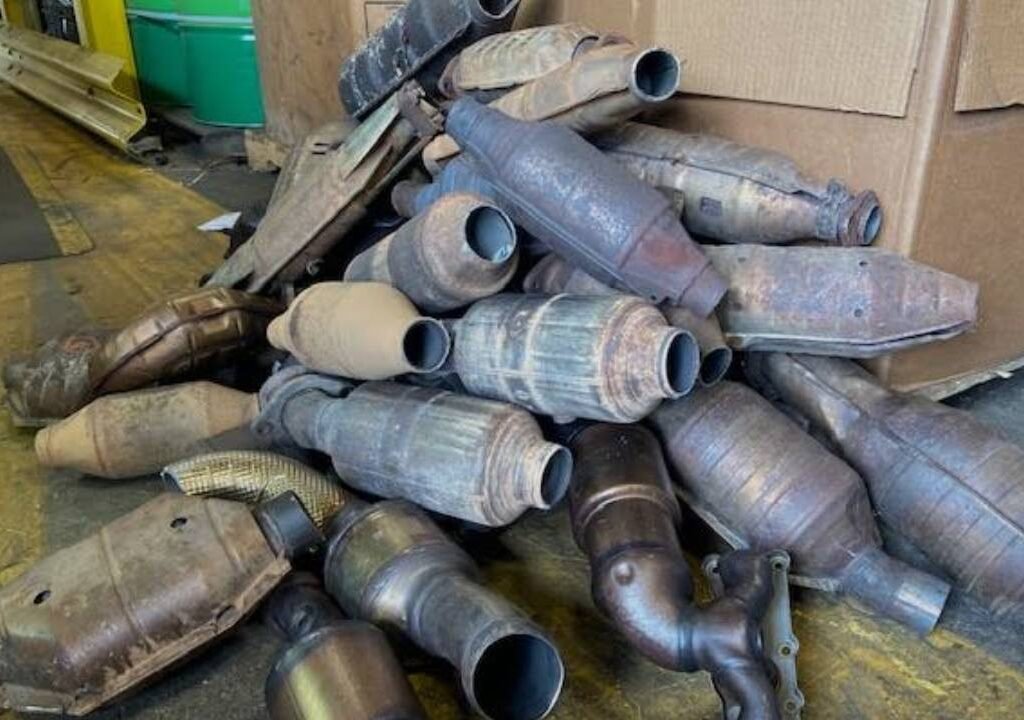
Two checks confirm which type is on hand. An OEM converter carries a manufacturer part number stamped into the shell. An aftermarket unit is lighter, carries a generic stamp, and often bolts on with fewer sensor bungs than the factory part it replaced.
Catalytic Converter Price by Vehicle Make and Model
| Vehicle | Typical GTA Junk Price |
| Toyota Prius (hybrid, OEM) | $350 – $900 |
| Toyota Camry / RAV4 (OEM) | $120 – $280 |
| Honda Civic / Accord (OEM) | $80 – $220 |
| Honda CR-V Hybrid (OEM) | $200 – $450 |
| Nissan Altima / Maxima (OEM) | $80 – $250 |
| Ford F-150, gas (OEM) | $100 – $300 |
| Chevrolet Silverado (OEM) | $150 – $300 |
| BMW 3 Series / 5 Series (OEM) | $200 – $500 |
| Mercedes-Benz C-Class / E-Class (OEM) | $250 – $500 |
| Porsche Cayenne V8, dual set (OEM) | $600 – $1,200+ |
| Any universal aftermarket unit | $10 – $50 |
Metal markets shift the numbers above from week to week. Treat this table as a starting range and confirm the current figure with a GTA converter specialist using the serial number.
How to Identify Your Converter Before You Sell
To identify a converter accurately, locate the stamped serial number on the shell, photograph it clearly, and send that photo with the sale inquiry. A buyer reads the code to confirm the exact PGM content instead of estimating from the vehicle’s year and model alone.
- Locate the vehicle identification number (VIN) and the converter’s stamped part number.
- Photograph both codes before the metal is scratched, painted over, or coated in road grime.
- Keep the converter whole. Do not cut it open or remove the honeycomb core, since that destroys recoverable metal.
- Request a quote from at least three GTA buyers before accepting an offer.
A visual check backs up the serial number. An OEM converter generally has a factory-welded shell, a manufacturer logo or part number, and sensor bungs that match the vehicle’s original wiring layout. An aftermarket unit is usually lighter, has a bolted or clamped shell, and carries a generic stamp with no manufacturer logo. Neither check replaces a direct quote, but both help confirm that a buyer’s assessment matches what is actually on the vehicle.
Is It Legal to Sell a Catalytic Converter in Toronto?
Yes, selling a catalytic converter in Toronto is legal when the transaction goes through a licensed buyer. The City of Toronto requires businesses that buy second-hand goods, including scrap metal and auto parts, to hold a Second Hand Shop licence under Chapter 545 of the Toronto Municipal Code. Licensed dealers must keep a register recording every item received, along with the seller’s identification, and that register is open to inspection by the Toronto Police Service.
Cash payment is discouraged and many licensed GTA buyers now default to e-transfer or cheque so the transaction stays traceable. A seller who cannot produce government-issued photo ID and proof that the converter came from a vehicle registered in their name should expect a licensed buyer to decline the sale.
Bring these four items to a Toronto transaction:
- Government-issued photo ID that matches the name on the sale.
- The VIN of the vehicle the converter came from, or a bill of sale if the vehicle has already been scrapped.
- Proof of ownership, such as a vehicle registration or title, when the buyer requests it.
- A bank account or e-transfer email address set up to receive a traceable payment.
Where to Get the Best Price for Your Catalytic Converter in Toronto
General scrap yards and retail auto parts stores commonly pay 20 to 50 percent less than converter specialists, because they resell the unit to a refiner or a specialist and keep the margin. A specialist deals directly with refiners and passes more of that value back to the seller.
- Collect three to five quotes from GTA buyers before committing to a sale.
- Ask each buyer whether the quoted price is locked for a set number of days.
- Sell in spring or fall, when GTA scrap demand typically runs higher than in December or July.
- Choose a converter specialist over a general metal yard or parts store whenever the price gap between quotes is significant.
Common Mistakes That Lower Your Payout
Most sellers lose value through five avoidable mistakes rather than through a fair market drop. Reviewing the list below before a sale takes less time than a single phone call and can add hundreds of dollars to the final offer.
- Cutting the converter open to inspect the honeycomb, which destroys recoverable metal and drops the payout.
- Removing or scratching out the stamped serial number, which forces a buyer to guess the metal content and quote low.
- Accepting the first quote received without comparing at least two more from other GTA buyers.
- Selling to a buyer who skips the ID and registration check, since that unit can later be flagged as stolen property.
- Scrapping a valuable OEM converter with the full vehicle without asking the buyer to itemize its value separately.
Should You Sell the Converter Separately or Scrap the Whole Car?
Selling the converter separately makes sense if the rest of the vehicle still runs and only the emissions part has failed. Scrapping the whole vehicle is the simpler route if the car is non-running, heavily damaged, or near the end of its useful life, since a full-vehicle buyer prices the converter into the total offer and handles the paperwork and towing.
Readers who want a single combined payout instead of a separate parts sale can request a free scrap car quote from Scrap Cars 4 Cash, which factors the converter’s value into the price offered for the whole vehicle.
A side-by-side comparison makes the choice clearer. Selling separately means locating a specialist buyer, photographing the serial number, arranging removal, and completing a second transaction on top of whatever happens to the rest of the car. Selling the whole vehicle removes every one of those extra steps, since one buyer handles the converter, the remaining parts, and the paperwork in a single visit. Toronto and GTA sellers can compare both routes on our Toronto scrap car page before deciding.
What to Do If Your Catalytic Converter Is Stolen
Report a stolen catalytic converter to Toronto Police Service first, then contact the insurance provider tied to the vehicle. Keep the police report number, the repair invoice, and photographs of the damage on hand for the claim.
Do not buy a replacement converter from a seller who cannot provide a serial number or identification. A unit sold without those details carries a real risk of being stolen property, and Toronto’s licensing rules make that traceable back to the buyer as well as the seller.
Frequently Asked Questions
What is the catalytic converter junk price in Toronto right now?
Most units pay $80 to $500 in 2026, with hybrid and performance OEM converters reaching $900 to $1,200 or more depending on precious metal content and current market conditions.
Are OEM catalytic converters worth more than aftermarket ones?
Yes, OEM units typically pay 3 to 10 times more than aftermarket replacements because they carry a higher combined platinum, palladium, and rhodium load than a universal replacement built to the minimum emissions standard.
Can I sell a catalytic converter without ID in Toronto?
No, licensed Toronto buyers require government-issued photo ID for every catalytic converter transaction, along with proof that the converter came from a vehicle registered in the seller’s name.
Does a Toyota Prius converter pay more than a regular car’s converter?
Yes, hybrid converters such as the Prius commonly pay $350 to $900 in the GTA because the hybrid engine runs cooler and requires more precious metal to meet the same emissions standard as a standard gas engine.
How many grams of precious metal does a converter contain?
An OEM converter holds roughly 2 to 7 grams of platinum, 2 to 7 grams of palladium, and 0.5 to 2 grams of rhodium, while an aftermarket unit holds only a fraction of that amount.
Should I remove the converter before scrapping my car?
No, removing the converter first usually is not worth the extra effort, since it creates an additional transaction and paperwork step. Most sellers get a fair combined price by leaving it attached and scrapping the whole vehicle at once, because a licensed buyer already itemizes the converter’s value into a full-vehicle offer.
Is a rusty or damaged catalytic converter still worth anything?
Yes, rust and surface damage on the outer shell do not reduce the value of the metal inside, as long as the honeycomb core is intact and the serial number is still readable. A dented or corroded shell affects appearance only, not the recoverable platinum, palladium, and rhodium content.
Where can I get a fast catalytic converter or scrap car quote in Toronto?
Scrap Cars 4 Cash provides a free quote for Toronto and the GTA that prices the catalytic converter into the total offer for the vehicle, along with free towing.
Final Thoughts
A catalytic converter junk price depends on three things: the precious metal inside it, the paperwork behind it, and the number of buyers asked for a quote. Photograph the serial number, collect three quotes, and confirm the buyer follows Toronto’s ID and registration requirements before accepting an offer.
For a straightforward payout that already accounts for the converter’s value, request a free quote and get free towing across Toronto and the GTA on the same visit. A quick comparison between two or three local buyers, backed by a clear photo of the serial number, is usually the difference between an average offer and the best one available for a specific vehicle.