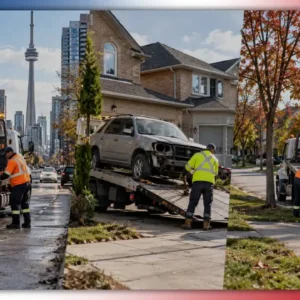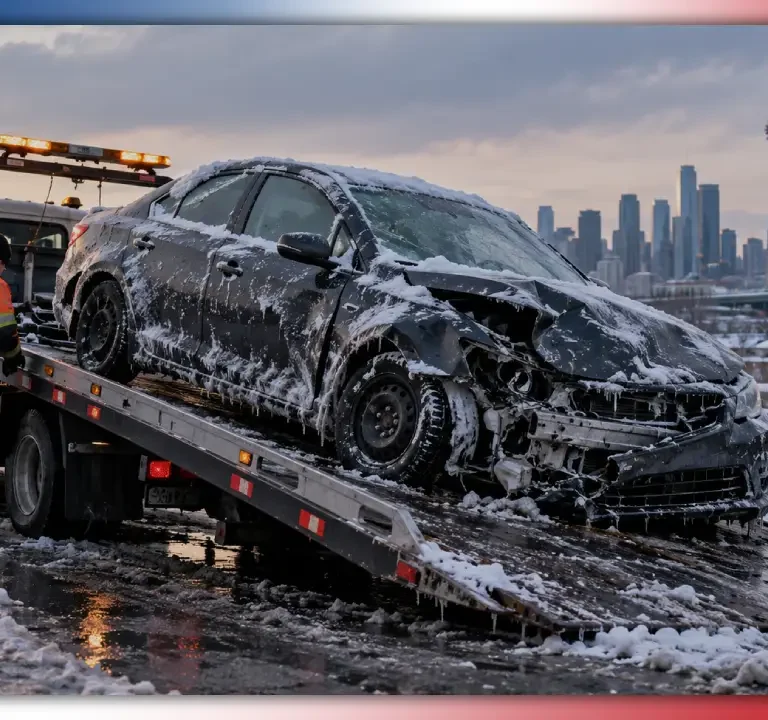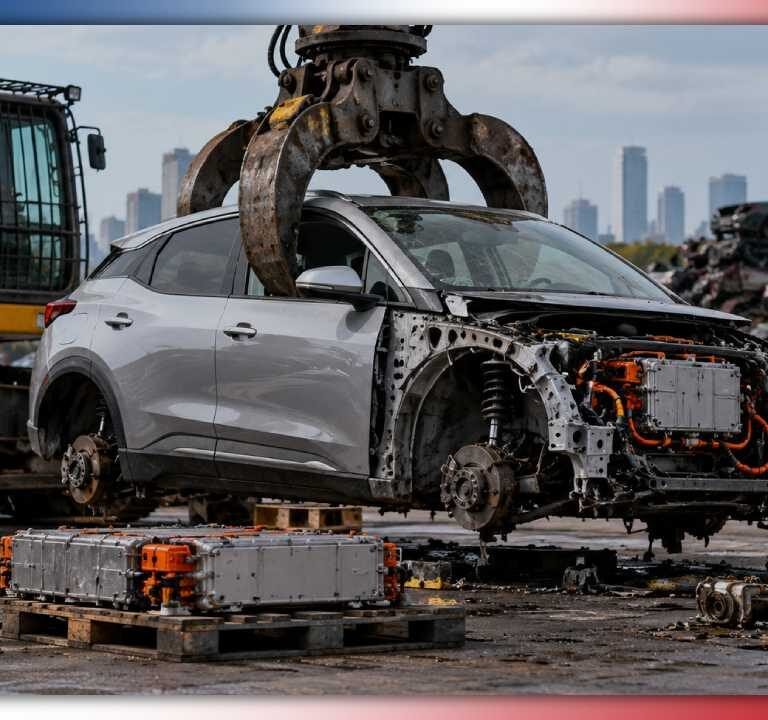
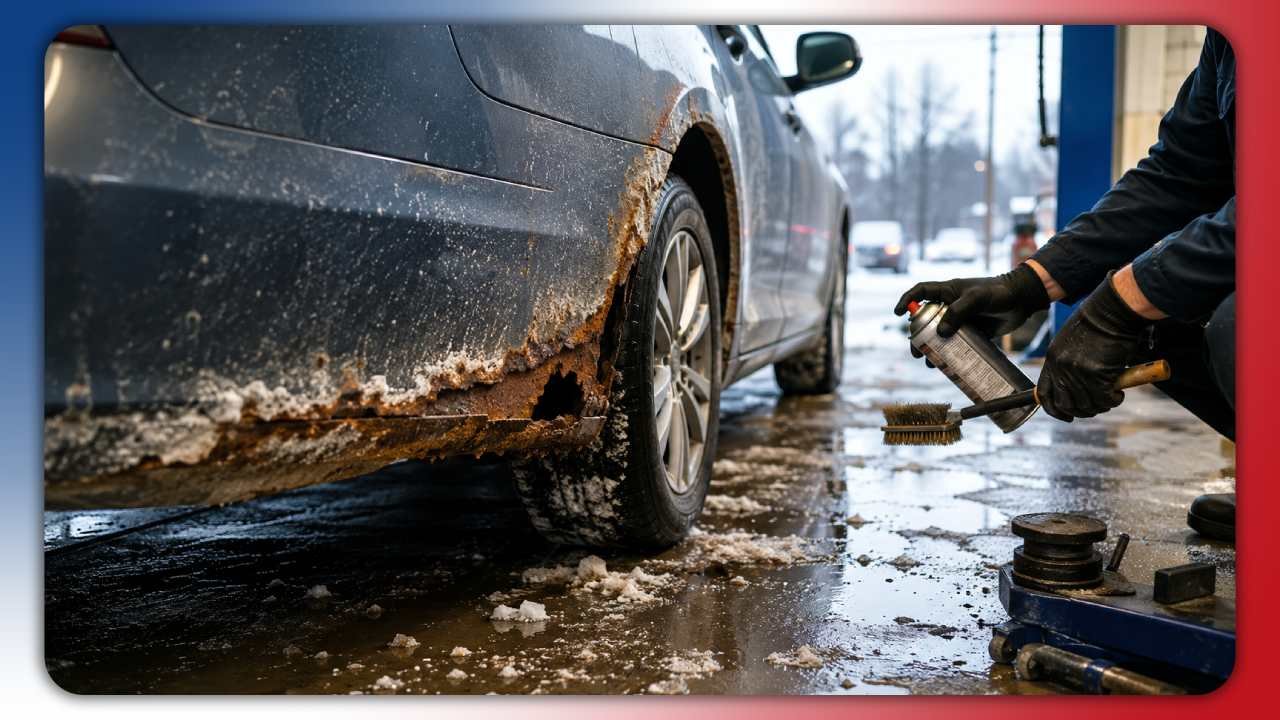
Car rust Ontario road salt damage starts within 3 winters on most vehicles built after 2010. Sodium chloride and calcium chloride brine soak into your undercarriage and attack bare steel every winter. You will learn why Ontario cars rust faster than cars in other provinces. You will also learn which parts fail first, what repairs cost, and when to scrap the vehicle. Ontario road crews spread salt across highways, side streets, and parking lots from November through April. That 6-month exposure window gives chloride far more time to work than shorter winters in other regions.
What Causes Car Rust From Ontario Road Salt?
Road salt causes car rust in Ontario because chloride ions strip the protective oxide layer off steel. Ontario used 1.68 million tonnes of road salt during the 2023-2024 winter season, more than any other province. That salt mixes with slush and splashes onto your car’s frame, doors, and wheel wells. Chloride then reacts with oxygen and moisture to form iron oxide, the reddish-brown compound known as rust. Provinces such as Quebec and Manitoba report lower salt volumes and see slower corrosion rates on comparable vehicles. Municipal crews spread rock salt, brine, and sand across major highways, side streets, and parking lots every storm. A single winter storm can deposit chloride residue on your vehicle within minutes of leaving your driveway. Newer vehicles use thinner steel panels to save weight, which lets chloride reach bare metal faster than older, heavier models.
How Road Salt Attacks Your Car’s Metal
Road salt attacks your car through 3 chemical processes: ion penetration, oxidation, and galvanic corrosion between mixed metals. Manufacturers apply zinc coatings, electrocoat primer, and clear paint to slow these reactions, yet every layer eventually wears thin. Stone chips, door dings, and scratched bumpers expose bare steel long before drivers notice the damage. Highway driving at 100 km/h (62 mph) throws salt crystals against lower panels hard enough to chip factory paint. Older vehicles built before 2005 often lack the zinc-rich primers used on current production lines. These vehicles rust faster once exterior paint fails.
The Chemistry Behind Sodium Chloride and Calcium Chloride Corrosion
Sodium chloride lowers the freezing point of water to about -9C (16F), while calcium chloride works down to -29C (-20F). Both chemicals dissolve into brine that clings to steel longer than plain water. Chloride ions penetrate microscopic gaps in paint and factory undercoating within hours. Bare steel exposed to chloride corrodes up to 10 times faster than steel exposed to fresh water alone. Magnesium chloride, a third de-icer used on some Ontario highways, produces similarly aggressive corrosion once it contacts unprotected metal. Electrical connectors, sensor wiring, and exhaust hangers made from mixed metals corrode even faster through galvanic reactions. Aluminum components paired with steel fasteners create a galvanic cell once chloride bridges the two metals. Corrosion then accelerates on both surfaces. Anti-lock brake sensors and wheel speed sensors fail more often on salt-exposed vehicles. Corrosion builds up inside the connector housing.
Freeze-Thaw Cycles Speed Up Rust Formation
Ontario winters swing above and below freezing 30 to 40 times per season. Each cycle traps salty water inside seams, then expands it as ice, cracking paint and coating. Condensation forms inside doors, rocker panels, and fenders once temperatures rise again. Humid summers that follow winter salt exposure add a second wave of corrosion. Spring thaw releases salt trapped in snowbanks back onto roads for several additional weeks each year. Vehicles parked outdoors face harsher freeze-thaw stress than vehicles stored in heated garages overnight.
Which Ontario Cities Have the Worst Rust Belt Conditions?
Southwestern Ontario forms the core of Canada’s Rust Belt, including cities such as London, Hamilton, Windsor, and Toronto. These cities combine heavy snowfall, high humidity, and dense traffic that keeps salt in constant contact with vehicles. Brampton, Mississauga, and Oshawa see similarly high salt use because of heavy commuter traffic. Coastal cities such as Vancouver salt roads far less often, so vehicles there corrode more slowly. Vehicles registered in Ottawa and Kingston also show elevated corrosion rates due to long, cold winters near the St. Lawrence River. Used-car buyers in these regions should always inspect the underbody before purchasing a vehicle with no visible exterior rust. A used vehicle imported from Alberta or British Columbia typically shows less corrosion than an Ontario-driven model. Buyers can request a vehicle history report to check prior registration provinces before agreeing to a purchase price.
Where Does Rust Start First on Your Vehicle?
Rust starts first on your undercarriage, then spreads to wheel wells, rocker panels, and brake lines.
Undercarriage and Frame Rust
Your car’s frame sits closest to road spray, so the frame absorbs the highest chloride concentration on every drive. Structural rust on the frame reduces crash protection and can cause a safety inspection failure. Fuel lines and brake lines run along the frame and corrode at the same rate. A cracked brake line from rust can cause complete brake failure without warning. Subframes, control arms, and exhaust mounts sit low enough to collect standing brine after every drive through slush. Mechanics often find frame rust only after lifting a vehicle onto a hoist for an unrelated repair. Perforated rust, meaning holes rather than surface flaking, on a frame member usually fails a safety inspection outright. A frame rust repair on a unibody vehicle often requires replacing entire floor sections rather than patching a single spot.
Wheel Wells, Rocker Panels and Brake Lines
Wheel wells trap salted slush behind plastic liners where drivers rarely check. Rocker panels rust from the inside out because factory drainage holes clog with road debris. Brake lines lose structural integrity once surface rust turns into pitting corrosion. A mechanic should inspect brake lines and fuel lines every 12 months in salt-belt regions. Door bottoms, trunk floors, and spare tire wells also collect trapped moisture behind sound-deadening material. Bubbling paint near a wheel arch usually signals rust that has already spread beneath the surface.
How to Slow Down Rust Damage on Your Car
To slow down rust damage, you need 2 defenses: physical barriers and consistent cleaning. Combining both defenses each year gives your vehicle the strongest possible protection against Ontario winters.
Undercoating and Rust Proofing Sprays
Oil-based undercoating penetrates seams and displaces trapped moisture on contact. Technicians apply spray rust proofing once a year, ideally in October or November before the first snowfall. Rubberized undercoating creates a thicker barrier but cracks over time and traps water underneath. Oil-based formulas cost between $100 and $180 CAD per application at most Ontario shops. Drivers who skip annual applications often see surface rust appear 2 to 3 years earlier than treated vehicles. Ask your technician to check drain holes in the rocker panels and doors during every appointment. Krown, Rust Check, and Fluid Film rank among the most common oil-based products used at Ontario shops. Choose a shop that uses a drill-and-fill method, since spraying only exposed surfaces leaves interior cavities unprotected.
Washing Schedule for Winter Driving
Wash your undercarriage every 2 weeks during salt season, from December through March. Touchless car washes with an undercarriage jet remove more chloride than a standard drive-through wash. Rinse door jambs, wheel wells, and the trunk seal, since salt collects in every gap. Avoid washing in temperatures below -10C (14F), since water can refreeze on brake components. Warm water dissolves crusted salt faster than cold water, so choose a wash bay that heats its rinse cycle. Dry your door seals afterward to stop trapped water from freezing shut overnight. Apply a silicone spray to rubber door and trunk seals every 2 months to keep them flexible in cold weather. Parking in a heated garage overnight lets trapped moisture evaporate before it has a chance to freeze inside seams.
How Much Does Rust Repair Cost in Ontario in 2026?
Rust repair in Ontario costs $500 CAD for a single rocker panel patch, up to $4,000 CAD for frame reinforcement. Surface rust removal and repainting runs $300 to $800 CAD per panel at most body shops. Structural rust repair on a frame or subframe often exceeds the vehicle’s current market value. Insurance rarely covers rust damage, since providers classify corrosion as a maintenance issue rather than an accident. Labour rates at licensed Ontario body shops range from $90 to $150 CAD per hour depending on the region. A full undercarriage sandblast and recoat can add $800 CAD to $1,500 CAD to the total bill. Parts availability also affects cost. Discontinued panels for older models can raise repair prices by 30% or more.
Quick-Reference: Ontario Rust Prevention Schedule
| Task | Timing | Method | Difficulty |
| Undercarriage wash | Every 2 weeks (Dec-Mar) | Touchless wash with undercarriage jet | Easy |
| Rust proofing spray | Once a year (October) | Oil-based undercoating, drill-and-fill | Moderate |
| Brake line inspection | Every 12 months | Mechanic visual and pressure check | Moderate |
| Surface rust patch | As spots appear | Sanding, primer, and paint | Moderate |
| Frame rust assessment | Before major repairs | Certified inspection at a body shop | Difficult |
Does Rust Affect Resale Value and Insurance in Ontario?
Visible rust lowers a used car’s resale value by 20% to 40%, even when the engine and transmission run well. Private buyers who spot frame rust during an inspection often walk away or demand a steep discount. Dealerships apply the same discount when appraising trade-in vehicles with underbody corrosion. Insurance adjusters treat rust-related failures as pre-existing wear, so claims for rust damage rarely succeed. A pre-purchase inspection that flags frame rust can lower a sale price by $1,000 CAD to $3,000 CAD. Extended warranty providers also exclude corrosion damage from coverage after the first 3 to 5 years of ownership.
When Should You Scrap a Rusted Car Instead of Repairing It?
Scrap your car when rust repair costs exceed 50% of its current market value. A vehicle with frame rust that fails an Ontario safety inspection often falls into this category. Rusted brake lines, fuel tanks, and subframes create safety risks that repairs cannot fully eliminate on older vehicles. Cars older than 15 years with visible frame rust rarely pass a used-vehicle inspection. Selling a heavily rusted car to a private buyer takes 4 to 8 weeks, if a buyer appears at all. Scrapping the same vehicle for cash typically takes less than 24 hours. Waiting longer than one extra winter on a car with frame rust usually adds repair costs without adding resale value. Continued insurance premiums and fuel costs on a car you no longer trust add up faster than most drivers expect. A mechanic’s written estimate comparing repair cost against current market value gives you clear numbers for this decision.
Do Electric Vehicles Rust Slower Than Gas-Powered Cars?
Electric vehicles rust at similar rates to gas-powered cars, since both use steel frames and body panels. Battery packs sit inside sealed enclosures, but suspension components, brake lines, and subframes remain exposed to road spray. Regenerative braking systems reduce wear on brake pads, yet the brake lines themselves still corrode from chloride exposure. Owners of electric vehicles in Ontario should follow the same washing and rust proofing schedule as owners of gas-powered vehicles.
How to Get Cash for a Rusted Car in Ontario
To get cash for a rusted car, you contact a licensed scrap buyer instead of listing it privately. A scrap car removal service accepts vehicles with frame rust, failed brake lines, or holes in the floor pan. Most Ontario buyers pay between $150 CAD and $800 CAD based on scrap metal weight and salvageable parts. A junk car pickup service tows the vehicle for free and completes MTO paperwork the same day. Requesting a cash for cars quote before booking a tow lets you compare offers across 2 or 3 buyers. Same-day pickup means you avoid paying for another season of insurance, storage, or failed repairs. Bring your vehicle ownership, a valid photo ID, and any spare keys to speed up the paperwork at pickup. Removing personal belongings and license plates beforehand keeps the handover process under 15 minutes in most cases.
Frequently Asked Questions
Does road salt really cause car rust in Ontario?
Yes. Sodium chloride and calcium chloride brine strip protective coatings and expose bare steel to oxidation.
Can you stop rust once it forms on steel?
No. Rust converters and coatings only slow further corrosion; they cannot reverse rust already formed on bare steel.
Is undercoating worth the cost on an older car?
Yes. Undercoating slows new corrosion on cars up to 15 years old, even with existing surface rust.
How long does Ontario road salt take to rust a car?
3 to 5 years for visible surface rust. Structural rust often appears by year 8 on untreated vehicles.
What is the fastest way to sell a rusted car in Ontario?
Scrap car removal provides same-day cash offers, compared to 4 to 8 weeks for a private sale.
Get Cash for Your Rusted Car Today
Car rust from Ontario road salt shortens most vehicle lifespans by 5 to 8 years compared to salt-free regions. Regular washing, annual rust proofing, and prompt brake line inspections slow the damage but cannot stop it forever. Once repair costs pass 50% of your car’s value, scrapping becomes the faster and safer choice. Contact Scrap Cars 4 Cash for a same-day scrap car removal service and turn your rusted vehicle into cash today.