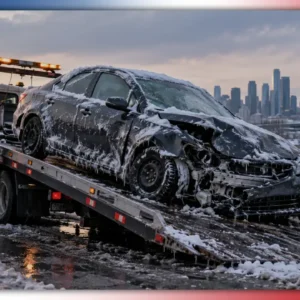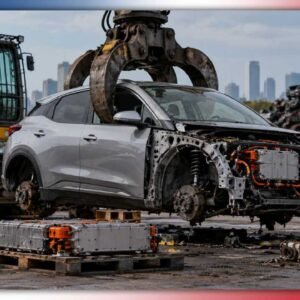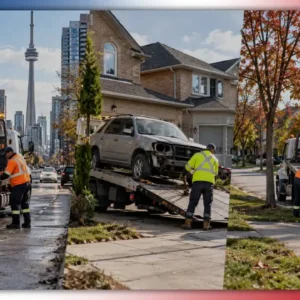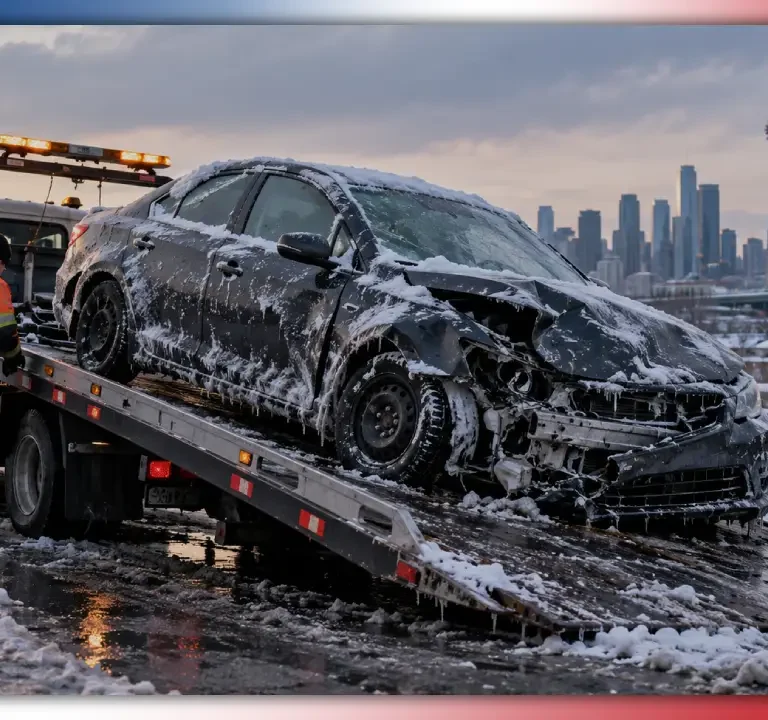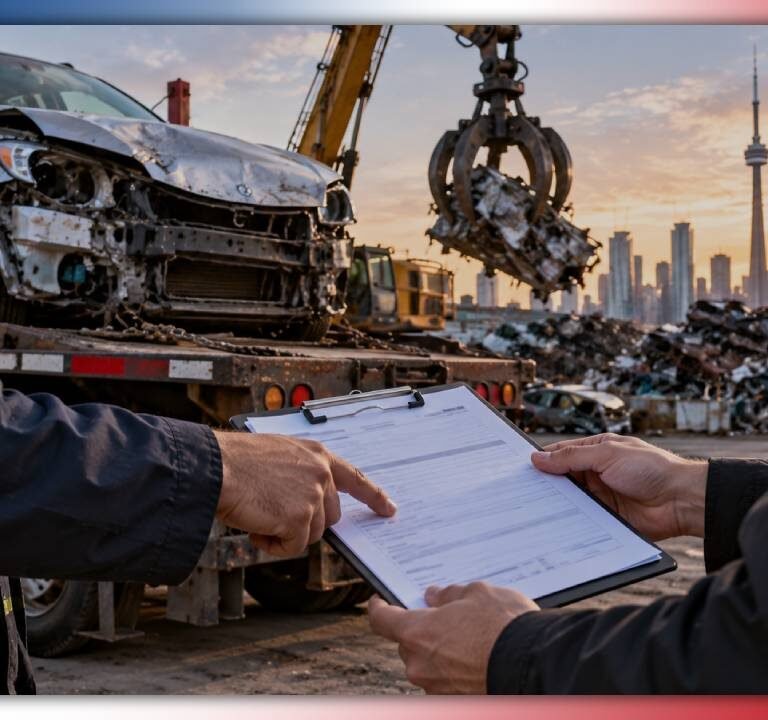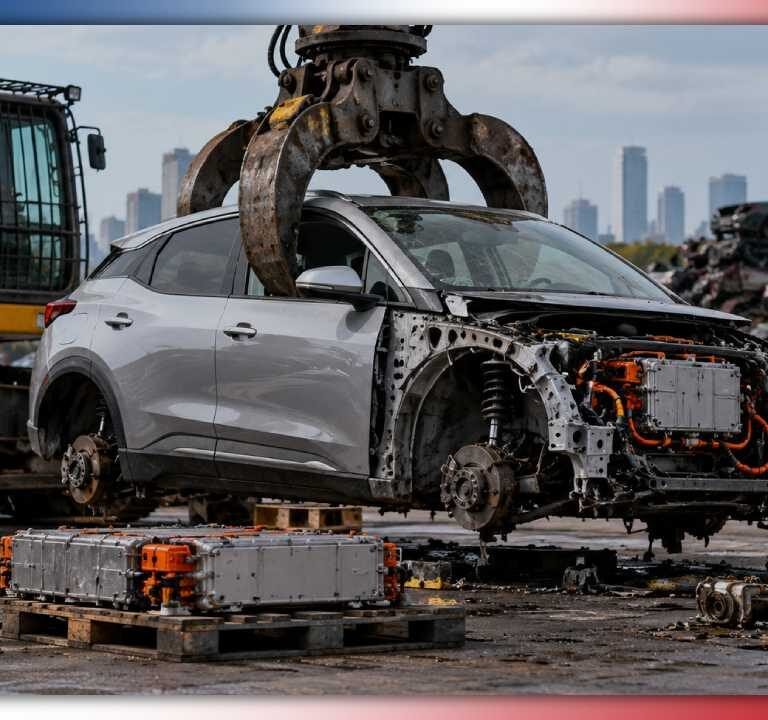
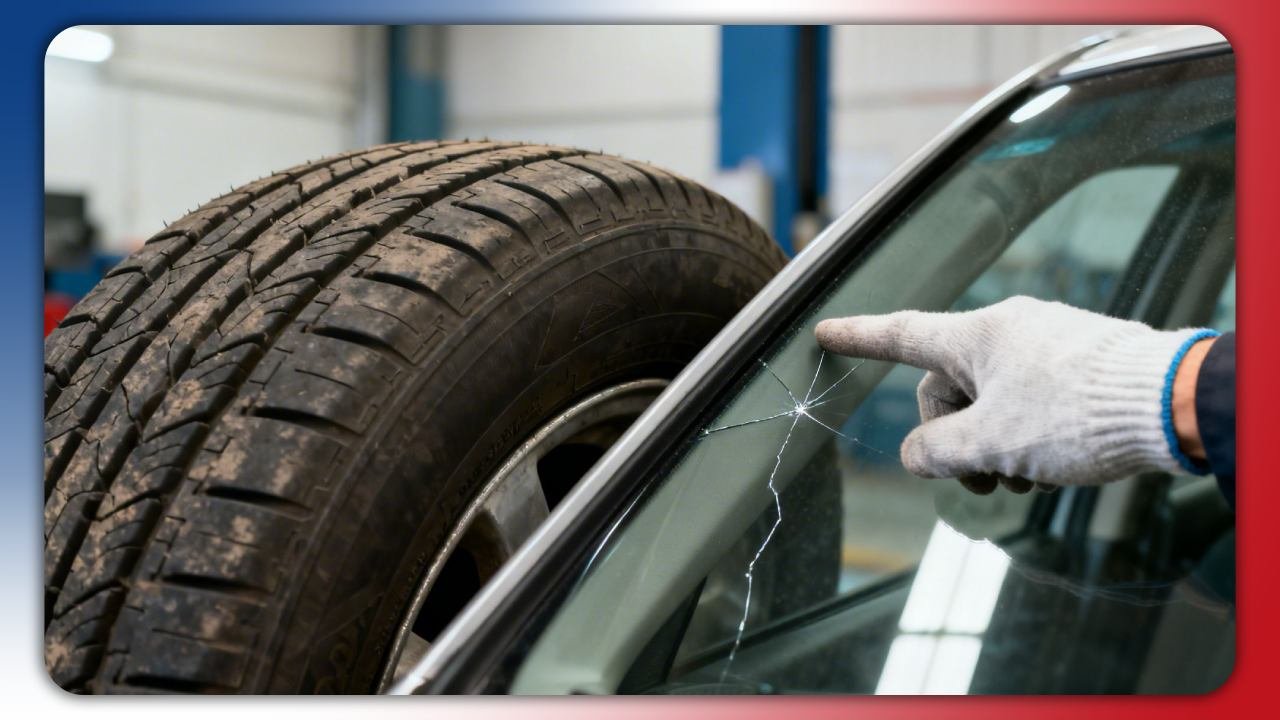
A car failed safety inspection in Ontario when one or more components don’t meet Ministry of Transportation (MTO) standards under the DriveON program. The technician hands you a digital reject report, you get 10 days for a free or discounted re-inspection, and until repairs pass, the vehicle cannot be registered, plated, or sold with a valid Safety Standards Certificate (SSC). For drivers in Toronto, Mississauga, Brampton, and across the Greater Toronto Area (GTA), this moment usually splits into two paths: pay for repairs, or sell the car as-is for cash. This guide breaks down both paths with real numbers, so you can pick the one that protects your wallet.
DriveON replaced the old paper-based Motor Vehicle Inspection Station (MVIS) program in 2025. It moved every inspection record onto a digital database. The MTO and law enforcement can now check records instantly. That shift didn’t add new fees or stricter rules for everyday passenger vehicles. However, it did close a loophole. Previously, a shop could quietly skip recording a failed item. Today, every reject item your car receives gets logged against your Vehicle Identification Number (VIN). Any future inspector or insurer who looks it up can see it.
Why a Car Failed Safety Inspection in Ontario
A car fails its DriveON safety inspection in Ontario when a licensed technician finds a defect in one of eight checked systems: brakes, tires and wheels, steering and suspension, the electrical system, the exhaust, the windshield and wipers, the frame and body, or coupling devices. Inspectors follow a fixed checklist set by the MTO, not personal judgment, so two shops in different cities apply the exact same thresholds.
Eight Defect Categories Drive Almost Every Failed Report:
- Brake lining worn to 1.6 mm (0.06 in) or less, which cuts stopping distance and fails the brake check immediately.
- Tire tread depth under 2 mm (0.08 in), measured at the shallowest point across the tread.
- Wheel alignment variance of 25 mm (1 in) or more, a sign of worn ball joints, tie rods, or bent components.
- Cracked or pitted windshield glass inside the wiper sweep area, which blocks the driver’s direct line of sight.
- Exhaust leaks, holes, or rust-through sections, which let carbon monoxide enter the cabin.
- Frame or body rust that has perforated structural rails or floor pans, weakening crash protection.
- Faulty headlights, brake lights, or turn signals, which reduce visibility for other drivers.
- Damaged or non-retracting seat belts, which fail the restraint system check on the spot.
Minor cosmetic issues, like a small stone chip outside the wiper zone or light surface rust on a bracket, rarely cause a failure on their own. DriveON inspectors only reject items that compromise safety, not appearance.
Every inspection also includes a road test, where the technician checks braking response, steering feel, and unusual noises under load. A car can look fine on the lift and still fail here if it pulls to one side, vibrates under braking, or produces a clunking sound over bumps. Commercial vehicles, trailers, and salvage-branded cars face additional structural checks beyond this standard eight-point list, since they carry separate inspection schedules under Ontario’s regulations.
What Happens After Your Car Fails Inspection
After a failed inspection, the technician issues a digital DriveON report listing every reject item, and you have 10 calendar days to repair the vehicle and return for a free or reduced-fee re-inspection. Miss that window, and the shop typically charges full price for a fresh inspection. You’re free to repair the car at the same facility or take it to an independent mechanic, since Ontario law doesn’t require you to use the inspecting shop for the actual repair work.
Yes, you can usually keep driving a car that failed inspection. It must stay registered and insured. The defect must not pose an immediate road hazard like failed brakes. You just can’t transfer ownership, sell it with a valid SSC, or re-register it on a new plate until it passes. Once repairs hold up at re-inspection, the shop issues an SSC valid for 36 calendar days. This is the window you have to complete registration before it expires.
A full safety inspection in Ontario costs $60 to $150 (CAD). Pricing depends on the inspection station’s location and the vehicle type. It also depends on whether extra diagnostic time is needed to confirm a reject item. Re-inspections within the 10-day window often run cheaper. The technician only re-checks the specific components that failed the first time. They do not re-check the entire eight-point list.
How to Calculate Repair Cost vs Scrap Value
Use the 50% rule: if the repair quote exceeds half your car’s current market value, scrapping makes more financial sense than fixing it. A $3,000 sedan that needs $2,200 in suspension and brake work crosses that line fast, since you’d never recover that spend at resale. A newer SUV worth $14,000 that only needs $600 in tires sits well under the threshold, so repair is the smarter call.
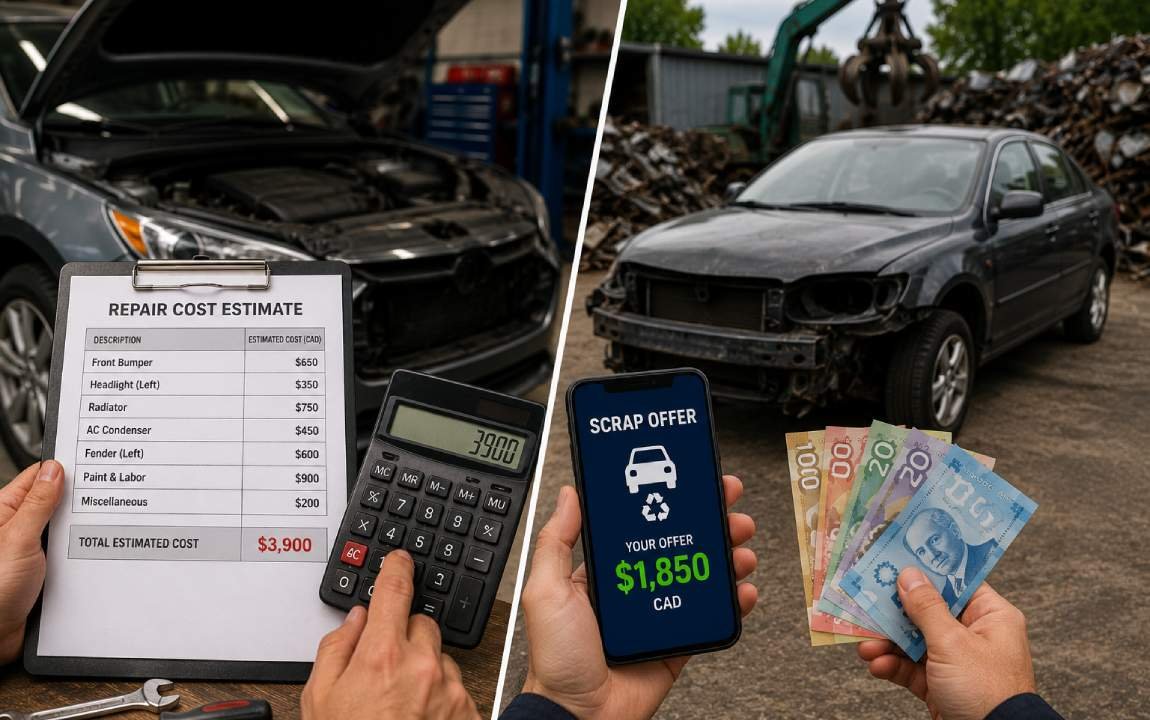
Three numbers decide which side of the 50% line your car lands on:
- Get the repair quote in writing, itemized by part and labour, from at least two shops.
- Check current market value using a recent private-sale listing for the same year, make, and model in similar condition.
- Divide repair cost by market value. Anything above 50% points toward scrapping; anything below points toward repair.
Weight matters too. A half-ton pickup or full-size SUV carries roughly 1,800 to 2,300 kg (4,000 to 5,000 lbs) of scrap steel, which pushes its cash value well above a compact sedan’s 1,100 to 1,300 kg (2,400 to 2,900 lbs). Heavier vehicles with failed safety reports almost always pay out higher scrap value, even with the same mechanical problems.
Run the numbers on a real example. A 2014 hatchback worth $4,500 fails inspection for worn brake pads, a cracked windshield, and a rusted exhaust pipe, with a combined repair quote of $1,900. That’s 42% of the car’s value, under the 50% line, so repair is the financially sound choice. Change one variable, say the same car needs $2,700 in repairs because the frame also shows rust, and the math flips to 60%, pushing the decision toward scrapping instead.
4 Signs Your Car Isn’t Worth Repairing
Four warning signs mean the safety failure is a symptom, not the real problem:
- Structural rust through the frame rails or floor pans, since welding repairs cost thousands and rarely pass a follow-up inspection.
- Engine or transmission failure layered on top of the safety reject items, which pushes total repair cost past the car’s full value.
- Odometer reading above 250,000 km (155,000 miles), where remaining components tend to fail in clusters rather than one at a time.
- Repeat breakdowns requiring a tow more than twice in six months, a pattern that signals systemic wear, not an isolated fault.
If two or more of these apply alongside your failed report, repair spending becomes a sunk cost. Selling for scrap locks in cash today instead of feeding a vehicle that keeps demanding more.
Repair vs Scrap: Side-by-Side Comparison
| Factor | Repair Makes Sense | Scrapping Makes Sense |
| Repair Cost | Under 50% of market value | Over 50% of market value |
| Vehicle Age | Under 10 years old | Over 15 years or 250,000+ km |
| Reject Items | Tires, brakes, lights, wipers | Frame rust, engine, transmission |
| Breakdown History | No tows in the past year | 2+ tows in six months |
| Your Priority | Keep driving this vehicle | Get cash and move on |
How Much Cash You Can Get for a Failed Safety Car in Ontario
Cars that failed safety inspection in Ontario typically pay out $150 to over $1,000 in scrap cash, depending on weight, make, model, and current scrap metal pricing. A compact sedan with a failed brake or rust report often lands between $200 and $450, while a failed SUV or pickup with valuable parts like an intact catalytic converter can clear $800 or more.
Three factors swing your quote the most:
- Vehicle weight in kilograms or pounds, since scrap yards pay by the metal ton, and heavier vehicles weigh in higher.
- Catalytic converter condition, because the precious metals inside (platinum, palladium, rhodium) drive a large share of resale value.
- Distance from the GTA core, as some buyers reduce offers for pickups outside Toronto, Mississauga, Brampton, or Vaughan.
At Scrap Cars 4 Cash, every quote is based on real-time scrap metal rates with no deductions for free towing, so the number you hear on the phone is the number you get paid in your driveway.
Scrapping a failed safety car also avoids environmental risks. Leaving fluids and rusted metal sitting in a driveway or on the roadside can cause serious harm. Licensed scrap operators drain oil, coolant, and brake fluid before processing the vehicle. This keeps these substances out of soil and storm drains. Ontario’s environmental regulations for vehicle recyclers require this practice.
How to Scrap a Car That Failed Safety Inspection in Ontario
To scrap a car that failed safety inspection in Ontario, remove the license plates, sign the green ownership portion over to the buyer, collect a bill of sale, and notify ServiceOntario that the vehicle is no longer yours. None of these steps require the vehicle to pass inspection first, since scrap buyers purchase cars in any mechanical condition.
- Call for a quote using your year, make, model, and a description of the failed items.
- Confirm free towing and a same-day pickup window for your address.
- Remove your plates before the tow truck arrives, since plates stay with you, not the car.
- Sign the ownership document (the vehicle portion of the green permit) over to the buyer on pickup.
- Collect your bill of sale and cash on the spot, paid before the car leaves your property.
- Notify ServiceOntario that the vehicle has been scrapped to keep your driving and ownership record clean.
This entire process usually wraps in under an hour. No repairs, no second inspection, no negotiating with private buyers who want proof the car can pass safety first.
Repair, Sell Privately, or Scrap: Choosing Your Path
Three options sit on the table once your report comes back. Repair fixes the safety issue but only pays off if the cost stays under 50% of the car’s value and the vehicle has years of use left. Selling privately works for cars with minor reject items, since most private buyers expect a valid SSC before they’ll close the deal, which means you pay for repairs anyway before you see a cent. Scrapping skips both problems: no repair bill, no buyer negotiations, and payment the same day you call.
Drivers across Toronto, Mississauga, Brampton, Vaughan, Markham, and the wider GTA increasingly default to scrapping once frame rust, transmission failure, or a stack of reject items shows up on the report, since the math rarely favours a multi-thousand-dollar repair bill on an older vehicle.
Timing plays a role too. The 36-day SSC clock and the 10-day re-inspection window both run out fast. A car sitting unregistered past those dates loses options, not gains them. Deciding within the first week keeps every path open. The reject report and repair quotes are still fresh at that point. You can fix it, sell it privately once repaired, or scrap it as-is. Acting early prevents the deadlines from forcing a more expensive choice.
Frequently Asked Questions
What happens if my car fails a safety inspection in Ontario?
Yes, you’ll get a written reject report listing every failed item, and you have 10 days to repair and return for a re-inspection. The vehicle can’t be registered, transferred, or issued a Safety Standards Certificate until it passes. Repairs can happen at any licensed shop, not only the one that performed the original inspection.
What fails a safety inspection in Ontario most often?
Worn brake linings under 1.6 mm, tire tread under 2 mm, cracked windshields in the wiper zone, exhaust leaks, and frame rust cause most failures. Electrical faults like broken headlights or turn signals and damaged seat belts round out the most common reject items across DriveON inspection reports.
Can I still drive my car after it failed safety inspection?
Yes, as long as the vehicle stays registered and insured and the defect isn’t an immediate hazard like brake failure. You just can’t transfer ownership, sell it with a valid certificate, or re-register it on a new plate until it passes a re-inspection.
Should I repair or scrap a car that failed safety inspection?
Scrap it if the repair quote tops 50% of the car’s market value; repair it if the quote stays under that line and the car has years of life left. A $2,500 repair bill on a $3,000 car rarely makes financial sense, while $600 in tire work on a $10,000 SUV almost always does.
How much cash can I get for a car that failed safety inspection in Ontario?
Most failed-inspection vehicles bring $150 to $1,000+ in cash, based on weight, make, model, and current scrap metal rates. Heavier vehicles like SUVs and pickups, plus cars with an intact catalytic converter, typically land at the higher end of that range.
Do I need to fix my car before scrapping it in Ontario?
No, scrap buyers purchase vehicles in any condition, including failed inspection, non-running, rusted, or missing parts. You skip the repair bill entirely and go straight to a cash payout, since scrap yards value the metal and parts, not roadworthiness.
What documents do I need to scrap a car that failed safety inspection?
You need the green ownership permit signed over to the buyer, your removed license plates, and a bill of sale as proof of the transaction. Notifying ServiceOntario afterward keeps your name off any future tickets or liabilities tied to the vehicle.
Get Cash for Your Failed Safety Inspection Car Today
A failed safety report doesn’t have to turn into a repair bill you can’t justify. If the numbers point toward scrapping, Scrap Cars 4 Cash offers free same-day towing across Toronto, Mississauga, Brampton, Vaughan, and the rest of the GTA, with cash paid on the spot and zero hidden deductions. Call +1 437-269-6321 for a free quote, or get an instant quote online and turn that failed inspection into same-day cash.
Sources: Ontario Safety Standards Certificate (ontario.ca); DriveON Emissions and Safety Inspection Program (ontario.ca)