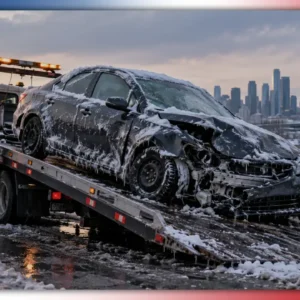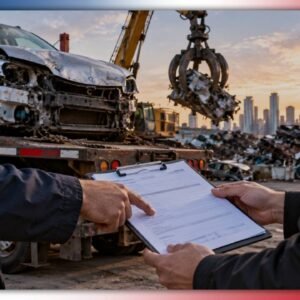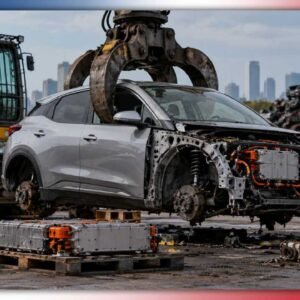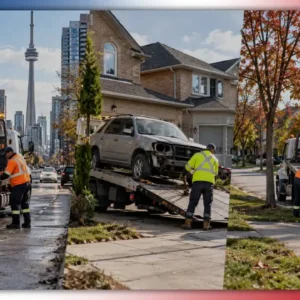
To legally remove an abandoned vehicle from private land, document the car’s condition, report the Vehicle Identification Number (VIN) to local police to verify the vehicle is not stolen, and hire a licensed towing company or scrap removal service to extract the vehicle. Knowing how to remove a scrap car from private property legally protects property owners from liability claims and municipal fines. Property owners carry specific legal obligations when managing unauthorized vehicles on residential or commercial land. Property owners must follow municipal bylaws to transfer liability back to the registered vehicle owner.
Identifying an Abandoned Vehicle on Private Property Ontario
An abandoned vehicle is an unplated, inoperable, or unauthorized motorized transport left on private land without the property owner’s explicit consent. Recognizing an abandoning vehicle requires checking 4 specific criteria.
- Lacks valid provincial license plates or updated registration stickers.
- Sits immobile for more than 72 hours (3 days) without property owner permission.
- Shows severe physical damage, missing essential structural components, or flat tires.
- Leaks hazardous automotive fluids onto the underlying soil or pavement.
Property owners must differentiate between a legally parked car and a deserted car. A registered vehicle belongs to the titleholder regardless of the vehicle’s physical location. Property owners cannot simply claim ownership of an abandoning car left on residential driveways.
5 Steps to Legally Remove a Scrap Car from Private Property
To legally remove an unauthorized vehicle, follow 5 specific legal procedures. Bypassing these procedures exposes the property owner to civil lawsuits under the Trespass to Property Act (TPA).
1. Document the Deserted Car Details
Record specific details about the vehicle immediately upon discovery. Documentation provides legal evidence for bylaw officers and towing services.
- Record the 17-digit VIN located on the driver-side dashboard.
- Photograph the license plates from multiple clear angles.
- Document the vehicle’s make, model, color, and visible physical damage.
- Log the exact date and time the vehicle appeared on the property.
2. Contact the Local Police Non-Emergency Line
Report the vehicle to local law enforcement using the non-emergency telephone number. Police departments run the VIN and license plates through national databases to check for criminal activity. Police officers will dispatch a unit to inspect the vehicle if the database flags the car as stolen or involved in a crime. Ask the police dispatcher for an official incident report number. Towing companies require this police report number before removing an abandoned car from private property.
3. Notify the Registered Vehicle Owner
Send a formal written notice to the registered vehicle owner if the police provide the owner’s contact information. Issue this notice via registered mail to maintain legal proof of delivery. Give the registered owner a strict 72-hour deadline to retrieve the vehicle. Proceed to the next removal step if the vehicle owner ignores the notice or remains unidentified.
4. Hire a Licensed Scrap Car Removal Service
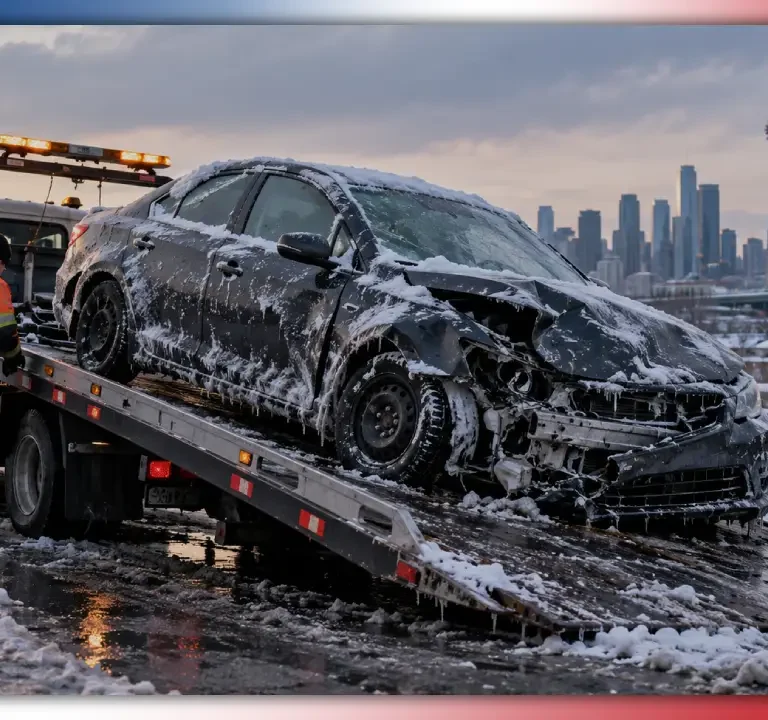
Hire a certified towing company or a specialized scrap car buyer to extract the vehicle. ScrapCars4Cash provides professional, legally compliant vehicle removal services across Ontario. Professional operators utilize flatbed tow trucks to safely transport immobile vehicles weighing over 4,000 pounds (1,814 kg). Provide the towing dispatcher with the police incident report number and the vehicle’s exact location on the property.
5. Transfer Legal Liability
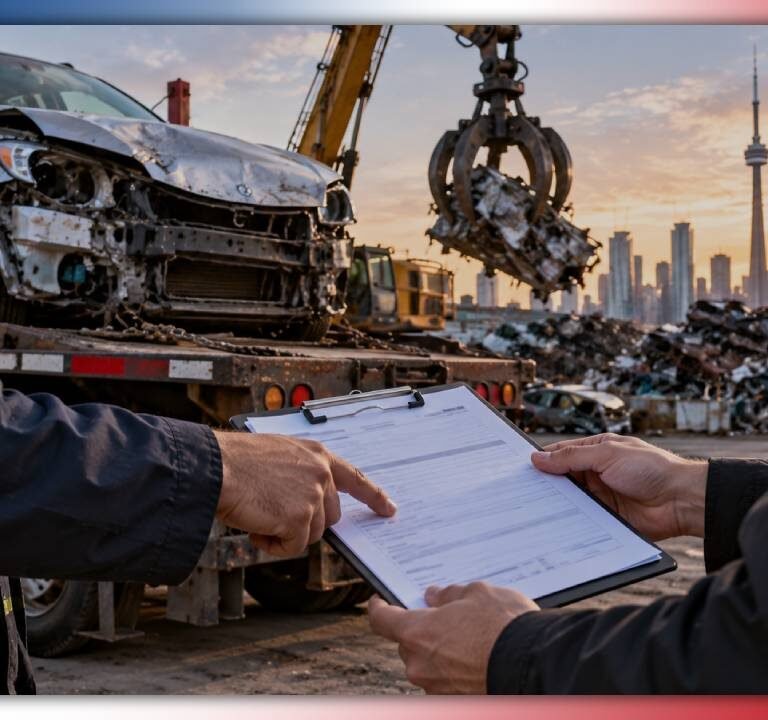
Sign the towing company‘s authorization forms to transfer physical possession of the vehicle. The towing operator assumes responsibility for the vehicle during transit and storage. Towing companies typically impound the vehicle under the Repair and Storage Liens Act (RSLA). The RSLA allows the storage facility to auction or scrap the vehicle to recover towing costs after a mandatory 60-day holding period.
Residential vs. Commercial Property Bylaws
Municipalities enforce different removal rules based on property zoning. Understanding how to remove a scrap car from private property legally requires identifying the property’s specific zoning classification.
Residential Driveways and Lawns
Homeowners face strict timelines when dealing with abandoned vehicles on residential land. Municipal bylaws prohibit parking unplated or inoperable vehicles on residential lawns or unpaved driveways. Bylaw officers issue fines ranging from $200 to $500 to the property owner for harboring derelict vehicles. Homeowners must initiate the removal process within 48 hours to avoid municipal penalties.
Commercial Parking Lots and Plazas
Commercial property managers manage high volumes of unauthorized parking. The commercial properties require clear, visible signage stating parking rules and towing enforcement warnings. Property managers can authorize immediate towing if a vehicle blocks fire routes, loading zones, or accessibility spaces. Managers must wait 24 hours before towing an abandoned car from standard commercial parking spaces.
4 Environmental Hazards of an Abandoned Vehicle
Leaving a junk car on private property creates severe environmental contamination risks. Deteriorating vehicles release toxic chemical compounds into the local ecosystem. Remove derelict vehicles promptly to improve local soil health and prevent groundwater contamination.
- Motor Oil: A single gallon (3.78 liters) of leaked motor oil contaminates 1 million gallons of fresh groundwater.
- Battery Acid: Decomposing lead-acid batteries leak sulfuric acid, which destroys grass and alters soil pH.
- Antifreeze: Ethylene glycol leaks from cracked radiators, presenting a fatal poisoning risk to local pets and urban wildlife.
- Rust Particulates: Oxidizing metal panels deposit heavy iron particulates into the surrounding soil during heavy rainstorms.
Financial Penalties for Abandoning a Car
Individuals abandoning a vehicle face severe financial and legal consequences. Municipalities actively track down registered owners who dump vehicles on private or public land. The registered owner receives a municipal dumping fine of up to $5,000 in Ontario. The owner remains legally responsible for all towing fees, daily impound storage rates, and environmental cleanup costs. Unpaid municipal towing fines eventually transfer to the owner’s provincial driving record, preventing the renewal of driver’s licenses and vehicle registrations at ServiceOntario.
Why Choose ScrapCars4Cash for Vehicle Removal?
ScrapCars4Cash simplifies the complex legal process of clearing unwanted vehicles from your land. We specialize in fast, compliant removals for property owners dealing with unauthorized dumping.
- Legal Compliance: We handle all necessary RSLA paperwork to ensure the property owner incurs no legal blowback.
- Free Towing: We provide complimentary flatbed towing for all qualifying scrap vehicles across our service areas.
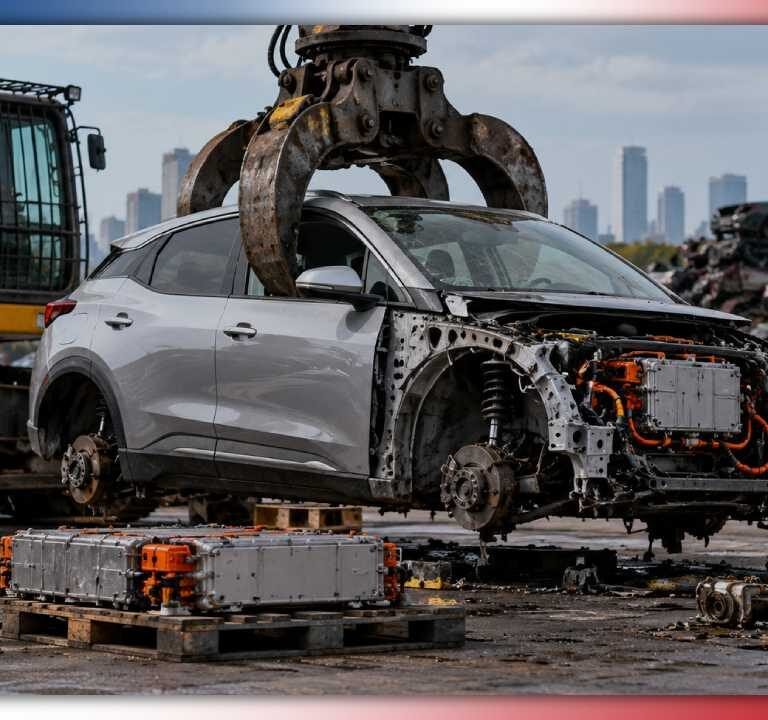
- Eco-Friendly Recycling: We drain all hazardous fluids and recycle 80%-90% of the vehicle’s steel and aluminum components through licensed Ontario auto recyclers.
- Instant Compensation: We pay top market value for the vehicle’s scrap metal weight directly to authorized sellers. Explore our cash for scrap cars services to evaluate your vehicle’s current market value.
Learning exactly how to remove a scrap car from private property legally eliminates stress and restores your property’s usable space. Property managers and homeowners rely on our rapid-response teams to resolve disputes over unauthorized vehicles efficiently.
Frequently Asked Questions (FAQs)
Can I claim ownership of an abandoned vehicle on my property?
No. Property owners cannot legally claim ownership of a vehicle simply because the car sits on their land. The vehicle remains the legal property of the registered titleholder. You must apply through the provincial government to transfer a title, which requires a mechanic’s lien or a court order.
Do police tow abandoned cars from private residential property?
No. Police departments only tow vehicles on public roads, on municipal property, or that are directly involved in active criminal investigations. In contrast, private property owners remain entirely responsible for arranging and authorizing the towing of unauthorized vehicles from their own land.
How long does a car have to sit to be considered legally abandoned in Ontario?
A car becomes legally abandoned on public property after 72 hours. Municipalities consider a vehicle abandoned on private property immediately if the vehicle lacks the property owner’s consent. Commercial properties with posted parking signs enforce immediate removal rules for unauthorized vehicles.
Will I pay the towing fees to remove someone else’s car?
No. Professional towing companies remove unauthorized vehicles at the vehicle owner’s expense. Specifically, the towing company impounds the vehicle and bills the registered owner for the tow and daily storage fees. On the other hand, scrap car buyers often remove worthless junk cars for free to harvest the base scrap metal.
Can I push an abandoned vehicle onto the public street?
No. Pushing an unauthorized vehicle from your private land onto a public municipal road constitutes illegal dumping. Bylaw enforcement officers will trace the vehicle back to your property and issue severe municipal fines for creating a public roadway hazard.
What happens if someone leaves an abandoned vehicle with no VIN or plates?
Contact local police immediately if you find an abandoned vehicle missing both license plates and the VIN plate on the dashboard. Criminals frequently strip identification markers from stolen vehicles before dumping them on private farmland or commercial lots. Police treat completely unidentified vehicles as active crime scenes.
Can I sell an abandoned car to a scrap yard myself?
No. Scrap yards require the seller to present a valid vehicle ownership title matching their government-issued identification. In fact, selling a vehicle without legal ownership constitutes auto theft under the Canadian Criminal Code. Therefore, you must hire a towing company to impound the vehicle legally under the Repair and Storage Liens Act.