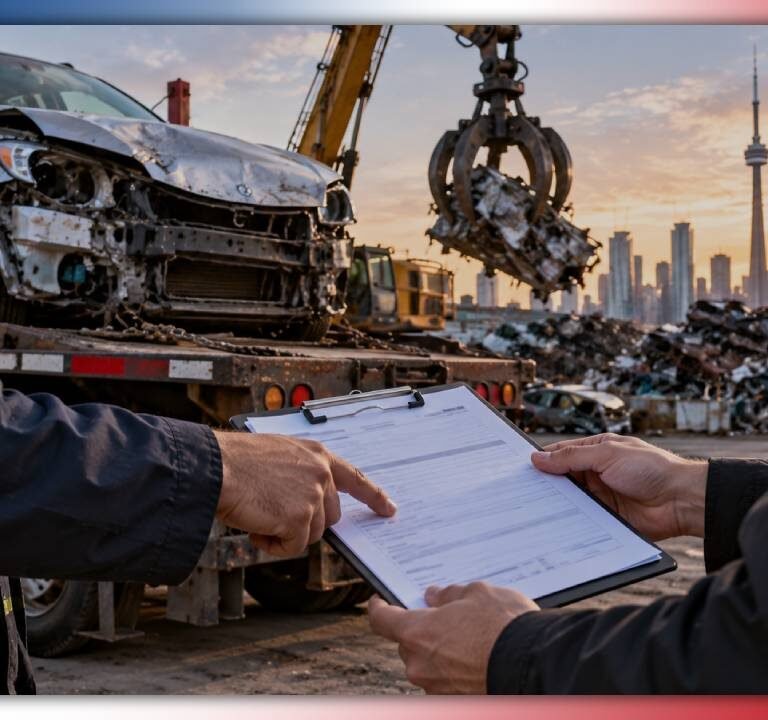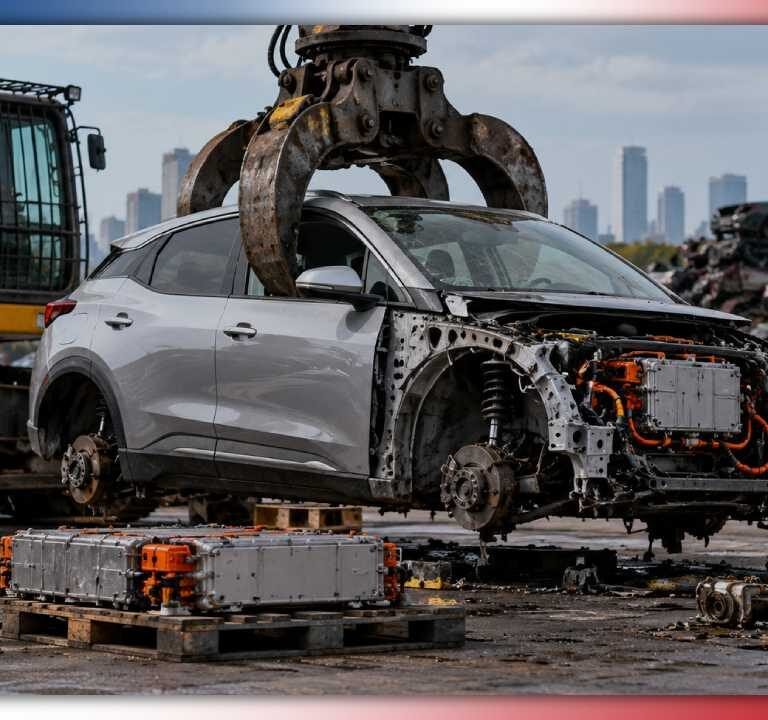
If you want to clear your driveway and earn extra money, selling an end-of-life vehicle (ELV) is a highly practical choice. Many junk car owners in the Greater Toronto Area (GTA) immediately want to know the bottom line before calling a local auto recycler. In Toronto, you can get between $250 and $20,000 for scrapping car, though most standard non-running vehicles yield between $400 and $1,500. Your final cash payout is determined heavily by the vehicle type, its total curb weight, and current global commodity rates for steel, aluminum, and precious metals.
Competitor valuation templates often rely on static pricing grids that fail to account for daily market adjustments. If you want to ensure you receive the highest market return, calculating the real-time material value of your car is essential. Understanding the underlying mechanics of the Ontario auto recycling industry allows you to avoid typical lowball tactics and secure the top scrap car rate.
5 Factors That Determine Scrap Car Prices in Toronto
Scrap yards do not guess your vehicle value. They analyze precise physical and economic metrics to establish a guaranteed quote. If you know these variables before contacting a buyer, you can protect yourself against sudden price drops at the time of pickup.
1. Curb Weight and Heavy Metals
The heaviest component of your vehicle payout comes down to total mass. Scrapyards purchase cars primarily for their meltable steel and iron contents. A compact vehicle yields less raw material than an industrial transport truck.
2. The Completeness of Your Vehicle
A complete vehicle retains all core structural machinery from the factory. If you strip key components like the alternator, battery, or radiator prior to sale, your final quote decreases significantly. Scrap buyers pay maximum rates only if the vehicle arrives fully intact.
3. Presence of an Original Catalytic Converter
The catalytic converter is an exhaust emission control device containing rare precious metals. These components contain physical trace amounts of platinum, palladium, and rhodium. An original factory converter dramatically raises your junk car worth, whereas an aftermarket replacement reduces the offer.
4. Year, Make, and Model Salvageability
If your vehicle belongs to a highly popular model family, like a Honda Civic or a Toyota Corolla, the mechanical components are highly valuable for secondary consumer resale. Yards pay more for scrap vehicles if they can pull and sell functional engines, transmissions, or body panels to repair shops.
5. Proximity to Processing Depots
Your physical location in the GTA alters logistics costs. If a flatbed tow truck must navigate through dense downtown Toronto traffic grids for 2 hours, the fuel and labor costs reduce your net cash payout. Sellers located near high-density industrial hubs like Etobicoke, Scarborough, or North York inherently secure better baseline offers because transport logistics are shorter.
Toronto Scrap Car Price Estimates by Vehicle Class
Vehicle scale directly dictates volume pricing. To understand what local auto wreckers pay, evaluate your vehicle according to these 4 specific categories:
Small Compact Cars ($250 – $450)
- Examples: Honda Fit, Chevrolet Spark, Hyundai Accent, Smart Fortwo.
- Smaller platforms contain less structural steel frame weight. They generally scale at less than 1.2 metric tons (2,645 lbs), making their base metal value lower.
Standard Sedans and Crossovers ($400 – $700)
- Examples: Toyota Camry, Mazda 6, Ford Fusion, Subaru Outback.
- These everyday commuter options average roughly 1.5 tons (3,300 lbs) of recyclable material. They represent the baseline standard for local scrap car valuation.
Full-Size Sport Utility Vehicles and Minivans ($600 – $1,200)
- Examples: Dodge Grand Caravan, Honda Pilot, Ford Explorer, Chevrolet Tahoe.
- Sport utility vehicles (SUVs) offer increased structural mass and heavy-duty drivetrain parts, driving up their total material yield.
Full-Size Pickup Trucks ($800 – $1,500+)
- Examples: Ram 1500, Ford F-150, GMC Sierra, Chevrolet Silverado.
- Heavy-duty trucks contain massive steel box frames and large-displacement engines. They regularly weigh over 2.2 metric tons (4,850 lbs), consistently commanding the highest baseline auto scrap value.
High-Value Car Components That Increase Cash Payouts
To squeeze every dollar out of your vehicle scrap value, verify whether your car retains these high-end components:
- Original Catalytic Converter: Industrial processing facilities purchase these specifically for their rare chemical elements, adding $150 to $800+ to a baseline quote.
- Aluminum Alloy Rims: If your car features factory aluminum rims instead of basic stamped steel wheels, your car scrap value estimate improves because aluminum trades at a higher premium than steel.
- Running Engine and Transmission Assemblies: Wreckers can test, pull, and clean functional powertrain systems, reselling them directly to local auto shops for a premium.
- Intact Mechanical Alternators and Starters: These parts contain dense copper wiring windings, which command excellent wholesale recycling rates.
Hidden Pitfalls That Reduce Scrap Car Payouts
Many sellers accidentally destroy their car scrap value before the tow truck arrives. Avoid these 3 common financial mistakes to keep your quote firm:
- Prematurely Stripping Parts: Taking out the car battery or radiator to sell independently often backfires. If a vehicle is stripped of core parts, most scrap yard buyers will drop their bulk weight offer by an amount greater than the cash you make selling those pieces privately.
- Losing Crucial Ownership Documentation: You must present valid legal proof of ownership, such as your Ontario master vehicle permit (the green slip). If you lose this documentation, you must purchase a replacement from a ServiceOntario kiosk before a licensed auto recycler can legally process your vehicle.
- Leaving Inaccessible Physical Obstacles: If your vehicle has 4 flat tires, lacks a functional steering column, or is buried deep inside a low-clearance underground parking garage, it requires specialized recovery gear. These extraction challenges create extra labor costs that buyers subtract from your final cash handoff.
How Global Commodity Markets Drive Toronto Scrap Car Prices
Sellers often notice that the price of an old car scrap changes from one week to the next. These variations occur because local vehicle scrap prices are directly linked to global commodity trading indexes.
When international construction projects increase demand for raw structural steel, the spot price on the London Metal Exchange (LME) climbs. Toronto processing yards can then export shredded steel bundles for higher margins, allowing them to raise their local cash offers. Conversely, during global economic slowdowns, manufacturing demand drops, which lowers the domestic scrap rate for cars across Ontario.
Step-by-Step Guide: How to Scrap a Car in Toronto
If you want to secure a seamless, legal transaction from your driveway to the recycling yard, execute this 4-step process:
Gather Valid Proof of Ownership Documents: Requires Ontario Green Slip.
Locate the permit portion of your Ontario vehicle registration. Licensed salvage operators require this documentation to confirm you hold the legal right to dispose of the vehicle, which prevents the trafficking of stolen property.
Obtain Guaranteed Visual Quotes: Compare 3 Local Operators.
Contact local vehicle removal specialists to compare current offers. Provide your vehicle identity number (VIN), accurate mileage, structural completeness, and structural damage details to lock in a firm cash offer.
Clear Personal Items and Remove License Plates: Check Gloveboxes and Trunks.
Remove all personal belongings from the cabin, trunk, and door pockets. Detach your physical Ontario license plates using a screwdriver, as you will need to return them to a ServiceOntario office or transfer them to a replacement vehicle.
Execute the Handover and Collect Instant Payout: Verify Cash or Electronic Transfer.
Sign the back of your vehicle permit certificate to transfer ownership over to the auto scrapper. Confirm that the tow driver hands you the exact cash sum or executes a verified e-Transfer before the vehicle is winched onto the flatbed bed.
Avoid Common Towing Scams in the GTA
The Ontario vehicle recycling market contains predatory operators who use bait-and-switch tactics. Protecting your payout requires understanding how these predatory companies operate.
The Classic “Weigh-Down” Scam: A rogue buyer quotes you $800 over the phone to win your business. Once they arrive at your Toronto home, they claim your vehicle looks lighter than expected or point out common rust spots, dropping their actual cash handoff to $400.
To safeguard your transaction, always deal with transparent, established platforms like Scrap Cars 4 Cash. If you live outside the central metropolitan core, you can utilize their dedicated Scrap Car Removal Mississauga service branch to secure fully guaranteed phone quotes. Choosing professional providers ensures you receive free towing logistics with zero hidden processing fees, completing cash payments before loading your vehicle. For immediate digital appraisals, you can submit your vehicle information directly through their Contact Us page to lock in your seasonal rate.
Environmental Benefits of Auto Recycling in Ontario
Scrapping an old car is a highly impactful step for environmental conservation. Over 1.6 million end-of-life vehicles are processed across Canada every year, diverting massive volumes of toxic material from local provincial landfills. Modern industrial recycling facilities achieve an exceptional 95% material recovery rate per vehicle.
Safely Diverting Toxic Automotive Fluids
Vehicles contain a variety of highly toxic chemicals, including ethylene glycol antifreeze, lead-acid battery compounds, synthetic engine oils, and fluorocarbon air conditioning refrigerants. Professional vehicle processors systematically drain and neutralize these fluids inside specialized containment bays. This careful process prevents hazardous run-off from contaminating local Ontario soil and water tables.
Lowering Carbon Footprints with Recycled Steel
Refining raw iron ore requires an intense amount of energy and releases substantial carbon emissions. Processing recycled structural automotive steel instead slashes manufacturing energy demands by roughly 74%. This clean source of secondary metal supplies vital manufacturing sectors across Canada, allowing industries to build new infrastructure with a much smaller carbon footprint.
Scrapping Car Prices Toronto: Frequently Asked Questions
How much is a scrap car worth in Toronto right now?
Most standard end-of-life cars in Toronto pay between $400 and $1,500. Compact sedans sit on the lower end of this scale, while large work trucks and commercial vans command higher rates due to their heavy metal weight. Payouts can exceed $2,000 if your vehicle contains an original factory catalytic converter or salvageable components.
Can I scrap my vehicle if I cannot locate the green registration slip?
No, reputable auto scrap yards in Ontario cannot legally buy a vehicle without valid proof of ownership. If you have misplaced your original green slip, you must bring your personal identification to a local ServiceOntario branch. You can purchase a certified replacement vehicle permit for a small administrative fee before scheduling your scrap pickup.
Do I need to empty the engine oil and radiator fluids before pickup?
No, you do not need to drain any fluids yourself. Licensed automotive recycling facilities are equipped with specialized fluid extraction bays. Their teams safely drain, capture, and recycle engine oil, coolant, fuel, and air conditioning gases in compliance with Ontario environmental safety regulations.
4. Is it more profitable to strip and sell the vehicle components myself?
This approach is only profitable if you possess advanced mechanical tools, commercial storage space, and plenty of free time. While components like alternators or tires can be sold on online marketplaces, stripping them reduces the core weight of your vehicle. A stripped shell holds little value, meaning a scrap yard may lower your bulk quote or charge a towing fee to haul it away.
Why do different scrap yards offer different quotes for the same car?
Some scrap operations run basic auto shredders and value your vehicle strictly by its raw metal weight. Advanced auto wreckers evaluate your car’s year, make, and model to see if its parts can be resold. If your vehicle has high-demand components, these buyers can offer a significantly higher payout.
Do I get to keep my Ontario license plates when I scrap my car?
Yes, your physical license plates remain your personal property. You must remove both plates before the tow truck operator hooks up your vehicle. You can take the plates to a ServiceOntario kiosk to officially cancel the registration, request a refund for any remaining validation months, or save them to transfer onto a new vehicle.
What happens to my old vehicle after it gets towed away?
Your vehicle undergoes a detailed, multi-stage decommissioning process. Technicians first extract all hazardous fluids, deploy unspent airbags, and remove the battery. Next, valuable components such as the catalytic converter, engine, and electronic modules are removed for resale. Finally, the remaining steel body shell is crushed, shredded, and sent to metal foundries to be melted down into new raw materials.
Final Words
The scrap value landscape in the Greater Toronto Area continues to favor sellers who preserve the structural completeness of their end-of-life vehicles. While global manufacturing trends cause micro-adjustments to daily scrap rate baselines, the bulk mass of an intact vehicle provides an unyielding layer of leverage against local market shifts.
To maximize net profitability, avoid unverified third-party haulers that lack commercial processing facilities. Dealing directly with established local recycling organizations stabilizes the valuation process, guarantees logistical safety, and guarantees that your vehicle disposal meets provincial environmental thresholds. Use these benchmarks to calculate your true material asset weight, protect your green master permit, and confidently secure the top market value on your vehicle exchange.