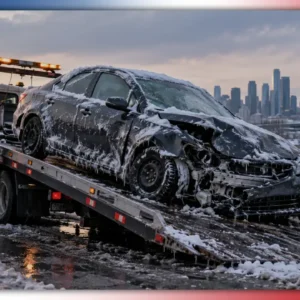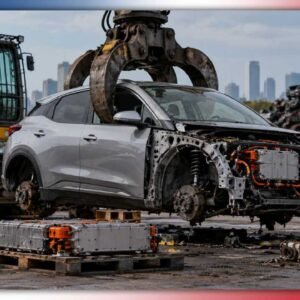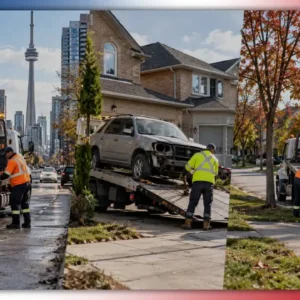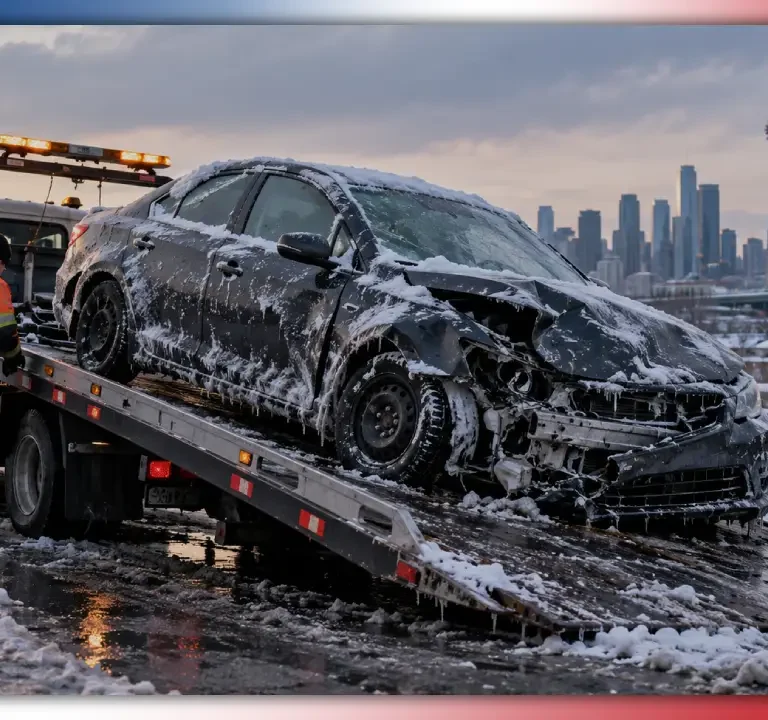
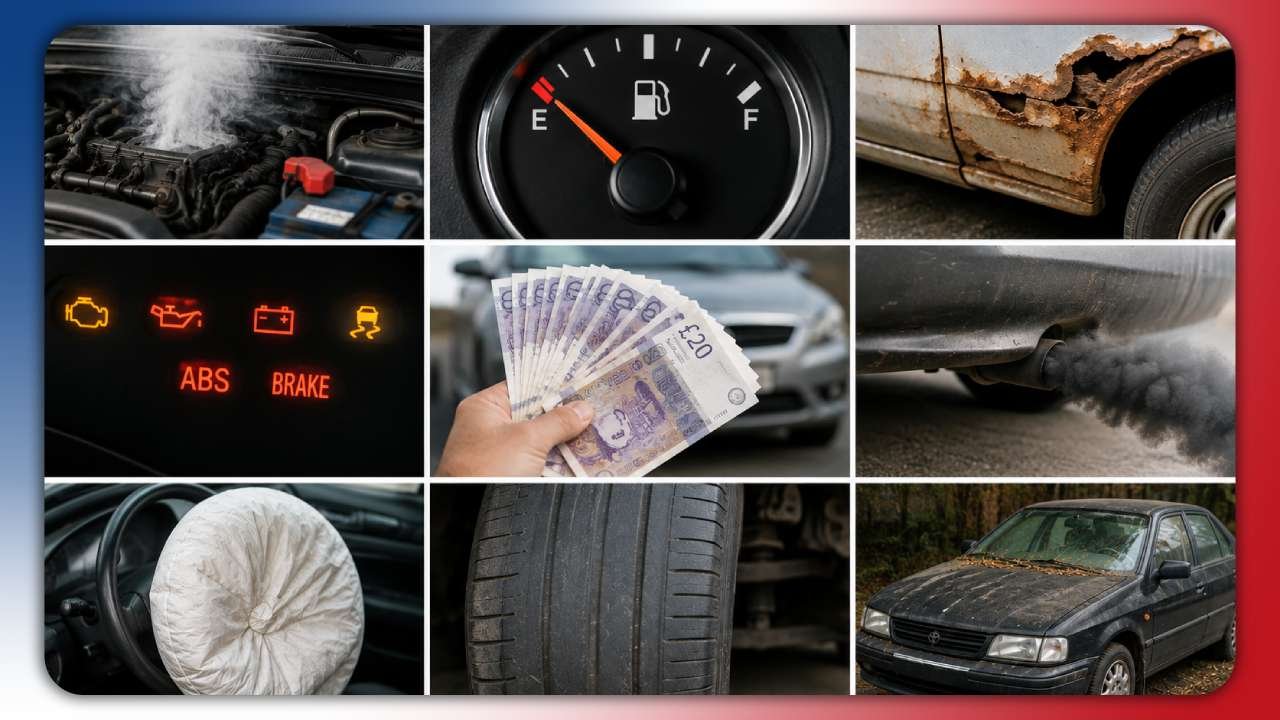
The clearest signs to scrap your car are rising repair costs, failed inspections, structural rust, and recurring mechanical failures. Once your vehicle shows 2 or more of these signs, scrapping usually costs less than another repair.
Owners across Ontario often wait too long to make this call. A car that needs constant attention drains your bank account and your time. This guide lists 9 signs to scrap your car in 2026, plus the steps to take next.
Provincial registration data shows Ontario drivers retire roughly 700,000 vehicles every year. Many of those cars still run when their owners let them go. Knowing the warning signs early protects your wallet and keeps you off the shoulder of Highway 401.
Fuel prices, parts costs, and labour rates all climbed through 2025 and into 2026. Every one of those increases raises the break-even point where repair no longer makes sense. Reading your car’s condition against these 9 signs takes less than 15 minutes.
A short checklist beats guesswork every time. Walk through each sign below, note how many apply to your vehicle, and use the quick-reference table to plan your next move.
Sign 1: Repair Costs Exceed Your Car’s Market Value
A repair bill above 50% of your car’s resale value signals it is time to scrap. Mechanics call this threshold the 50% rule, and it applies to engine, transmission, and suspension repairs alike.
Check your car’s private sale value on a tool like Canadian Black Book before you approve any major repair. Compare that number against the mechanic’s written estimate.
Owners frequently authorize repairs in stages, paying for a water pump one month and a timing belt the next. Each stage feels small, but the running total often exceeds the car’s full value within a single year.
How to Compare Repair Estimates Against Value
To compare repair estimates against value, request 2 written quotes from separate shops. Then look up your vehicle on Canadian Black Book or a similar valuation tool.
Subtract the repair cost from the resale value. A negative or near-zero result means scrapping saves you money. A 2015 sedan worth $2,500 CAD with a $2,000 CAD transmission repair barely breaks even.
Save every past invoice for 12 months before you make a final decision. A pattern of 3 or more repairs above $500 CAD each points toward scrapping over fixing.
Sign 2: Your Car Fails a Safety Inspection or Emissions Test
A failed Ontario Safety Standards Certificate test is one of the strongest signs to scrap your car. Brake failures, steering faults, and frame damage all block certification.
Ontario requires a Safety Standards Certificate before you transfer ownership of a used vehicle. If your car cannot pass, private buyers will avoid it entirely.
Emissions failures add another cost layer. Catalytic converter replacement runs $1,000 CAD to $3,000 CAD on many models, often more than the car is worth.
A second inspection failure after a repair attempt confirms the issue runs deeper than a single part. At that stage, a third repair rarely solves the underlying fault.
Sign 3: Rust Has Reached the Frame or Structural Components
Rust on the frame, rocker panels, or suspension mounts means your car has reached the end of safe use. Surface rust on a door panel is cosmetic. Structural rust is not.
Ontario winters accelerate corrosion through road salt exposure over 4 to 6 months every year. Cars driven through multiple winters without an undercoating treatment show rust years earlier than garage-kept vehicles.
3 Rust Locations That Signal Structural Failure
Check these 3 spots before you decide on repairs:
- Frame rails and subframe mounts, where corrosion weakens crash protection
- Rocker panels beneath the doors, which support the car’s structural rigidity
- Suspension mounting points, where rust causes alignment and handling failures
A frame weakened by rust can fail during a collision at speeds as low as 30 mph (48 km/h). No repair fully restores that lost strength, since welded patches address symptoms rather than the underlying metal fatigue.
Sign 4: The Same Mechanical Problem Keeps Returning
A repair that fails 2 or more times points to a deeper, unfixable issue. Overheating, electrical faults, and transmission slipping rank as 3 common repeat offenders.
Each return trip to the shop adds labour costs on top of parts. Owners often spend more chasing a recurring fault than the original repair quote suggested.
A mechanic who cannot solve a problem after 2 attempts rarely solves it on the third try. Stop the repair cycle and request a scrap quote instead.
Wiring faults rank among the hardest problems to trace, since a short can hide behind a dashboard or seat. Diagnostic time alone can run 2 to 4 hours at shop labour rates.
Sign 5: Your Odometer Shows High Mileage With Declining Reliability
A car past 200,000 km (124,000 miles) with new faults every few months has reached its practical limit. Mileage alone does not doom a car, but mileage combined with new problems does.
Highway-heavy driving wears a car differently than stop-and-go city routes. A car with mostly highway kilometres often outlasts a city-driven car with the same total on the odometer.
2 Mileage Benchmarks That Matter
Watch for these 2 benchmarks:
- 160,000 km (100,000 miles): timing components, water pumps, and seals near the end of their life
- 240,000 km (150,000 miles): engine and transmission internals face higher failure risk
A well-maintained car can pass both benchmarks safely. A car with a thin service history usually cannot, since skipped maintenance accelerates wear on internal components.
Sign 6: Replacement Parts Are Hard to Find or Overpriced
Discontinued or imported parts push repair costs past what your car is worth. Older European models, low-production trims, and vehicles with unique electronics all face this problem.
Sourcing a used part from a salvage yard can take 2 to 3 weeks. Shipping and installation add further delay and cost, especially for engine control modules.
A car that needs a part nobody stocks is a strong candidate for a scrap car removal service. Waiting on backordered parts leaves your vehicle undrivable for weeks, adding storage and insurance costs you did not plan for.
Sign 7: The Car Feels Unsafe to Drive
Weak brakes, worn tires, or unstable steering make your car unsafe regardless of its age. Safety always outweighs sentiment when you decide whether to keep driving a vehicle.
Airbags that fail to deploy in a prior collision leave you unprotected in a second impact. A car recovered after an accident often qualifies for accidental scrap car removal rather than a costly bodywork repair.
Multiple drivers in one household raise the stakes further. A car that feels manageable to an experienced driver may not suit a new or younger driver.
Sign 8: Nobody Wants to Buy It Privately
A car that sits unsold for 60 days or longer at a fair price has little private market value left. High mileage, visible rust, and accident history all shrink your buyer pool.
Private sales also cost you time. Listing photos, test drives, and price negotiations can consume 10 or more hours before you find a serious buyer.
A cash for cars offer converts an unsellable vehicle into same-day money without the listing hassle. You also avoid the safety risk of meeting unknown buyers for test drives at your home.
Sign 9: The Car Sits Unused and Takes Up Space
A car parked for 6 months or longer without moving loses value every week it sits. Fuel systems gum up, tires develop flat spots, and batteries die from disuse.
Driveway space in the Greater Toronto Area (GTA) carries real value, particularly in Toronto, Mississauga, and Brampton. A dead car in that space costs you convenience even when it costs no cash.
Insurance premiums and municipal parking rules also apply to a car that never moves in some cities. Removing it clears both the space and the ongoing paperwork.
Scrap vs. Sell: Which Option Puts More Cash in Your Pocket?
A car worth less than $1,500 CAD after repairs almost always nets more through a scrap quote. Private buyers negotiate hard on older vehicles and expect a clean safety history.
A car worth more than $3,000 CAD with no major faults usually sells for more privately. A scrap quote pays for materials, not a working vehicle. Weigh your time against the price gap before you choose either path.
3 Mistakes Owners Make When Deciding to Scrap
Owners repeat 3 avoidable mistakes when they weigh scrapping against repair. Recognizing these mistakes ahead of time saves you both money and frustration.
Waiting for one more repair to fix everything is the first mistake. A car with 3 or more unrelated faults rarely stabilizes after a single fix. Aging components tend to fail in clusters.
Skipping a written valuation is the second mistake. Owners who guess at their car’s worth often overpay for repairs on a vehicle worth far less than they assumed.
Accepting the first scrap quote without comparison is the third mistake. Quotes vary between companies based on current metal prices and part demand. A second quote can reveal a higher offer.
How to Calculate Your Car’s Scrap Value Before You Decide
To calculate your car’s scrap value before you decide, start with 3 factors: weight, metal prices, and part demand. Heavier vehicles like trucks and SUVs typically fetch more than compact sedans.
3 Factors That Set Your Quote
Scrap car companies weigh these 3 factors:
- Vehicle weight, since steel and aluminum are priced by the tonne
- Working parts, such as the engine, transmission, or catalytic converter
- Current scrap metal market prices, which shift week to week
Documents You Need Before Pickup
Gather your vehicle registration, a valid ID, and the ownership permit before your pickup date. A licensed removal company handles the ownership transfer paperwork with the Ontario Ministry of Transportation once you sign off.
Missing paperwork is the most common reason pickups get delayed in the GTA. Locate these documents a day ahead so your appointment finishes in under 30 minutes.
Quick-Reference Table: Signs to Scrap Your Car
| Sign | When to Act | Method | Difficulty |
| Repair cost over 50% of value | Before approving any quote | Compare 2 written estimates | Easy |
| Failed safety inspection | Within 7 days of the test | Request the full inspection report | Easy |
| Structural rust | Every 12 months | Visual check or shop lift inspection | Moderate |
| Repeat mechanical fault | After the 2nd failed repair | Track repair history and dates | Easy |
| High mileage with new faults | At 160,000 km and 240,000 km | Review service records | Easy |
| No private buyer after 60 days | After 2 months of listing | Compare listing views to inquiries | Moderate |
| Car unused for 6 months | At the 6-month mark | Check battery, tires, and fuel system | Easy |
What Happens After You Scrap Your Car in Ontario
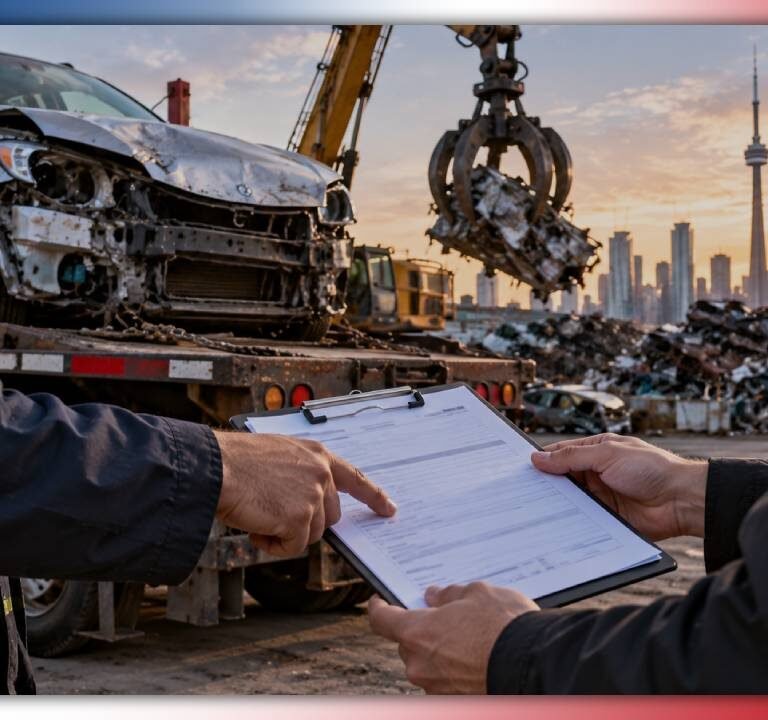
A licensed facility drains fluids, removes hazardous materials, and strips reusable parts within 24 to 48 hours of pickup. Steel, aluminum, and copper then move to recycling for reuse in new manufacturing.
You receive payment on the spot in most cases. Confirmation follows that the Ontario Ministry of Transportation has recorded the vehicle as retired. Recording removes your future liability for tickets or tolls tied to the old plate.
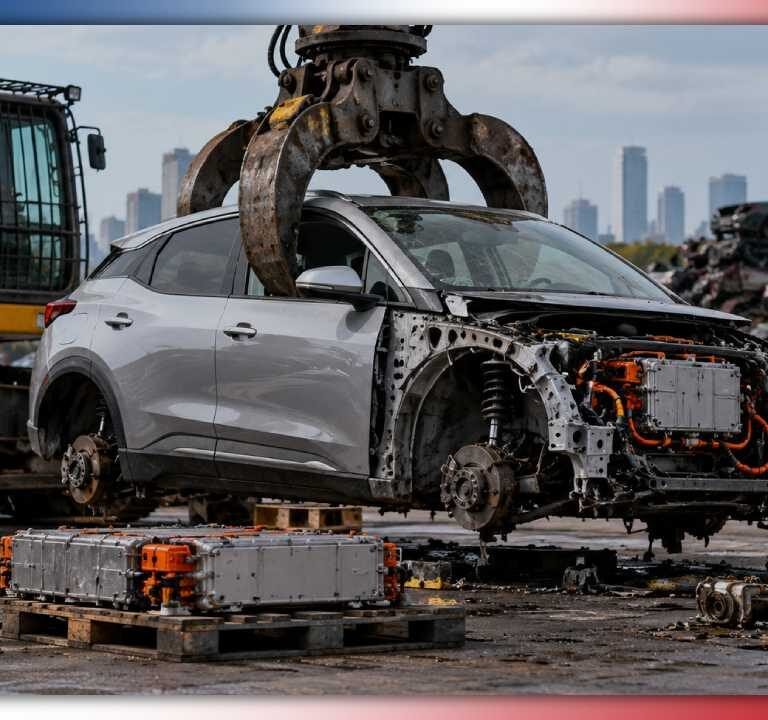
Recycling a single car recovers roughly 1 tonne (2,205 lb) of steel on average, plus aluminum, copper, and rubber. Responsible recycling keeps hazardous fluids like motor oil and coolant out of Ontario landfills.
Choosing a licensed facility over an unlicensed buyer protects you from fines tied to improper vehicle disposal. Ask for proof of licensing before you accept any pickup appointment.
Frequently Asked Questions
Is it worth fixing a car with 250,000 km on it?
No. Repairs on a car past 240,000 km (150,000 miles) rarely return more value than the cost of parts and labour. Engine and transmission internals face a high failure risk at this stage. A single major repair often exceeds the car’s resale value.
Can I scrap a car that does not start?
Yes. Licensed scrap car companies tow non-running vehicles from your driveway at no charge. You do not need to move the car, charge the battery, or make it drivable before pickup.
Do I need a Safety Standards Certificate to scrap my car?
No. A Safety Standards Certificate applies to private resale, not to scrapping through a licensed facility. The removal company handles the ownership transfer directly with the Ontario Ministry of Transportation.
How much cash can I get for a scrapped car in the GTA?
Cash offers in the GTA typically range from $150 CAD to $800 CAD, depending on weight and working parts. A larger vehicle with a working engine and catalytic converter earns a higher quote than a stripped compact car.
Does rust always mean a car is done?
No. Surface rust on body panels is repairable with sanding and a patch panel. Rust on the frame or rocker panels signals structural failure and points toward scrapping instead.
Ready to Scrap Your Car in 2026?
You now know the 9 signs to scrap your car and the exact steps to confirm your decision. A car with rising repair bills, failed inspections, or structural rust costs you more the longer you keep it. Get a free, no-obligation quote through Scrap Cars 4 Cash’s contact page. Turn your old vehicle into same-day cash today.