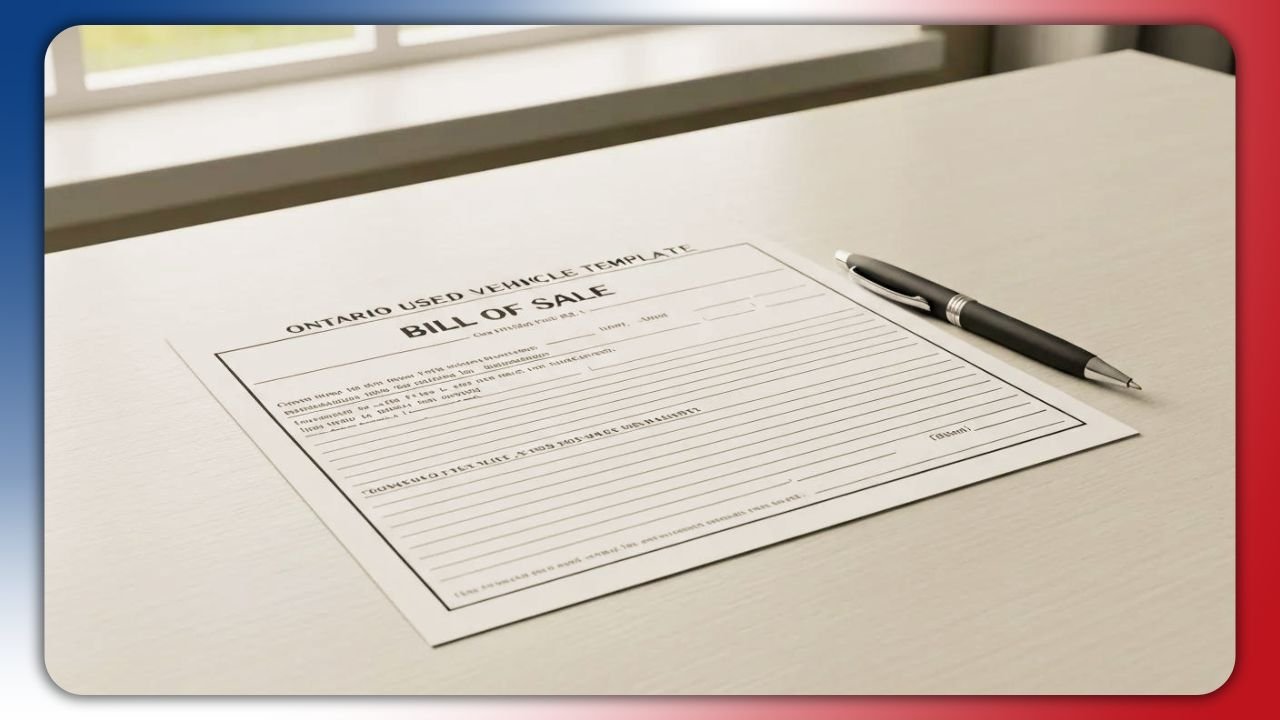
An Ontario used vehicle bill of sale must list the VIN, make, year, power source, body type, colour, model, purchase price, the seller’s name and address, the buyer’s name and address, and the sale date. ServiceOntario rejects incomplete bills of sale at registration, so missing even one field can delay your plate transfer by days. Whether you’re selling privately in Toronto, Mississauga, Brampton, or anywhere else in the GTA, this guide gives you the exact template fields, the tax rules that follow, and the registration steps that come after signing.
A bill of sale functions as a receipt and a legal record at the same time. It proves the transaction date, the agreed price, and that both parties consented to the transfer, details that matter if a dispute over the vehicle’s condition or payment surfaces months later. Courts in Ontario treat a properly completed bill of sale as binding evidence, whether it’s typed on a formal template or written by hand on a notepad.
What an Ontario Used Vehicle Bill of Sale Must Include
ServiceOntario requires nine specific fields on every bill of sale for a used vehicle in Ontario. Skip one, and the buyer’s registration appointment gets rejected on the spot, since clerks check the document against this exact list before processing the transfer.
- Vehicle Identification Number (VIN), the full 17-character code stamped on the dashboard and door frame.
- Make, year, and power source (gas, diesel, hybrid, or electric).
- Body type, colour, and model, as shown on the vehicle’s permit.
- Purchase price, including any HST or GST number if the seller is a dealer or company.
- Seller’s name, address, and signature, matching the name on the green ownership permit.
- Buyer’s name and address, recorded exactly as it will appear on the new registration.
- Sale or purchase date, which starts the 6-day registration countdown.
The document doesn’t need to be typed. A handwritten bill of sale is fully valid in Ontario, as long as every required field above is legible and the original copy reaches ServiceOntario. A photocopy only counts if a clerk views and copies the original on-site, or the seller faxes it directly to the office, so hand over the original whenever possible.
Most templates also include an odometer reading, even though it’s not on the strict ServiceOntario list, since recording mileage at the point of sale protects both sides if a dispute over the car’s history comes up later. Note the reading directly off the dashboard, photograph it if possible, and write it into the document before either party signs.
Sample Ontario Bill of Sale Template
Use this layout as a starting point. Fill every bracket, then both parties sign and date the bottom.
| Field | Entry |
| Vehicle Identification Number (VIN) | [17-character VIN] |
| Make / Year / Power Source | [e.g., Honda / 2018 / Gas] |
| Body Type / Colour / Model | [e.g., Sedan / Black / Civic] |
| Odometer Reading | [___________ km] |
| Purchase Price (CAD) | $[_____________] |
| Seller Name & Address | [Full legal name, street address, city, postal code] |
| Buyer Name & Address | [Full legal name, street address, city, postal code] |
| Sale Date | [DD/MM/YYYY] |
| Seller Signature | [Signature] _______________ |
| Buyer Signature | [Signature] _______________ |
Add a line stating the vehicle is sold “as is, where is, with no warranty expressed or implied,” if you want to limit post-sale liability for mechanical issues you didn’t know about. This single clause stops most buyer disputes over condition after the keys change hands.
Used Vehicle Information Package (UVIP) and How It Connects to Your Bill of Sale
Ontario law requires every seller to buy a Used Vehicle Information Package (UVIP) and hand it to the buyer before the sale closes. The UVIP confirms the VIN matches the permit, shows whether the vehicle carries a lien, and includes a built-in bill of sale section that mirrors the standalone template above.
Three things the UVIP confirms before money changes hands:
- Lien status, so the buyer doesn’t inherit someone else’s unpaid loan secured against the car.
- VIN match, which catches stolen vehicles or paperwork that doesn’t line up with the actual car.
- Wholesale value from the Canadian Red Book, the figure ServiceOntario uses to calculate tax if it’s higher than your sale price.
Either fill in the bill of sale section printed on the UVIP itself, or attach a separate signed document, as long as both copies show identical figures for price, VIN, and date.
Order the UVIP online through the Ministry of Transportation’s website using the VIN and plate number, and it typically arrives within minutes as a downloadable PDF. Sellers pay for this package, not buyers, and the cost stays the same regardless of the vehicle’s age, make, or sale price.
How Sales Tax Works on a Private Vehicle Sale
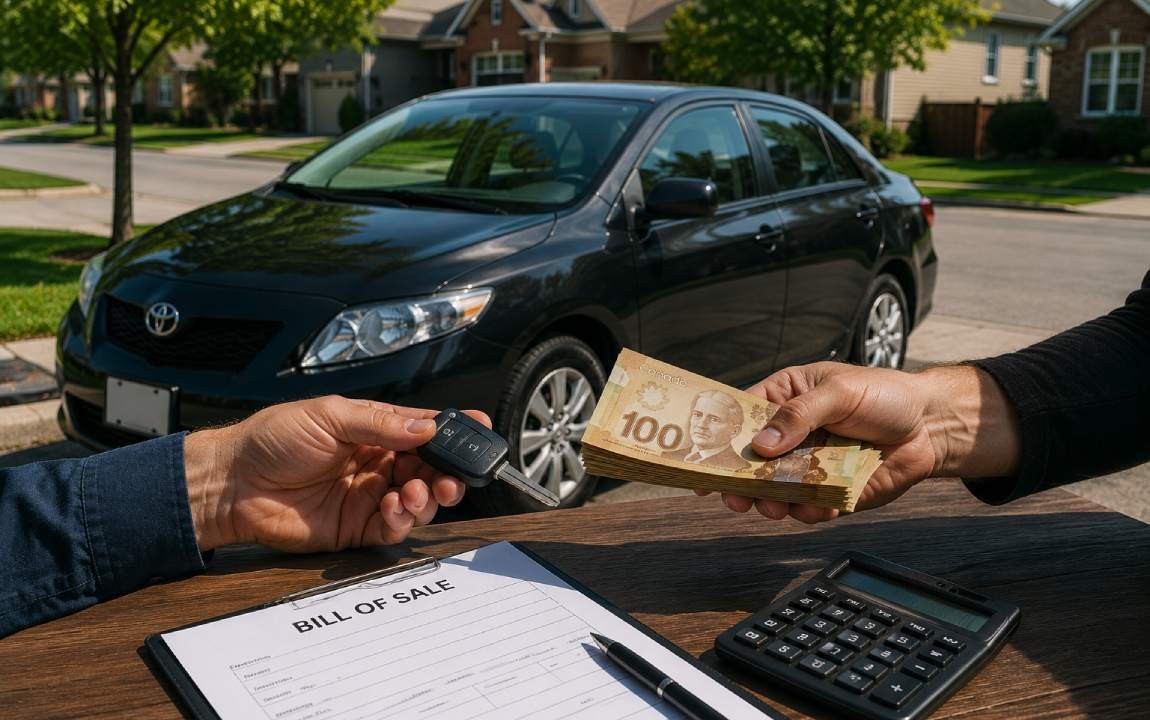
Buyers pay 13% Retail Sales Tax (RST) on the sale of a private used vehicle in Ontario, calculated on the higher of the purchase price or the vehicle’s wholesale value. The seller never collects this tax directly. ServiceOntario charges it when the buyer registers the vehicle, so the bill-of-sale price still matters even though the tax payment occurs later.
Sell a $6,000 sedan with a Red Book wholesale value of $7,200, and the buyer pays RST on $7,200, not $6,000, since the province always applies the higher figure. If you genuinely sold below market value, an appraisal can support the lower number, but ServiceOntario still taxes the greater of the two even after an appraisal.
- Family gifts skip RST entirely with a signed Sworn Statement for a Family Gift, available at any ServiceOntario location.
- Vehicles 20 years or older require a formal appraisal before registration, regardless of the listed sale price.
- Status Indians and qualifying diplomats qualify for a full RST exemption under separate provincial rules.
Registering the Vehicle: What Happens After Signing
The buyer must register the vehicle within 6 days of the purchase date, bringing the bill of sale, the UVIP, proof of insurance, and a valid driver’s licence to a ServiceOntario centre. Add a Safety Standards Certificate (SSC) to that list if the sale isn’t between spouses, since most ownership transfers require a passed safety inspection first.
- Confirm the seller’s identity matches the name on the green ownership permit before paying anything.
- Collect the signed bill of sale, UVIP, and the vehicle portion of the permit with the Application for Transfer completed on the back.
- Get a Safety Standards Certificate from a licensed DriveON technician if the transfer isn’t a spousal exception.
- Bring proof of insurance and your driver’s licence to the ServiceOntario appointment.
- Pay RST and registration fees on-site, based on the higher of sale price or Red Book wholesale value.
- Walk out with your new plate sticker and ownership document to finalize the transfer.
Sellers keep their license plates, since plates travel with the driver in Ontario, not the vehicle, plus the plate portion of the old permit in case they reuse those plates on a new car.
Common Mistakes That Delay Registration
Four errors send buyers back home without a completed registration:
- Missing VIN digits, since even one wrong character flags a mismatch against the permit and the UVIP.
- No purchase price listed, which blocks ServiceOntario from calculating RST at all.
- Unsigned or undated documents, since an incomplete signature block makes the bill of sale invalid as proof of transfer.
- Photocopies submitted instead of originals, which ServiceOntario only accepts under specific in-office viewing conditions.
Double-check every field against your permit and UVIP before the appointment. A five-minute review at the kitchen table saves a second trip to ServiceOntario.
Keep two signed copies once the document is complete. One copy goes to the buyer and one stays with the seller. A lost original leaves either party without proof the transaction happened at all. A scanned backup stored separately from the physical copy adds another layer of protection. This helps if the paper version gets damaged or misplaced before registration.
Bill of Sale Requirements: Quick Reference Table
| Requirement | Who Provides It | Deadline |
| Bill of Sale | Seller | Signed at time of sale |
| UVIP | Seller | Before sale closes |
| Safety Standards Certificate | Seller or buyer | Before registration |
| RST Payment | Buyer | At registration |
| Vehicle Registration | Buyer | Within 6 days of sale |
Protecting Yourself From Fraud During the Sale
Verify the seller’s identity against the name printed on the green ownership permit before handing over any cash, since mismatched names are the top warning sign of title fraud in Ontario. Title jumping, where a vehicle changes hands without proper registration, lets the actual owner of record dodge taxes or liability while leaving the next buyer exposed to legal trouble.
- Match the VIN physically stamped on the dashboard against the number printed on the permit and UVIP before paying.
- Meet in a public, well-lit location, or a police-monitored exchange zone if either party feels uneasy about a home visit.
- Confirm lien status through the UVIP rather than taking a seller’s word that the vehicle is debt-free.
- Walk away from any deal offered without a title or ownership permit, since a missing title is one of the clearest signs of a stolen or abandoned vehicle.
Report anything suspicious, like an owner’s name that doesn’t match the permit or a VIN that someone has altered, to local police before completing the transaction.
When a Bill of Sale Isn’t Enough: Selling a Vehicle That Can’t Pass Safety
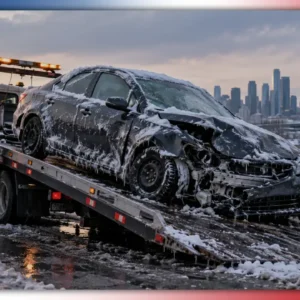
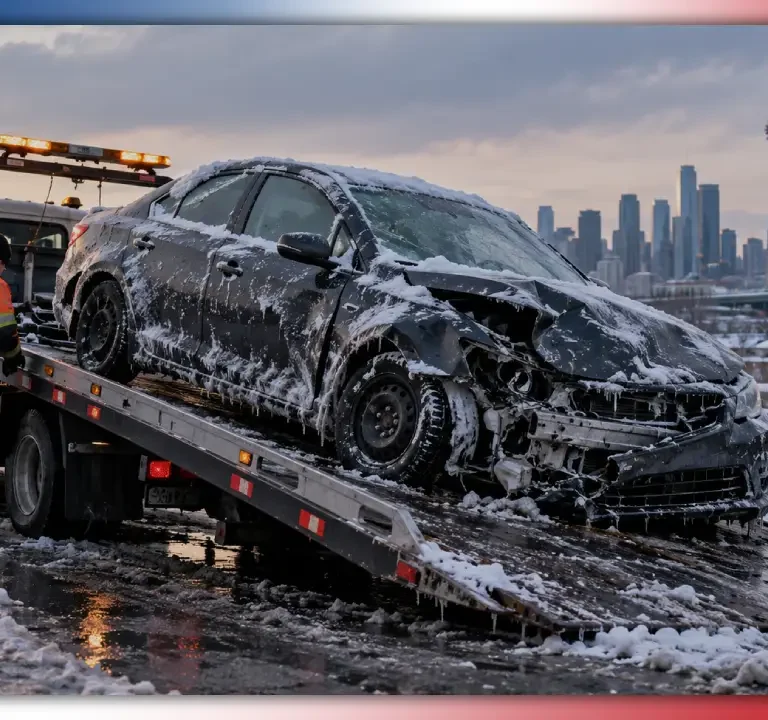
Not every vehicle has a buyer waiting. Cars with frame rust, a failed safety inspection, or mechanical damage rarely attract private buyers. Most won’t close a deal without a valid Safety Standards Certificate in hand. In that situation, a bill of sale still applies. However, the transaction looks different. You’re not selling to a private buyer who plans to drive the car. Instead, you’re selling to a scrap or salvage buyer who values the metal and parts.
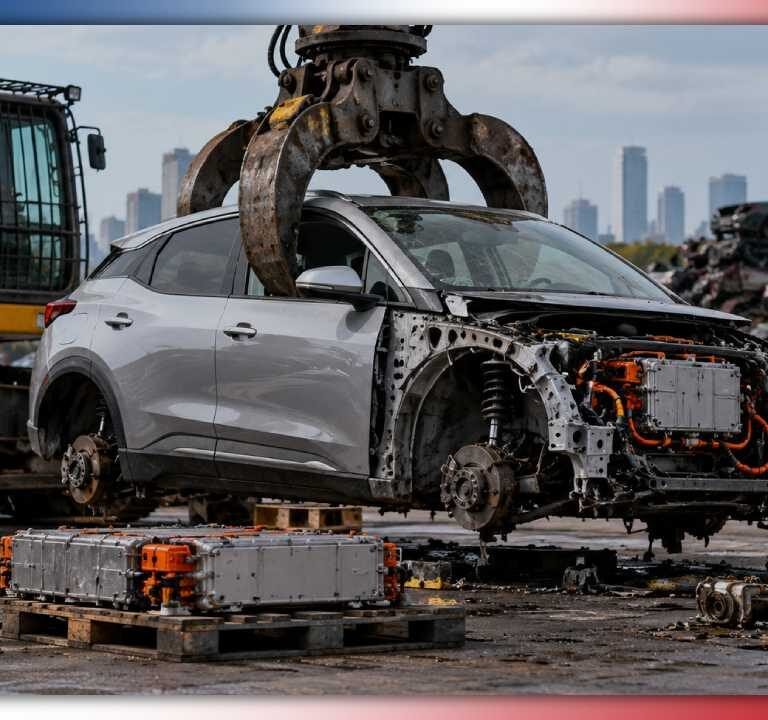
Scrap and salvage sales still need a signed bill of sale. However, they skip the UVIP, safety certificate, and RST entirely. The vehicle is being recycled, not re-registered for road use. The buyer just needs your signature on the ownership transfer. They also need a bill of sale showing the agreed cash amount. This process is far shorter than a full private sale.
This distinction matters most for vehicles sitting unsold after weeks of private listings. The same frame rust or failed inspection that scares off private buyers doesn’t affect a scrap buyer’s offer at all. A scrap transaction trades the multi-step UVIP and safety certificate process for a single signature and same-day payment. That is exactly why it works for cars a private bill of sale process can’t move.
At Scrap Cars 4 Cash, every pickup across Toronto, Mississauga, Brampton, Vaughan, and the rest of the GTA includes a same-day bill of sale, free towing, and cash paid before the vehicle leaves your driveway. Call +1 437-269-6321 for a free quote, or get an instant online quote to turn an unsellable vehicle into same-day cash.
Frequently Asked Questions
What must be included in an Ontario used vehicle bill of sale?
Yes, an Ontario bill of sale must include the VIN, make, year, power source, body type, colour, model, purchase price, both parties’ names and addresses, signatures, and the sale date. Missing any of these fields can cause ServiceOntario to reject the document at registration.
Can a bill of sale for a car in Ontario be handwritten?
Yes, a handwritten bill of sale is legally valid in Ontario as long as it’s legible and includes every required field with both signatures and the sale date. The document must be an original; only specific photocopy conditions, like in-office viewing at ServiceOntario, are accepted.
Do I need a UVIP in addition to a bill of sale?
Yes, Ontario law requires sellers to provide a Used Vehicle Information Package (UVIP) alongside the bill of sale before completing a private vehicle sale. The UVIP confirms lien status, verifies the VIN, and includes a built-in bill of sale section the buyer can use for registration.
How much tax does the buyer pay on a used vehicle in Ontario?
Buyers pay 13% RST on the higher of the purchase price or the vehicle’s Canadian Red Book wholesale value. Family gift transfers, qualifying diplomats, and Status Indians are exempt from this tax under separate provincial rules.
How long do I have to register a used vehicle after buying it?
Buyers must register the vehicle within 6 days of the purchase date listed on the bill of sale. Registration requires the bill of sale, UVIP, proof of insurance, a valid driver’s licence, and a Safety Standards Certificate where applicable.
Does a bill of sale need to be notarized in Ontario?
No, notarization isn’t required for a bill of sale in Ontario, and ServiceOntario accepts a signed original without a notary’s stamp. Witnesses aren’t mandatory either, though having one can strengthen the document if a dispute ever reaches court.
Can I sell a car for scrap without completing the full bill-of-sale process?
Yes, scrap and salvage sales still need a signed bill of sale, but skip the UVIP, Safety Standards Certificate, and RST since the vehicle isn’t being re-registered. The buyer only needs your signature on the ownership transfer and a basic sale document showing the agreed cash amount.
Whichever route fits your situation, repair and resell, list it privately, or sell it for scrap, the bill of sale stays the constant that protects both sides of the transaction. Getting the fields right the first time keeps registration, taxes, and ownership transfer moving without a second trip to ServiceOntario.
Sources: Buy or sell a used vehicle in Ontario (ontario.ca); Used Vehicle Information Package (ontario.ca)