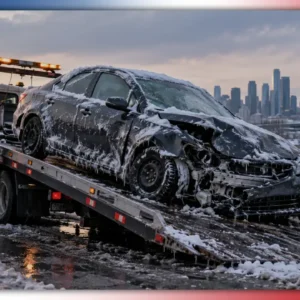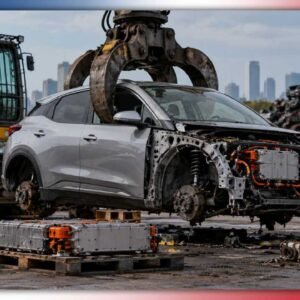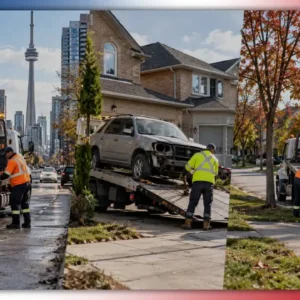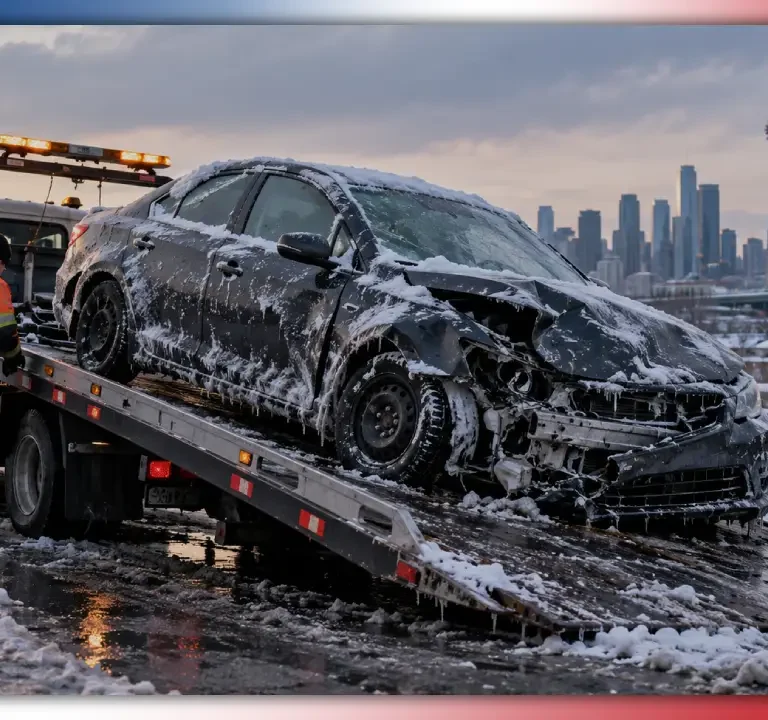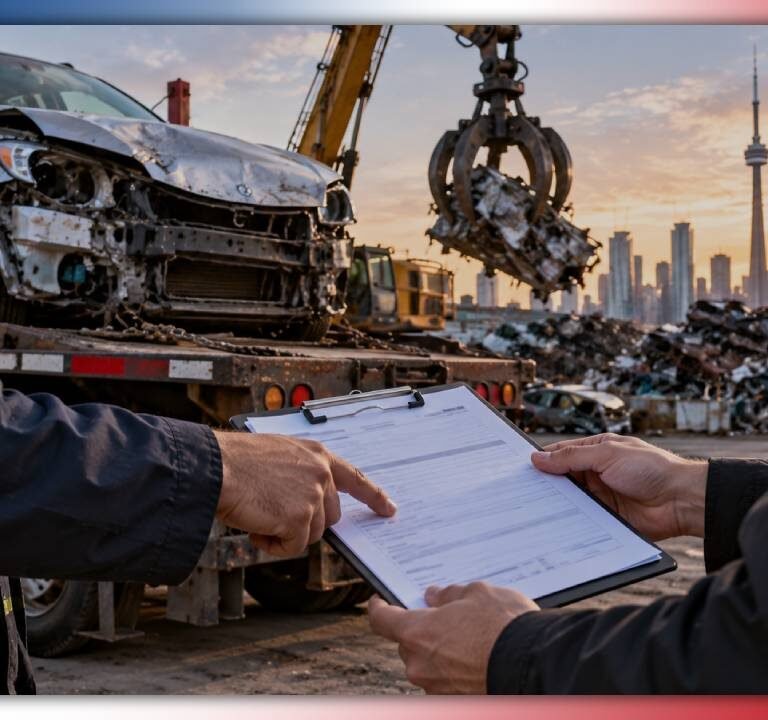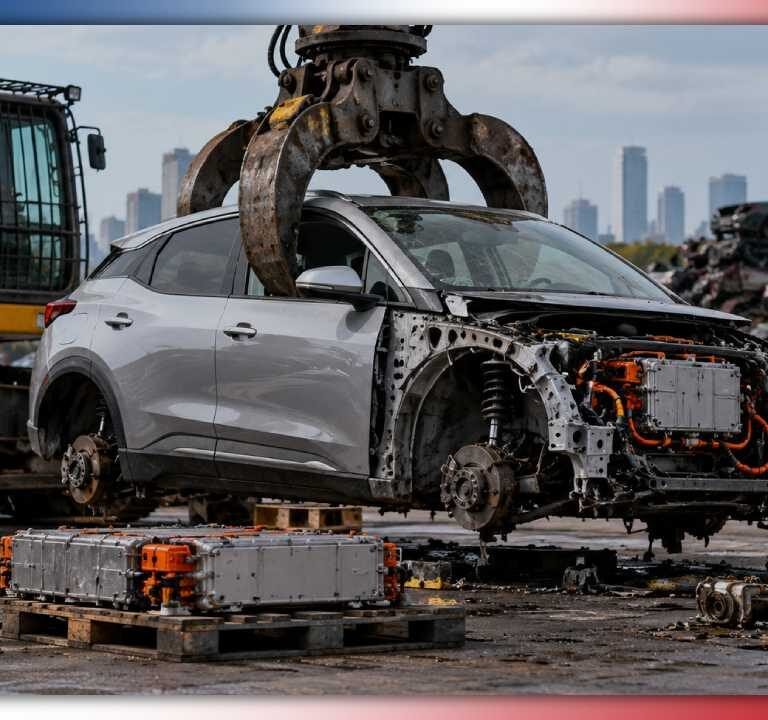
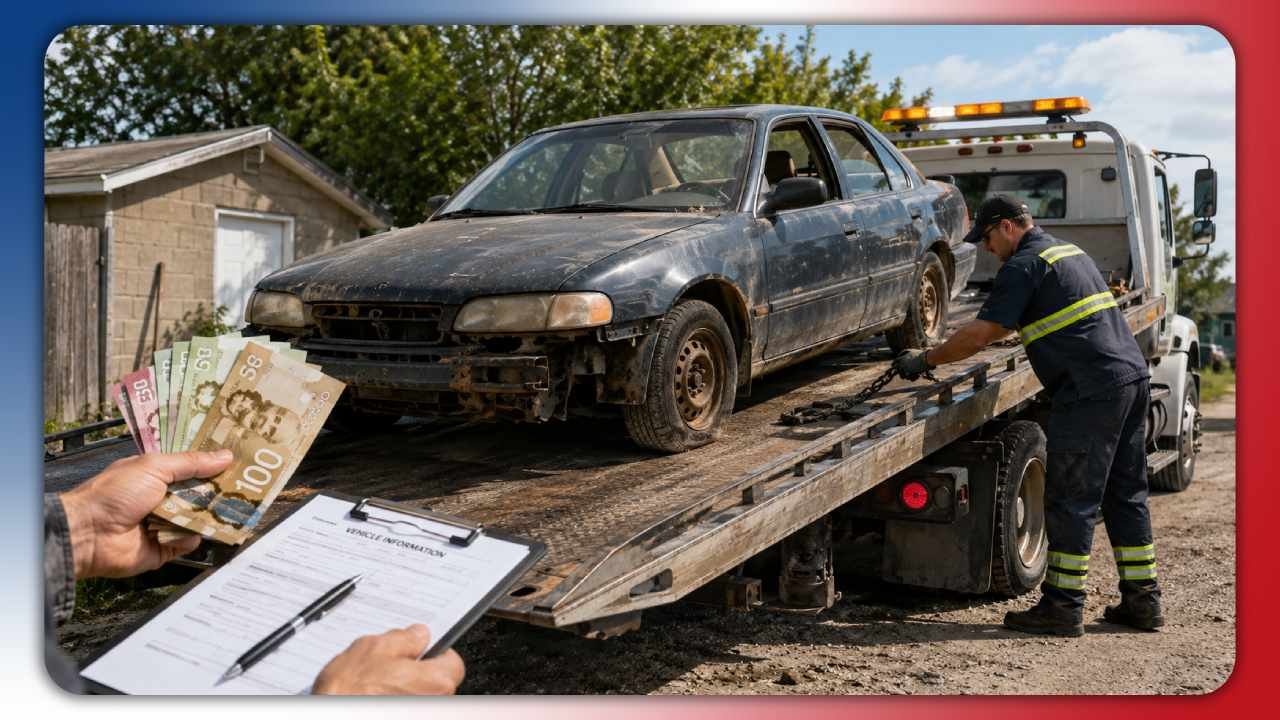
You can scrap a non-running car in Ontario without driving it, towing it yourself, or holding a safety certificate. Licensed buyers such as Scrap Cars 4 Cash send a flatbed or winch truck, pay you cash on the spot, and remove the vehicle even if it has no wheels, a dead engine, or storm damage.
This guide walks through every step, from paperwork to payout, for a car that will not move on its own.
What Counts as a Non-Running Car You Can Still Scrap
A non-running car is any vehicle that cannot start, roll, or move under its own power. 3 categories cover most non-running vehicles: mechanical failures, electrical failures, and structural damage.
Mechanical failures include problems such as a blown head gasket, a seized engine block, and a snapped timing belt. These failures often cost more to repair than the car is worth, so you scrap the vehicle instead of fixing it.
Electrical failures include issues such as a dead battery, a failed alternator, and a burnt wiring harness. A car with electrical failure often looks intact but will not turn over, and a jump start rarely fixes a deeper wiring fault.
Structural damage covers cases such as flood damage, collision damage, and fire damage. Buyers who specialize in accidental scrap cars handle these vehicles daily, since insurance write-offs make up a large share of the non-running car market. A vehicle with a bent frame or a cracked block still holds full scrap value, since buyers pay for metal weight, not driving condition.
A quick check of the symptoms tells you which category applies before you call a buyer. Listen for a click with no crank, which points to a battery or a starter, and watch for fluid pooling under the car, which points to a gasket or a hose. Either way, a buyer values the metal and salvageable parts, not the diagnosis.
How to Scrap a Non-Running Car in Ontario: 5 Steps
To scrap a non-running car in Ontario, you follow 5 steps: gather your paperwork, remove your plates, request a quote, confirm free towing, and hand over the keys.
Step 1: Gather Your Ownership Permit and Photo ID
To gather your paperwork, you locate the vehicle ownership permit, known as the pink slip, issued by the Ministry of Transportation Ontario (MTO). You also need a government-issued photo ID that matches the name on the permit, such as a driver’s licence, a passport, or an Ontario photo card. If you lost the permit, you request a replacement at any ServiceOntario location before pickup day. Bring the vehicle identification number (VIN) with you, since staff use it to confirm ownership records.
Step 2: Remove Your License Plates Before Pickup
To remove your plates, you unscrew the front and rear plates with a screwdriver or a socket wrench. Ontario license plates belong to you, not the vehicle, so you keep them for a future car or return them to ServiceOntario. Returning your plates cancels the plate portion of your registration and can trigger a partial refund. Skipping this step can leave you responsible for tickets tied to your plate number.
Step 3: Request a Free Quote From a Scrap Car Removal Team
To request a quote, you describe the year, make, model, and condition of the car, including whether it rolls, starts, or has missing parts. A qualified scrap car removal team gives you a price based on current metal rates within minutes over the phone or through an online form. Photos of the front, rear, and interior speed up the process and reduce the chance of a lower offer on pickup day.
Step 4: Confirm Free Towing and Fluid Removal
To confirm free towing, you ask the buyer directly whether pickup, fuel drainage, and disposal fees sit inside the quote. Licensed recyclers drain oil, coolant, and fuel safely before transport, since Ontario regulations require this step for any end-of-life vehicle. A written or texted confirmation protects you from a surprise deduction at pickup.
Step 5: Hand Over the Keys and Get Paid in Cash
To hand over the keys, you sign the bill of sale, remove personal items, and collect payment before the truck leaves your property. Most licensed buyers pay in cash or e-transfer on the same visit, so you never wait for a mailed cheque. Keep a copy of the signed transfer for your own records.
How to Move a Non-Towable Car Without a Standard Flatbed
You move a non-towable car with a winch truck, a set of tow skates, or car dollies, depending on where the vehicle sits.
Using a Winch Truck for Cars Stuck in Snow, Mud, or Tight Spaces
To use a winch truck, the driver attaches a steel cable to the vehicle’s frame or axle and pulls it onto the flatbed from up to 30 feet (9 meters) away. Winch trucks work well for cars parked on grass, gravel, or a sloped driveway. The cable applies steady tension, so the wheels never need to turn.
Using Tow Skates or Car Dollies for Vehicles With No Wheels
To use tow skates, the crew lifts each corner of the car with a hydraulic jack and slides a low steel skate under the hub. Each skate holds up to 5,000 pounds (2,270 kilograms) and includes small rollers, so the car moves freely once lifted. Car dollies work the same way for vehicles missing 2 or more wheels, and both tools avoid further damage to a brake rotor or axle.
Handling a Non-Running Car Blocked by Fences, Sheds, or Tight Garages
To handle a blocked car, the crew measures the access path first and brings narrower equipment, such as a mini winch or a hand-operated dolly jack. A path as narrow as 3 feet (0.9 meters) is usually wide enough for this equipment to reach the vehicle. For a car sunk in soft soil, crews lay down steel plates or wooden boards to create a stable path for the truck.
What Determines the Value of a Non-Running Car
3 factors set the price of a non-running car: metal weight, catalytic converter presence, and current scrap metal rates.
Weight and Metal Content
A small sedan, such as a Honda Civic or a Toyota Corolla, weighs 2,600 to 3,000 pounds (1,180 to 1,360 kilograms). A full-size SUV, such as a Chevrolet Tahoe or a Ford Expedition, weighs 5,000 to 5,800 pounds (2,270 to 2,630 kilograms) and brings a higher payout. Steel and aluminum content raise the scrap price per pound of the vehicle, while plastic trim and glass add no value.
Catalytic Converter and Salvageable Parts
A catalytic converter contains platinum, palladium, and rhodium, and it can add $50 to $300 to your quote for a non-running car. Salvageable parts, such as an alternator, a starter motor, and an intact transmission, raise the offer further when the buyer resells parts. Removing the catalytic converter before pickup lowers your payout, since the buyer loses that resale value.
Age, Make, and Local Scrap Metal Prices
Older vehicles, such as models built before 2005, sometimes carry heavier steel bodies and score a higher weight-based price than lighter modern cars. Demand for parts from a common make, such as a Toyota or a Ford, can raise your offer if the buyer resells components locally. Scrap steel prices shift week to week, so a quote from Tuesday can differ from a quote requested the following Monday.
Quick-Reference Table: Scrapping a Non-Running Car Step by Step
This table breaks down each task, its typical timing, the method used, and the difficulty level for scrapping a non-running car.
| Task | Timing | Method | Difficulty |
| Gather ownership permit and ID | 5 minutes | Locate pink slip at home or ServiceOntario | Easy |
| Remove license plates | 2 minutes | Screwdriver or socket wrench | Easy |
| Request a cash quote | 5–10 minutes | Phone call or online form | Easy |
| Move a non-towable car | 20–40 minutes | Winch truck, tow skates, or dollies | Moderate |
| Confirm free towing and fluid draining | 5 minutes | Verbal or written confirmation | Easy |
| Sign bill of sale and get paid | 15–20 minutes | Cash or e-transfer at pickup | Easy |
Do You Need a Safety Certificate to Scrap a Non-Running Car in Ontario
No, Ontario law does not require a safety certificate, an emissions test, or a working engine to scrap a car. The Environmental Protection Act governs vehicle recycling in Ontario, not the Highway Traffic Act, so drivability rules never apply to a non-running car. You transfer the vehicle directly to a licensed recycler instead of a private buyer, which removes the certificate requirement completely. This rule applies equally to a car with a seized engine, a missing transmission, or full flood damage. Provincial regulations focus on how a recycler drains fluids and handles scrap metal, not on whether the car could pass a road test.
What Documents Do You Need to Scrap a Non-Running Car
You need 3 documents: the vehicle ownership permit, a government-issued photo ID, and a completed bill of sale.
The vehicle ownership permit, called the pink slip, proves you own the car and lists the vehicle identification number (VIN). Your photo ID, such as a driver’s licence, a passport, or a health card with a photo, confirms your identity matches the permit. The bill of sale records the sale price, the date, and both parties’ signatures, and it protects you if the recycler mishandles the non-running car later. Keep digital copies of all 3 documents in case a dispute arises after pickup.
How Long Does It Take to Scrap a Non-Running Car in the GTA
Most non-running cars leave the property within 24 to 48 hours of the first phone call, and some buyers offer same-day pickup. The quote step takes 5 to 10 minutes over the phone once you share the year, make, model, and condition. Paperwork and payment at pickup add another 15 to 20 minutes, so the full process from call to cash often finishes inside 2 days. A car blocked by snow or stuck in mud can add a half day while the crew arranges a winch truck.
Should You Scrap a Non-Running Car or Sell It for Parts
You scrap a non-running car when repair costs exceed its value, and you sell it for parts only if you have the time, tools, and storage space for a slow sale. Parting out a vehicle can bring more total cash, since a starter motor, an alternator, and a set of rims sell separately. This route also takes weeks of listing, shipping, and buyer communication, while a junk car pickup service pays the full amount in a single same-day visit. Most owners of a non-running car choose the faster route once they compare the hourly effort against the price difference.
How to Avoid Common Mistakes When Scrapping a Non-Running Car
You avoid the biggest mistakes by cancelling insurance, keeping your plates, and confirming free towing before pickup.
- Mistake 1: Forgetting to cancel insurance. You keep paying premiums on a non-running car you no longer own if you skip this step.
- Mistake 2: Leaving plates on the vehicle. Plates belong to you, and a buyer who takes them without asking creates a paperwork problem later.
- Mistake 3: Paying for towing. A licensed junk car pickup service includes towing in the quote, so any request for a pickup fee signals a problem.
- Mistake 4: Skipping a license check. An unlicensed buyer may dump fluids illegally, and Ontario law can hold the previous owner liable for that damage.
- Mistake 5: Accepting the first quote without comparison. Prices for a non-running car can vary by $100 or more between buyers, so a second quote often confirms a fair price.
Frequently Asked Questions About Scrapping a Non-Running Car
Can you scrap a car that does not start?
Yes, licensed buyers collect non-running vehicles with a flatbed or winch truck at no charge.
Do you need a tow truck to scrap a car with no wheels?
No, crews use tow skates or car dollies to lift and roll the vehicle onto a flatbed.
Is towing free for a non-running car in Ontario?
Yes, reputable buyers include towing in the cash quote, with zero pickup fees.
How much is a non-running car worth in Ontario?
A non-running car typically brings $150 to $2,000, based on weight, metal content, and the catalytic converter.
Can a buyer scrap a car without the ownership permit?
No, Ontario law requires the ownership permit, or a ServiceOntario replacement, before pickup.
Get Cash for Your Non-Running Car Today
Scrapping a non-running car takes 3 documents, 5 steps, and one phone call, regardless of whether the car rolls, starts, or sits on blocks. Ontario law lets you skip the safety certificate, and licensed crews bring winch trucks and tow skates to move a vehicle that a standard flatbed cannot reach. A dead battery, a seized engine, or storm damage never disqualifies your vehicle from a fair cash offer. Request your free quote and turn a stalled, stuck, or storm-damaged car into same-day cash.