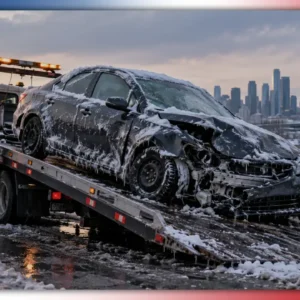
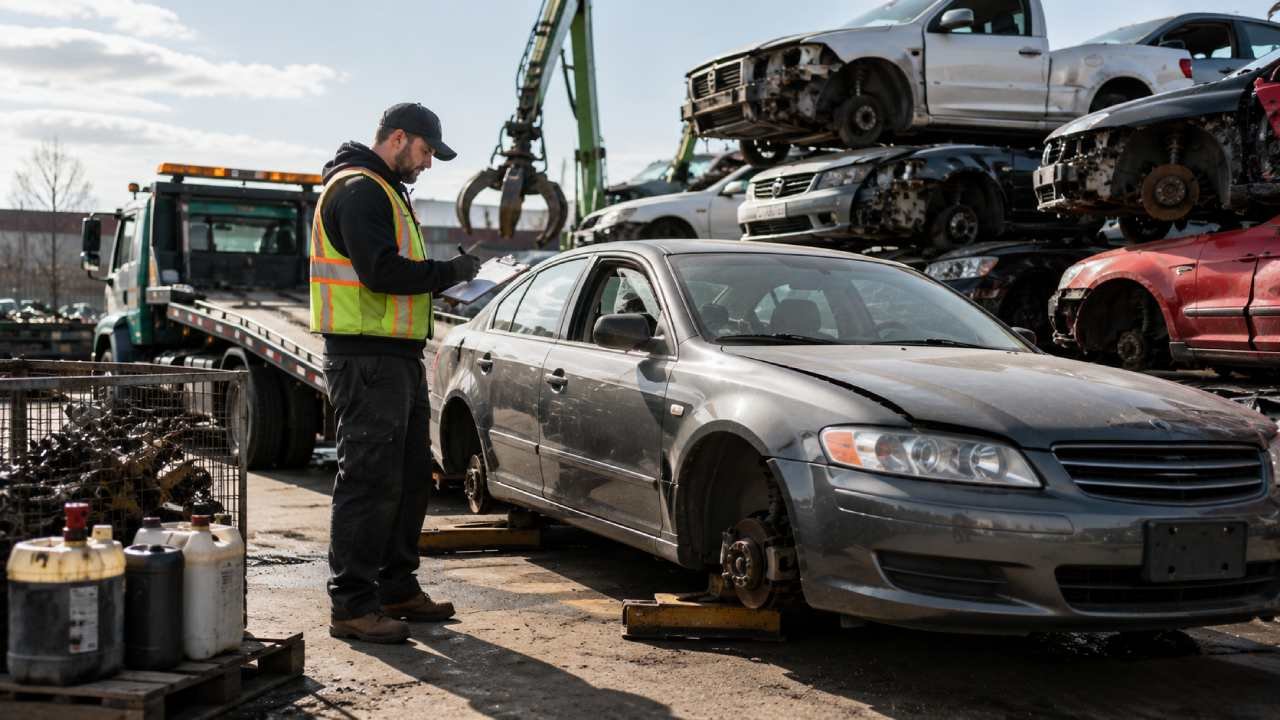
You must follow specific scrap vehicle regulations Ontario enforces under provincial law. These rules cover ownership documents, licensed recyclers, hazardous material removal, and formal de-registration.
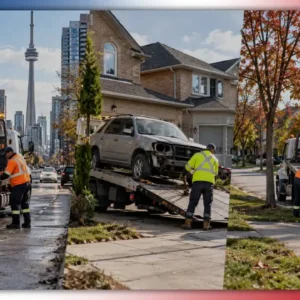
Skipping any step exposes you to fines, fraud risk, and ongoing liability for a car you no longer own. This guide breaks down every requirement for 2026, so you can scrap your vehicle correctly the first time. Toronto, Mississauga, Brampton, and every other Ontario municipality enforce the same provincial baseline rules, though local bylaws can add extra layers around abandoned vehicles.
What Documents Do Ontario’s Scrap Vehicle Regulations Require?
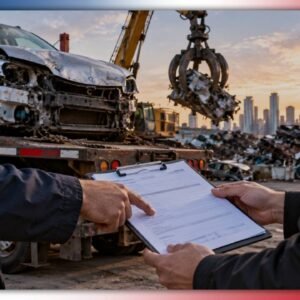
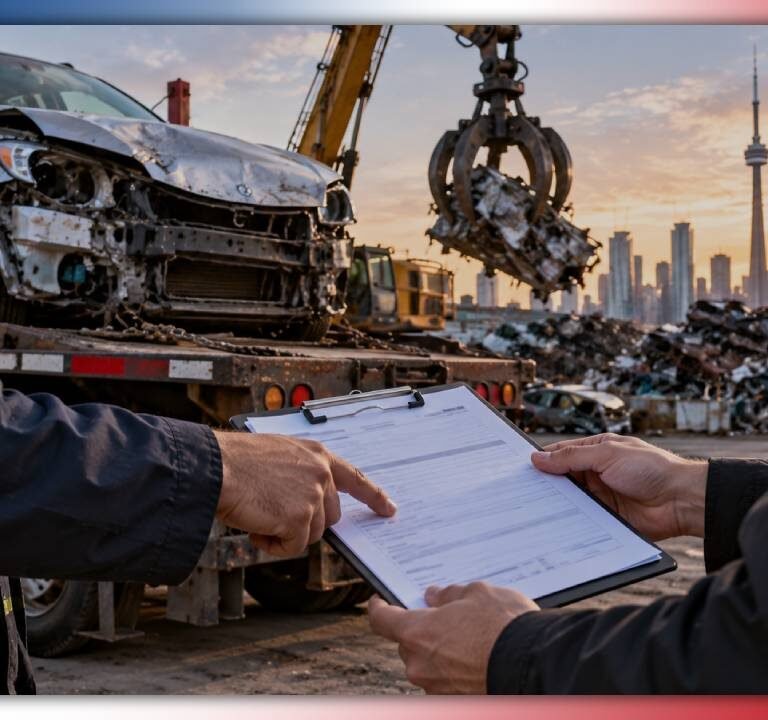
You need 3 core documents to scrap a car legally: the vehicle ownership permit, a valid Bill of Sale, and government issued photo identification. The vehicle ownership permit is the single most important document, since it proves you have the legal right to transfer the car.
Without these documents, a licensed recycler cannot legally purchase your vehicle. Gather everything before you call for a quote to avoid delays on pickup day. A missing permit is the single biggest cause of delayed scrap car pickups across the GTA.
Vehicle Ownership Transfer Requirements
To transfer ownership, sign the back of your Ontario vehicle permit and list the recycler as the purchaser. Include the sale date, odometer reading, and purchaser’s name on the transfer section.
Never write a personal name in the buyer information field when a business completes the purchase. This mistake can delay the transfer at ServiceOntario and leave the vehicle listed in your name. Double check every field before you hand the permit to the tow driver.
When You Need a Bill of Sale
A licensed recycler must give you a Bill of Sale regardless of the payment amount. This document lists the Vehicle Identification Number (VIN), make, model, year, and sale price.
Keep a copy for at least 3 years in case ServiceOntario or your insurer asks for proof of the sale. A Bill of Sale also protects you if the vehicle is later linked to fraud or an unpaid toll. Refuse pickup from any company that will not provide one, regardless of how small the offer is.
How to Choose a Licensed Scrap Yard in Ontario
To choose a licensed scrap yard, verify its registration before you hand over your keys. Unlicensed operators can leave you liable for fines, environmental damage, and unresolved ownership records.
Price should never be your only factor. A cheap quote from an unlicensed operator can cost you far more in legal exposure later. Look for 3 signals of legitimacy: a physical yard address, an EASR number, and consistent online reviews.
How to Verify EASR Registration
Ontario auto recyclers must register under the Environmental Activity and Sector Registry (EASR), per Section 20.21(1)(a) of the Environmental Protection Act. This registration, filed under O. Reg. 85/16, confirms a facility meets end-of-life vehicle disposal standards.
You can search the Access Environment website to confirm any recycler’s EASR status before booking a pickup. Many unlicensed operators claim registration they do not actually hold, so verify directly rather than taking their word for it. This check takes under 5 minutes and can save you thousands in future liability.
How to Check the OARA Directory
The Ontario Automotive Recyclers Association (OARA) maintains a public membership directory of verified recyclers. Cross check any quote you receive against this list before agreeing to a price.
A licensed operator offering a scrap car removal service will appear in both the EASR and OARA records. This double verification takes 5 minutes and protects you from scams. Ask the company directly for their EASR number if you cannot locate it online.
What Environmental Rules Apply to Scrapping a Vehicle in Ontario?
Ontario’s environmental rules require recyclers to drain and safely dispose of every hazardous fluid before dismantling a car. The Environmental Protection Act governs this process for all registered facilities.
These rules exist to keep oil, coolant, and refrigerant out of soil and waterways. A licensed facility follows a documented process for every vehicle it receives, logging each hazardous material as it comes out of the car.
Hazardous Materials You Must Remove
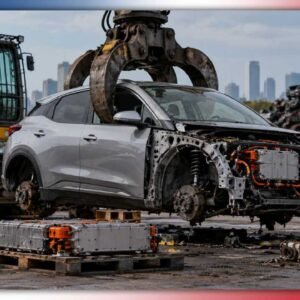
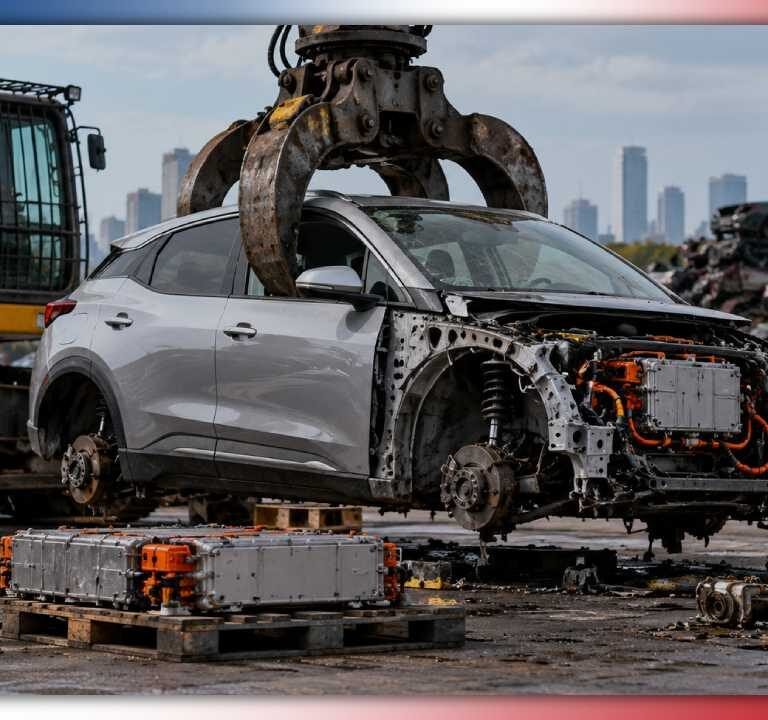
Before scrapping, remove 3 categories of hazardous items: fuel and fluids, the 12 volt battery, and aftermarket electronics like a 407 transponder. Licensed recyclers handle refrigerant recovery and airbag disposal on site, since these require certified equipment.
Leaving these items in the car is not illegal, but removing valuables like a transponder first saves you replacement fees. 407 ETR charges a separate fee for a lost transponder. Garage door openers, cell phone holders, and toll passes also belong on this checklist.
Fluid and Battery Disposal Requirements
Engine oil, transmission fluid, brake fluid, and coolant must drain into sealed containers rated for hazardous waste. A typical lead acid battery lasts 3 to 5 years (roughly 1,095 to 1,825 days) before it needs recycling.
Facilities send recovered batteries to certified processors rather than standard landfills. This keeps lead and acid out of general waste streams and supports Ontario’s broader battery recycling programs.
How to De-Register Your Vehicle After Scrapping It
To de-register your vehicle, return your license plates to a ServiceOntario location within a reasonable timeframe after the sale. This step formally removes the car from your name in the provincial system.
Skipping de-registration leaves you responsible for a vehicle that technically no longer exists. This can create problems with insurance renewals, plate stickers, or future vehicle purchases.
Returning License Plates to ServiceOntario
Remove your plates with a 10 millimeter (roughly 0.4 inch) socket or a Phillips screwdriver before the tow truck arrives. Bring the plates and the permit portion of your ownership to any ServiceOntario counter.
Keep validation stickers if you plan to transfer plates to a replacement vehicle. Ask the counter staff to confirm the transfer before you leave the office.
Notifying the Ministry of Transportation
The Ministry of Transportation Ontario (MTO) updates your record once ServiceOntario processes the returned plates. Confirm the vehicle status changed to sold or scrapped within 2 weeks of drop off.
This protects you from tickets, tolls, or liability tied to a car you already sold. Call ServiceOntario directly if your record has not updated after 2 weeks have passed.
Ontario Scrap Car Compliance Checklist at a Glance
Use the table below to track every requirement before your vehicle leaves your property. Each task includes the expected timing, method, and difficulty level.
| Task | Timing | Method | Difficulty |
| Gather ownership permit, Bill of Sale, and photo ID | Before booking pickup | Collect documents at home | Easy |
| Verify recycler’s EASR registration | Before booking pickup | Search Access Environment website | Easy |
| Check OARA membership directory | Before booking pickup | Search OARA public directory | Easy |
| Remove valuables and hazardous items | Before tow truck arrives | Remove battery, fuel, electronics, transponder | Moderate |
| Sign transfer section of ownership permit | On pickup day | List recycler as purchaser, include odometer reading | Easy |
| Collect Bill of Sale | On pickup day | Request from recycler before vehicle leaves | Easy |
| Remove license plates | On pickup day | Use a 10 mm socket or Phillips screwdriver | Easy |
| Return plates to ServiceOntario | Within a few days of sale | Visit any ServiceOntario counter | Easy |
| Confirm MTO record updated | Within 2 weeks of drop off | Check status or call ServiceOntario | Easy |
| Cancel insurance policy | After sale and de-registration confirmed | Contact insurer directly | Easy |
What Happens If You Scrap a Financed or Leased Vehicle?
You cannot legally scrap a financed or leased vehicle until you clear the lien against it. The lender holds a legal claim on the car until the loan balance reaches $0.
Scrapping a financed car without clearance can count as fraud against the lender. Always resolve this step first, even if the process takes a few extra days to complete.
Clearing a Lien Before Scrapping
Contact your lender for a payout amount and request written permission to scrap the vehicle. Some lenders accept a partial payment plus a signed agreement covering the remaining balance.
A registered recycler will ask for this release before completing the purchase. Keep a copy of the lender’s letter with your other sale documents in case a dispute arises later.
What Penalties Do Ontario’s Scrap Vehicle Regulations Impose for Violations?
Illegal vehicle disposal in Ontario can trigger municipal fines, environmental penalties, and personal liability for cleanup costs. Municipal bylaw fines for an abandoned vehicle typically range from $250 to $5,000, depending on the city and how long the car sits.
These penalties apply whether you abandon a car intentionally or simply forget to finish the paperwork. Ignorance of the rule does not remove your liability under Ontario law.
Municipal Abandoned Vehicle Fines
Cities across the GTA, including Toronto, Mississauga, and Brampton, enforce property standards bylaws against abandoned vehicles. Leaking fluids on public or private land can add environmental charges on top of the base fine.
Towing and storage fees accumulate daily until you retrieve or surrender the car. These costs often exceed the scrap value of the vehicle itself within a matter of weeks.
Environmental Protection Act Penalties
The Environmental Protection Act allows the province to fine individuals and corporations for improper hazardous waste disposal. Corporate penalties under related federal environmental law can climb into the hundreds of thousands of dollars for severe violations.
Using a licensed recycler removes this liability entirely, since the facility assumes responsibility for compliant disposal. This protection is one reason licensing matters more than a slightly higher cash offer from an unverified buyer.
How to Scrap an Insurance Write-Off in Ontario
To scrap an insurance write-off, let your insurer handle the ownership transfer once they declare the vehicle a total loss. The insurance company typically arranges pickup through an authorized salvage facility.
You still hold responsibility until the transfer completes, so confirm every step in writing. Do not assume the process finished just because the vehicle left your property that day.
Total Loss Vehicle Transfer Process
Your insurer completes the paperwork and sends the vehicle to a registered facility on your behalf. Request written confirmation once the transfer and de-registration are complete.
If your insurer misses this step, you remain the registered owner on file with ServiceOntario. Anyone dealing with an accident-damaged vehicle removal situation should confirm this step directly with their claims adjuster before signing off.
How Scrap Vehicle Regulations Ontario Apply to Classic or Older Vehicles
Older and classic vehicles follow the same core scrap vehicle regulations Ontario applies to any other car. The main difference lies in value, since collectors often pay more for rare parts than a standard scrap yard offers.
Salvage Value of Classic Parts
Contact a specialty recycler before a standard scrap yard if your vehicle is 25 years or older. Trim pieces, badges, and period correct parts can carry resale value far above the vehicle’s scrap weight.
Historical Plate Return Rules
If you hold historical or collector plates, confirm the return or transfer process with the MTO directly. These plate types sometimes follow different rules than standard passenger plates.
What About Non-Running or Unregistered Vehicles?
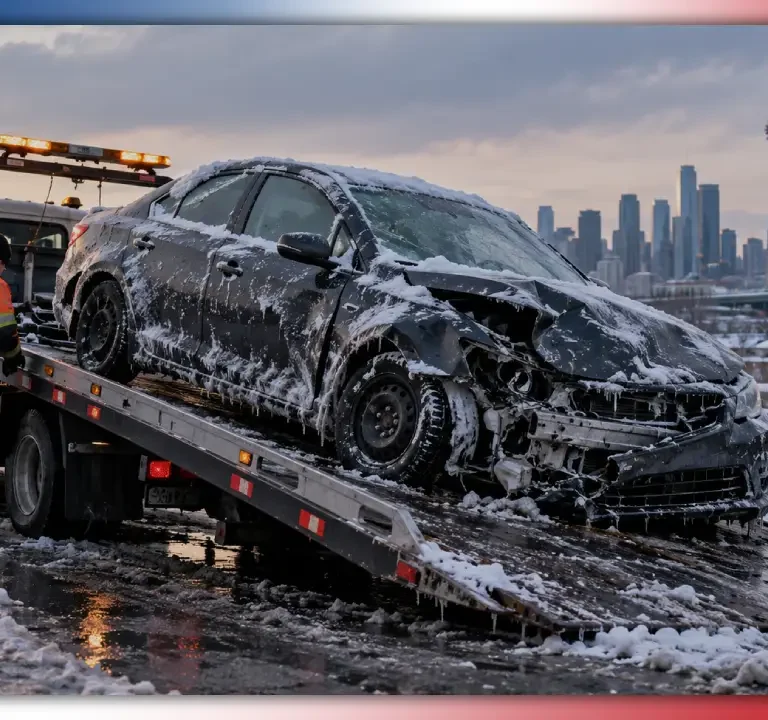
Ontario allows you to scrap a non-running vehicle using the same core process as a working car. A licensed recycler will tow the vehicle regardless of its condition, including cars missing wheels or an engine.
If your ownership permit is lost, apply for a replacement through ServiceOntario before scheduling pickup. This costs $32 and must be requested in person by the registered owner. Processing typically takes a single visit to a ServiceOntario counter.
Frequently Asked Questions About Ontario Scrap Vehicle Regulations
Do I need a UVIP to scrap a car in Ontario?
No, a Used Vehicle Information Package (UVIP) is not required for scrapping. Some recyclers request one for newer vehicles to confirm there are no outstanding liens.
Can I scrap a car without the ownership permit?
No, most licensed recyclers require the original ownership permit before purchase. You can apply for a replacement through ServiceOntario for a fee of $32 if the original is lost.
Is towing free when I scrap my car in Ontario?
Yes, most licensed recyclers across the GTA offer free towing with every scrap car pickup. Confirm this detail before booking, since policies vary between companies.
How much is my scrap car worth in Ontario?
Scrap car values in Ontario typically range from $150 to $1,000, though rare parts or high scrap metal prices can raise this. Engine condition, weight, and demand for specific parts all affect the final offer.
What if my scrap yard is not registered under EASR?
An unregistered scrap yard puts you at risk of fines and unresolved ownership records. Always confirm EASR and OARA status before you agree to a pickup date.
Do I need to cancel my insurance before scrapping my car?
Yes, cancel your insurance policy once the sale and de-registration are confirmed. Cancelling too early can leave you uninsured if the vehicle is still technically in your name.
Following the scrap vehicle regulations Ontario requires protects you from fines, fraud, and lingering liability for a car you no longer own. Gather your documents, confirm your recycler’s license, and clear your plates through ServiceOntario before pickup day. Contact Scrap Cars 4 Cash today to book a free, same-day cash for scrap cars pickup anywhere in the GTA.